
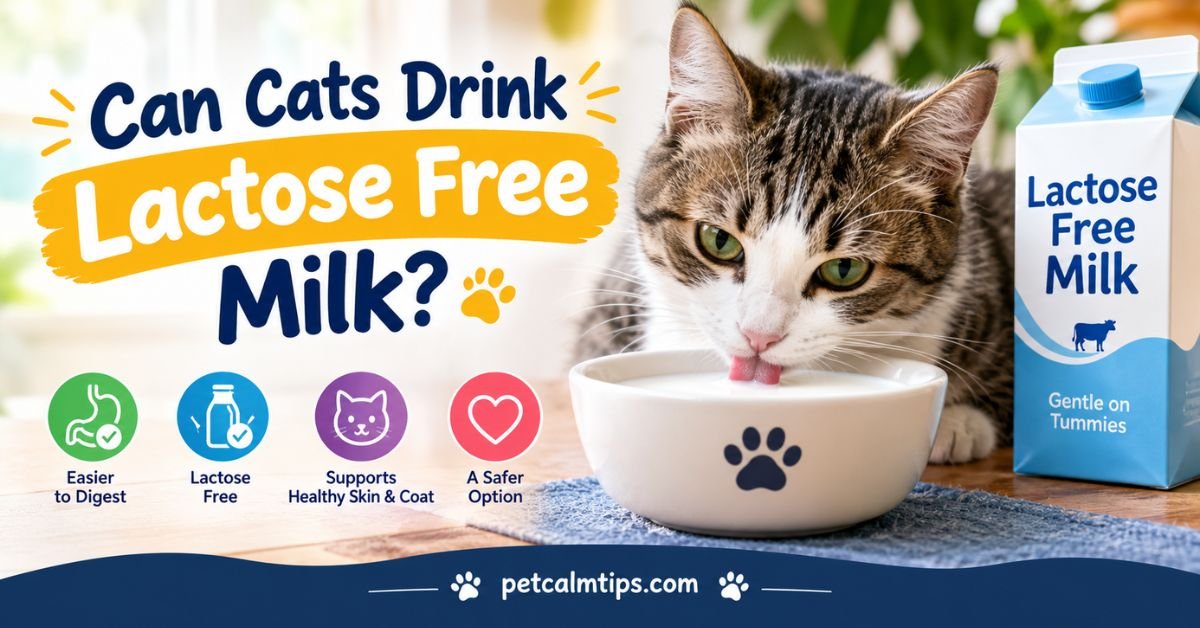
Can Cats Drink Lactose Free Milk? A Safe, Honest Answer
Quick Answer:
Yes, in small amounts. Lactose-free milk has the milk sugar broken down, so it’s gentler on most cats’ stomachs than regular milk. It still adds fat and calories, and it offers nothing a balanced cat food doesn’t already provide. Treat it as an occasional snack, never a drink replacement, and always keep fresh water available. Kittens and cats with health conditions need advice from your vet.
Table of Contents
- My Experience: Why Cats Love Milk and Why It Confuses Owners
- Is Lactose Free Milk Safe for Cats? 3 Reasons Vets See Daily
- Reason 1: Hidden Calories and Weight Gain
- Reason 2: Fat, Sugar, and a Sensitive Stomach
- Tonight’s Step-by-Step Plan: Offering Milk Safely (7 Steps)
- Common Mistakes Pet Owners Make With Cat Milk
- Long-Term Prevention Plan: Better Treats Than Milk
- When to Call Your Vet Immediately
- Conclusion: Lactose Free Milk Is a Rare Treat, Not a Need
- FAQs: Cats and Lactose Free Milk
My Experience: Why Cats Love Milk and Why It Confuses Owners
In my 12 years at a Texas shelter, I’ve seen the same scene again and again. A kind visitor sets down a saucer of milk, and the cat laps it up like a feast.
Cats love the smell and the fat. That doesn’t mean their bodies handle it well.
Kittens make lactase, the enzyme that digests lactose, while they nurse. After weaning, many cats make far less of it, so regular milk can ferment in the gut and cause gas, loose stools, or a rumbling stomach.
That’s the problem lactose-free milk tries to solve. The lactose is already split into simpler sugars, so most cats skip that particular upset.
The confusion comes from the old picture of a cat with a bowl of cream. Movies and cartoons made it look natural, so owners assume it must be fine. Lactose isn’t the only issue, though, and that’s where people get caught off guard.
Is Lactose Free Milk Safe for Cats? 3 Reasons Vets See Daily
Lactose-free milk is generally considered safe as a rare treat for healthy adult cats. The trouble starts when “rare” becomes “daily.” Here are the three problems that come up most:
- Hidden calories: Milk adds up quickly in a small body.
- Richness: Fat and sugar can still upset a sensitive stomach.
- Individual reactions: Every cat is different, and some react even to lactose-free milk.
That third one surprises people. Some cats do fine, while others get soft stool after a few tablespoons.
The only way to know is to start small and watch your cat closely. I’ll show you how in the step-by-step plan below.
Reason 1: Hidden Calories and Weight Gain
Lactose-free doesn’t mean low-calorie. It’s still milk, with fat, protein, and natural sugars. (Those sugars are pre-split, not removed.)
Most cats only need a small number of calories each day, so a few tablespoons can add up faster than you’d guess. That’s especially true for indoor cats, small cats, and seniors.
Here’s a pattern I watched many times: an owner offers a little extra here and there, and the extras quietly become a habit. A few months later, the cat is heavier, slower, and less keen to jump.
Extra weight can raise a cat’s risk of diabetes and joint trouble. Your vet can tell you what a healthy weight looks like for your cat, and a quick weigh-in at each visit helps you catch creeping gains early.
A common guideline is to keep treats to about 10% of daily calories. Milk counts as a treat, so if you pour some, trim a little from the next meal.
Reason 2: Fat, Sugar, and a Sensitive Stomach
Milk is rich. Even without lactose, a cat with a delicate digestive system can get loose stools, gas, or vomiting from the fat.
Cats with a history of pancreatitis, kidney disease, or diabetes need extra caution. Rich foods can make these conditions harder to manage, so ask your vet before offering any milk.
Skip flavored and plant-based versions too. Almond, oat, and soy drinks often contain sweeteners or additives your cat doesn’t need, and cats gain nothing from them.
If you’re unsure about an ingredient, bring the carton to your vet. A quick label check can save you a stressful night.
Cat-specific “milk” products sold in pet stores are designed with this in mind, but they’re still treats, not meals.
Tonight’s Step-by-Step Plan: Offering Milk Safely (7 Steps)
If you’d still like to share a little, here’s a calm, careful way to do it:
- Check your cat’s profile. Kittens, seniors, and cats with health conditions should skip this until your vet says it’s okay.
- Choose plain milk. Pick unflavored lactose-free cow’s milk or a milk made for cats.
- Start tiny. Offer one teaspoon as a test.
- Serve it fresh. Use room-temperature milk in a clean, shallow dish.
- Watch for 24 hours. Check stool, appetite, energy, and any vomiting or gas.
- Stay small. If all goes well, a spoonful or two once in a while is plenty.
- Balance the day. Count it as a treat, trim a little from meals if needed, and refill the water bowl.
If anything looks off at step 5, stop and don’t repeat it. Your cat is telling you milk isn’t a match.
6 Common Mistakes Pet Owners Make With Cat Milk
- Treating milk as a water substitute. Cats need clean water, and milk can’t replace it.
- Giving cow’s milk to kittens. Orphaned or young kittens need a kitten milk replacer, often called KMR, plus your vet’s guidance.
- Believing “lactose-free” means “free for all.” It only removes one problem, not the calories or fat.
- Offering milk during a tummy upset. If your cat already has diarrhea, milk makes things worse.
- Using flavored or sweetened milk. Plain is the only safe choice.
- Skipping the trial. Starting with a full bowl is the fastest way to a messy litter box.
Long-Term Prevention Plan: Better Treats Than Milk
The best fix is giving your cat something more useful. Cats are meat eaters, so protein-based treats suit them better than milk.
Tiny pieces of plain, cooked, boneless chicken or freeze-dried meat treats work well. A spoonful of wet food also feels special to a cat. You can read more in our guide to the best treats for indoor cats.
Hydration matters too. A water fountain or several bowls around the house can encourage more drinking, and our post on how much water a cat should drink covers the details.
Measure treats each day so they never creep past that 10% mark. A small treat jar with a daily portion keeps the whole household honest.
When to Call Your Vet Immediately
Everything above is general advice for healthy adult cats. The signs below are vet-needed situations, so don’t wait them out at home.
- Vomiting more than once, or diarrhea lasting longer than a day
- Blood in the stool or vomit
- Lethargy, hiding, or a swollen, painful belly
- Refusing food, or signs of dehydration like dry gums
- Any diarrhea in a kitten (they can dehydrate quickly)
- Itching, facial swelling, or trouble breathing (get emergency care right away)
Also call before offering milk if your cat has diabetes, kidney disease, or pancreatitis. This article can’t replace your vet’s advice for your own cat.
Conclusion
It’s natural to want to spoil your cat, and wanting to do it safely says a lot about you. So, can cats drink lactose free milk? For most healthy adult cats, yes, as a small, occasional treat.
It’s gentler than regular milk, but it still carries calories and fat, and your cat doesn’t need it to thrive. Fresh water and a balanced cat food do the real work.
Your next step is simple. Offer one teaspoon of plain lactose-free milk, watch for 24 hours, and let your cat’s body give you the answer.
You’re doing a great job asking before pouring.
Explore More Expert-Reviewed Pet Care Guides: Petcalmtips.com
FAQs
1: Is lactose free milk better than regular milk for cats?
Usually, yes. The lactose is already broken down, so fewer cats get gas or diarrhea. But it still has fat and calories, so it’s a treat rather than a meal. Some cats still react, so start with a teaspoon and watch closely.
2: How much lactose free milk can I give my cat?
Start with one teaspoon. If your cat does fine for a full day, a spoonful or two once in a while is enough. There’s no set amount that suits every cat, so ask your vet if your cat is small, older, or has health issues.
3: Can kittens drink lactose free milk?
No, kittens need a proper kitten milk replacer, often called KMR. Cow’s milk, even lactose-free, doesn’t match what a growing kitten needs. If you’ve found a young kitten or a kitten has diarrhea, call your vet quickly, because kittens can dehydrate fast.
4: What happens if my cat drinks too much lactose free milk?
You may see loose stool, gas, or a little vomiting, and these usually pass. Remove the milk and offer fresh water. If symptoms last more than a day, or your cat seems tired or in pain, call your vet.
5: Is there a milk made especially for cats?
Yes, many pet stores sell lactose-free cat milk. It’s designed with cats in mind, which can make it a bit better than a carton from your fridge. It’s still a treat, so check the label and keep portions small.
6: Can cats drink almond or oat milk instead?
It’s best to skip them. Plant-based milks often contain sweeteners, flavors, or additives your cat doesn’t need, and they offer no real benefit. If you want a treat, plain cooked chicken or a cat-specific product is a safer choice.
One Comment