
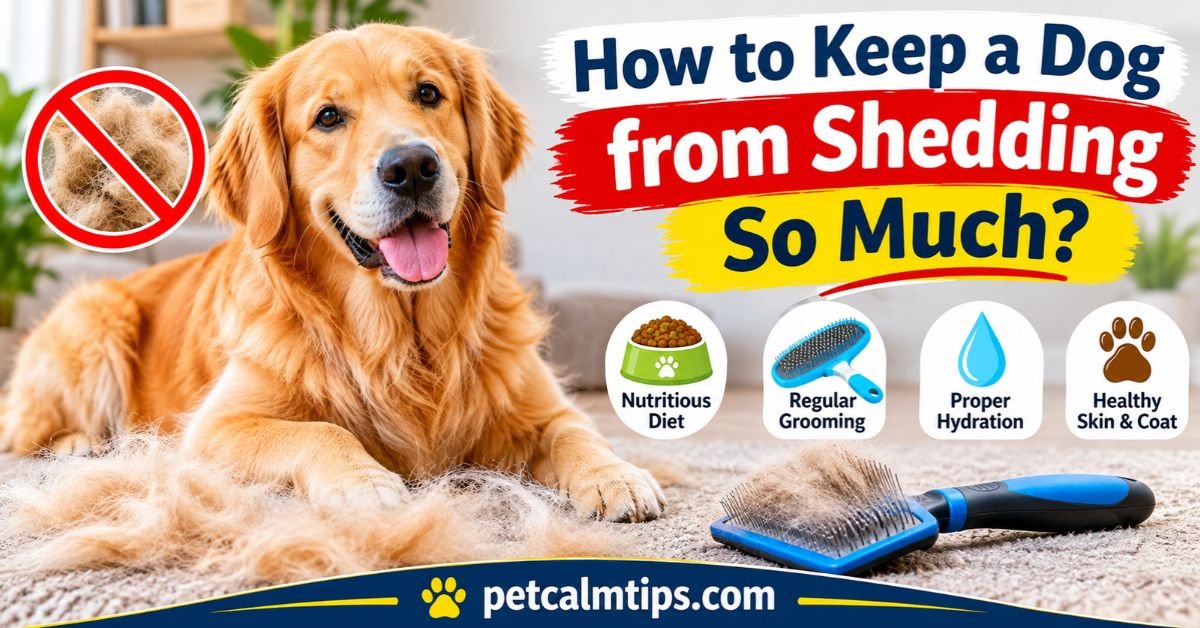
How to Keep a Dog From Shedding So Much: (What Really Works)
Quick Answer
You can’t stop shedding completely, but you can reduce loose hair with regular brushing, proper bathing, a complete diet, and year-round parasite prevention. Use the right brush for your dog’s coat type, and don’t shave double-coated breeds. If shedding is sudden, patchy, or comes with itching, redness, or skin changes, see your veterinarian, because an underlying medical issue may be the cause.
Why Dogs Shed and What’s Normal
Dog hair grows in cycles. Each hair grows, rests, and eventually falls out to make room for a new one. Shedding is simply the end of that cycle, and every dog with a hair coat does it to some degree.
How much is “normal” depends on several things:
- Breed and coat type. Double-coated breeds such as Labrador Retrievers, German Shepherds, Huskies, and Golden Retrievers have a dense undercoat beneath a protective outer coat. They shed year-round and “blow” their coats heavily once or twice a year.
- Season. Many dogs shed more in spring as they lose a winter coat, and again in fall as they prepare for colder weather. Indoor dogs exposed to artificial light and steady temperatures may shed more evenly across the year.
- Age and life stage. Puppies lose their soft puppy coat as the adult coat comes in. Pregnant and nursing females may also shed noticeably after giving birth.
Normal shedding means fur comes out evenly, the skin underneath looks healthy, and your dog isn’t developing thin or bare spots. Heavy but even seasonal shedding is usually just inconvenient. Patchy loss, scabs, or constant scratching is different.
5 Main Causes of Heavy Shedding
Knowing why your dog is shedding more than usual helps you choose the right fix.
1: Seasonal Coat Changes and Genetics
Some dogs are simply built to shed. Short-haired breeds like Beagles and Pugs can shed surprisingly heavily, and no grooming routine will turn a double-coated dog into a low-shedding one. Here, the goal is management, not elimination.
2: Diet and Nutrition
Skin and coat depend on protein, essential fatty acids, vitamins, and minerals. A diet lacking in these can lead to a dull coat, dry skin, and increased hair loss. A complete and balanced commercial dog food labeled for your dog’s life stage generally covers these needs. Some veterinarians recommend omega-3 fatty acid supplements for coat and skin health, but dosing depends on your dog, so ask your vet before adding any supplement.
3: Skin Allergies and Parasites
Fleas, mites, and allergies (to food, pollen, dust, or flea saliva) are common reasons dogs scratch, chew, and lose hair. Excess shedding paired with itching, redness, or hot spots deserves a veterinary exam rather than a home guess.
4: Stress and Anxiety
Stress can trigger temporary hair loss in dogs. A vet visit, a move, a new pet, or a change in routine may bring on a burst of shedding. If you suspect stress, our guide on calming an anxious dog may help (internal link suggestion).
5: Medical Conditions
Hormonal conditions such as hypothyroidism and Cushing’s disease, fungal or bacterial skin infections, and some medications can affect the coat. These typically come with other signs, such as lethargy, weight changes, a thin or brittle coat, recurring skin infections, or hair loss in symmetrical patterns. Only a veterinarian can diagnose them, usually through an exam and testing.
How to Reduce Dog Shedding: A Step-by-Step Plan
None of these steps will work for every dog, but together they make a real difference for most.
Step 1: Brush Consistently
Brushing removes loose hair before it lands on your floor. Many short-coated dogs do well with brushing once or twice a week. Double-coated and long-haired dogs often need it several times a week, and daily during heavy shedding seasons. Brush gently, in the direction of hair growth, and keep sessions pleasant with treats and praise.
Step 2: Use the Right Tool
A brush that works well for a Labrador may be wrong for a Cocker Spaniel. See the table below for coat-specific suggestions. Avoid pressing hard with any tool, because irritated skin can make shedding worse.
Step 3: Bathe Properly, but Not Constantly
A bath loosens dead hair so it washes away, and brushing a freshly dried coat removes even more. Use a shampoo made for dogs, since human products can disturb a dog’s skin balance. Many dogs do well with a bath every four to eight weeks, but skin conditions and activity level change that, so ask your groomer or vet. Over-bathing can dry out the skin.
Rinse completely, because leftover shampoo can irritate the skin. Dry thoroughly, especially the undercoat, to help prevent hot spots.
Step 4: Feed a Complete and Balanced Diet
Check that your dog’s food is labeled “complete and balanced” for their life stage. If your dog’s coat looks dull or flaky despite good food, talk with your vet before switching diets or adding supplements. Sudden food changes can cause stomach upset, so transition gradually over several days.
Step 5: Keep Your Dog Hydrated
Fresh water should always be available. Dry food contains little moisture, and a well-hydrated dog tends to have healthier skin.
Step 6: Stay on Top of Parasite Prevention
Fleas and mites cause itching, and itching leads to hair loss. Use a vet-recommended flea and tick preventive year-round, and check your dog’s coat during grooming for flea dirt (tiny black specks), redness, or bumps.
Step 7: Reduce Stress and Support Overall Health
Regular exercise, mental enrichment, and a predictable routine help keep stress-related shedding in check. Keep up with annual vet visits so health problems that affect the coat are caught early.
Best Grooming Tools by Coat Type
| Coat Type | Example Breeds | Helpful Tools |
|---|---|---|
| Short, smooth | Beagle, Boxer, Pug | Rubber curry brush, grooming mitt |
| Double coat | Labrador, Golden Retriever, German Shepherd, Husky | Undercoat rake, slicker brush |
| Long or silky | Collie, Cocker Spaniel | Pin brush, slicker brush, metal comb |
| Wiry | Terriers | Slicker brush, stripping comb (a groomer can help) |
Deshedding tools can remove a lot of undercoat, but using them too often or too aggressively can damage the coat and irritate the skin. Follow the manufacturer’s guidance, and if you’re unsure, ask a professional groomer to show you the technique.
Common Mistakes That Make Shedding Worse
1: Shaving a double-coated dog. It sounds logical, but the coat helps insulate against both heat and cold, and shaving doesn’t stop shedding. Hair can also grow back unevenly or with a different texture. Unless a veterinarian recommends shaving for a medical reason, trimming is generally safer than shaving.
2: Skipping brushing, then trying to catch up. Loose undercoat mats when it’s not removed. Short, regular sessions beat one long, stressful one.
3: Over-bathing. Frequent baths can dry out the skin and make a dog’s coat look worse.
4: Using human shampoo or conditioner. Dog skin has a different pH than human skin, and the wrong product can cause dryness and irritation.
5: Assuming it’s “just shedding.” If your dog is scratching, licking, or losing hair in patches, a medical cause may be involved. Guessing and trying supplements or home remedies can delay proper care.
6: Starting supplements without guidance. More isn’t always better, and the right product and amount depend on the dog.
When to Call Your Vet
Some shedding changes are worth a professional look. Schedule a veterinary appointment if you notice:
- Bald patches or thinning areas
- Persistent itching, scratching, licking, or chewing
- Red, flaky, scabby, greasy, or odorous skin
- Sudden increase in shedding with no seasonal explanation
- Shedding along with weight changes, low energy, or changes in appetite or thirst
- Visible fleas, ticks, or mites
- A dull, brittle coat that doesn’t improve with better care
Seek prompt veterinary attention if hair loss comes with open sores, swelling, signs of infection such as pus, severe discomfort, or if your dog seems seriously unwell. Your vet can examine the skin, check for parasites, and run tests to find the cause.
Long-Term Care and Managing the Fur That Remains
Even with great grooming, a shedding breed will always leave some hair behind. A few habits make life easier:
- Vacuum regularly with a model designed for pet hair, and use washable covers on furniture.
- Wash your dog’s bedding weekly or as needed.
- Keep lint rollers handy in the car and by the door.
- Groom outside when weather allows, so the hair doesn’t end up in your living room.
- Stay consistent. A short routine you’ll actually keep does more than an elaborate one you abandon.
Not every problem can be prevented, and some dogs will shed more than others no matter what you do. Realistic expectations help keep frustration down.
Conclusion
Learning how to keep a dog from shedding so much comes down to realistic goals. Shedding is natural, but regular brushing with the right tools, appropriate bathing, a balanced diet, hydration, and consistent parasite prevention can noticeably reduce the fur around your home. Avoid shaving double-coated dogs and skip unverified remedies.
Pay attention to changes. Patchy hair loss, itching, skin irritation, or sudden heavy shedding deserves a vet visit rather than more vacuuming. Your next step is simple: pick the right brush for your dog’s coat and commit to a short, calm grooming routine this week. Your dog will likely enjoy the attention, and your floors will thank you.
Explore More Expert-Reviewed Pet Care Guides: How to Calm a Dog for Grooming
Why Does My Dog Chew His Nails?
FAQs
1: Can you stop a dog from shedding completely?
No. Shedding is a normal part of the hair growth cycle, and all dogs with hair coats shed to some degree. You can reduce loose hair through grooming, good nutrition, and parasite control, but you can’t eliminate it. Some breeds shed much less than others, though no dog is truly “non-shedding.”
2: How often should I brush my dog to reduce shedding?
It depends on coat type. Short-haired dogs often do well with weekly brushing, while double-coated or long-haired breeds may need brushing several times a week or daily during heavy shedding seasons. Watch how much hair the brush collects and adjust. Gentle, consistent sessions work better than occasional marathon ones.
3: Does diet really affect how much a dog sheds?
It can. Skin and coat health depend on adequate protein, fatty acids, and other nutrients, so a poor diet may contribute to dryness and extra hair loss. A complete and balanced food suited to your dog’s life stage is the starting point. Ask your vet before adding supplements or changing food.
4: Should I shave my dog to stop shedding?
Generally not, especially for double-coated breeds. Shaving doesn’t stop shedding, and the coat helps regulate body temperature. It can also change how the coat grows back. If you’re considering a haircut, talk with a professional groomer or veterinarian about what suits your dog’s coat.
5: Why is my dog suddenly shedding so much?
Seasonal changes, stress, diet changes, parasites, allergies, or medical conditions can all play a role. If the increase lines up with spring or fall and your dog’s skin looks healthy, it’s often seasonal. If it comes with itching, bald patches, or other symptoms, have your vet check your dog.
6: How often can I bathe my dog to help with shedding?
Many dogs do well with a bath every four to eight weeks, though skin conditions and lifestyle can change that. Bathing loosens dead hair, but too-frequent baths can dry the skin. Use a dog-specific shampoo, rinse thoroughly, and ask your vet or groomer for a schedule suited to your dog.




One Comment