
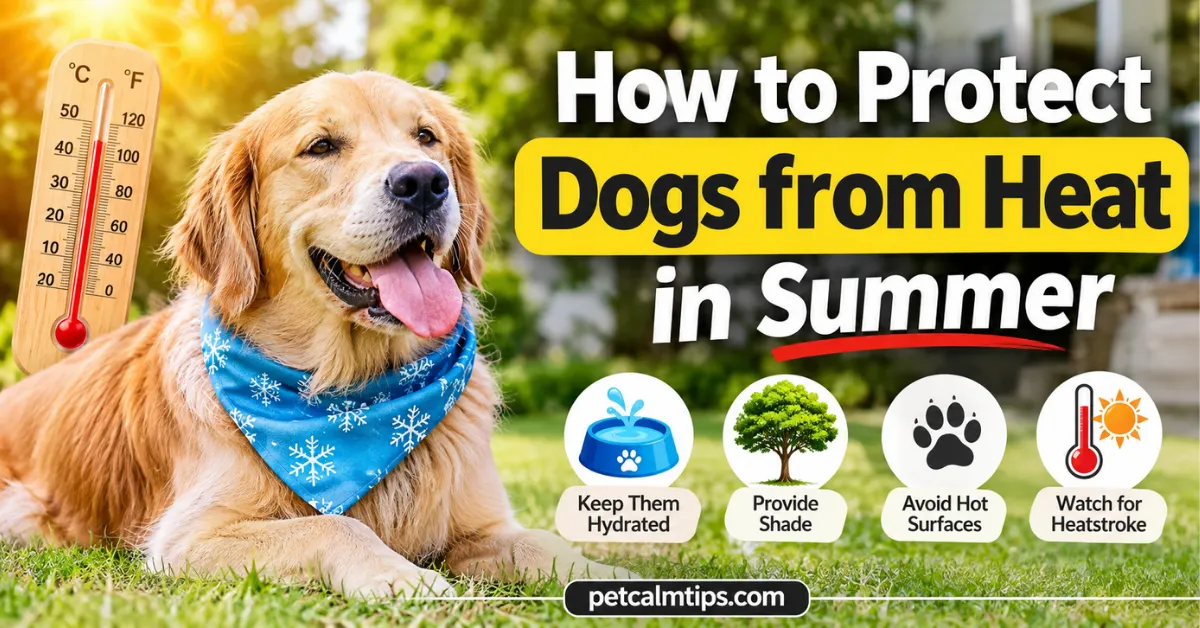
How to Protect Dogs From Heat in Summer: What Really Works
Quick Answer
To protect your dog from heat in summer, limit outdoor activity to cooler parts of the day, always provide shade and fresh water, and never leave your dog in a parked car. Test pavement with your hand before walks, and give extra care to puppies, seniors, overweight dogs, and flat-faced breeds. If your dog shows heavy panting, drooling, weakness, or collapse, start gentle cooling and contact a vet immediately.
Why Dogs Overheat So Easily
A dog’s normal body temperature runs roughly 101°F to 102.5°F. Dogs release heat mainly by panting, which moves moist air over the tongue and airways. They also lose a little heat through the pads of their paws and by widening blood vessels near the skin, but these routes contribute far less than sweating does for humans.
Panting works best when the air is dry and cooler than the dog’s body. Humidity weakens it, because moisture evaporates more slowly. That’s why a 85°F muggy afternoon can be harder on a dog than a drier day at a higher temperature.
When a dog can’t shed heat fast enough, body temperature climbs. Temperatures above about 104°F are a concern, and heatstroke, which can damage organs and become life-threatening, is generally associated with temperatures around 105°F to 106°F or higher. You can’t judge this by touch, so the practical goal is to prevent the situation entirely.
Which Dogs Are at Higher Risk
Any dog can overheat, but some are far more vulnerable:
- Flat-faced (brachycephalic) breeds such as Bulldogs, Pugs, Boxers, and Shih Tzus have shorter airways, which makes panting less efficient.
- Puppies and senior dogs regulate temperature less reliably.
- Overweight dogs carry extra insulation and work harder to breathe.
- Dogs with heart, lung, or airway conditions, including laryngeal paralysis, have less reserve.
- Thick-coated or dark-coated breeds absorb and hold more heat, especially in direct sun.
- Dogs not used to hot weather, including those recently moved from a cooler climate.
- High-energy dogs that will chase a ball until they drop, ignoring their own limits.
If your dog fits one of these categories, treat warm days more cautiously than you would for an average healthy adult dog. Ask your veterinarian what’s reasonable for your dog’s age, weight, and health.
Daily Habits That Keep Dogs Cooler
Shift Activity to Early Morning and Late Evening
The simplest protection is timing. Walk and play when the sun is low and pavement has had time to cool. On very hot days, swap long walks for short potty breaks and indoor enrichment such as puzzle feeders, scent games, or short training sessions.
Make Water Easy and Constant
Dogs need more water in hot weather. A common rule of thumb is about one ounce per pound of body weight daily, though needs vary with size, diet, and activity, so treat that as a starting point rather than a prescription. Practical habits help:
- Place several bowls around the house and yard.
- Refresh water often so it stays cool and clean.
- Carry a collapsible bowl and water on every outing.
- Add a few ice cubes to the bowl if your dog likes them.
If your dog suddenly drinks far more than usual, or refuses water altogether, mention it to your vet.
Rethink the Haircut
Many owners assume shaving a thick-coated dog makes summer easier. For double-coated breeds like Huskies, Golden Retrievers, and German Shepherds, the coat helps insulate against heat and protects skin from sunburn. Regular brushing to remove loose undercoat is usually better than shaving. If a dog’s coat is matted, or your groomer or vet recommends a trim, leave a protective length rather than going to bare skin.
Protect Skin From the Sun
Dogs with pale skin, thin coats, or pink noses can sunburn, especially on the nose, ears, and belly. Use only a sunscreen labeled safe for dogs. Human products may contain ingredients, such as zinc oxide, that are harmful if licked. Shade remains the best protection.
Keeping Your Dog Cool at Home
Indoors, air conditioning is the most reliable tool. If you don’t have it, close curtains on sunny windows, keep your dog in the coolest room, and offer a tile or concrete floor to lie on. Fans can make a room feel more comfortable to you, but because dogs rely on panting rather than sweating, a fan alone won’t cool a dog as well as it cools a person. Don’t count on one during a heat wave.
Cooling aids that many dogs enjoy include:
- Cooling mats that activate with pressure or are designed to stay cool without refrigeration.
- Damp towels for lying on, rewetted as they warm up.
- A shallow kiddie pool with a few inches of cool water, supervised.
- Frozen treats, such as plain frozen low-sodium broth cubes or dog-safe fruit pieces. Check that any ingredient is safe for dogs and skip anything containing xylitol, grapes, or raisins.
Outdoors, shade has to be real and lasting. A tree, covered patio, or shaded kennel works, but the sun moves, so check again through the day. A dog tied out or left in a fenced yard with no shelter can get into trouble quickly. On very hot days, the safest place for most dogs is indoors with you.
Plan for power outages, too. If the AC may go down during a heat wave, know where you could take your dog, such as a cooler friend’s home or a pet-friendly cooling spot.
Walks, Pavement, and Outdoor Adventures
Test the Ground First
Asphalt can get dramatically hotter than the air. On a sunny day in the mid-70s, it can reach temperatures high enough to burn paw pads. Place the back of your hand on the pavement for about five seconds. If it’s too hot for you to hold comfortably, it’s too hot for your dog. Walk on grass or dirt, stay in shade, or wait until evening.
Watch Your Dog, Not the Clock
Dogs, especially eager ones, often keep going past the point of safety. During warm weather:
- Keep walks shorter and slower than usual.
- Stop for water and shade breaks.
- Avoid intense exercise like running alongside a bike or long fetch sessions.
- Cut the outing short at the first sign of heavy panting that doesn’t ease with rest.
Hiking, Beaches, and Boating
Open trails and beaches offer little shade, and sand gets hot enough to burn paws. Bring plenty of water, offer breaks in the shade, and consider a canine life jacket on boats, since even strong swimmers tire. Don’t let dogs drink salt water or stagnant ponds, which can cause illness.
Cars, Travel, and Other Hidden Hazards
A parked car heats up far faster than most people think. On a warm day, the interior temperature can rise by roughly 20°F in about ten minutes, and cracking the windows doesn’t prevent it. Leaving a dog in a parked car, even briefly, is one of the leading causes of heat-related emergencies. Many US states also have laws addressing pets left in vehicles. If errands include stops where your dog can’t come inside, leave your dog at home.
When traveling with your dog, keep the AC running, offer water at stops, and never put a dog in an enclosed cargo area or truck bed without ventilation and safety.
Other hidden hazards include:
- Dark pavement and artificial turf, which hold heat.
- Muzzles, which can limit panting if not designed for it.
- Heavy exercise right after meals in hot weather.
- Humid days with a modest temperature, which can feel deceptively mild.
Signs of Heat Exhaustion and Heatstroke
Catching early signs gives you time to act. Watch for:
- Excessive or rapid panting that doesn’t settle
- Heavy drooling, thick saliva
- Bright red or very pale gums
- Restlessness, seeking shade, or lying down and refusing to move
- Weakness, stumbling, or wobbliness
- Vomiting or diarrhea
- Glazed eyes or confusion
- Collapse or seizures
Some of these signs also appear with other health problems, so you don’t have to be sure it’s heatstroke to act. If your dog has been in the heat and looks unwell, treat it seriously.
What to Do If Your Dog Is Overheating
Heatstroke is an emergency. Cooling begins at home, but it doesn’t replace veterinary care, since internal complications can develop even after a dog seems to recover.
- Move your dog out of the heat into shade or air conditioning right away.
- Offer small sips of cool water if your dog is alert and willing. Don’t force water.
- Cool gradually with room-temperature or cool water, soaking the belly, armpits, groin, and paws. Wet towels work, but replace them as they warm.
- Add airflow with a fan while the coat is wet.
- Call your vet or an emergency clinic immediately and tell them you’re on the way.
- Transport with the AC on, continuing to cool your dog gently.
Avoid ice-cold water or packing your dog in ice. Extreme cold can constrict blood vessels near the skin and slow heat loss from the core. Stop active cooling once your dog’s breathing starts to settle, as vets generally advise, so you don’t overcool.
Even a dog that perks up afterward should be examined. Heatstroke can affect the kidneys, liver, blood clotting, and brain, and signs of damage don’t always show right away.
8 Common Mistakes Owners Make
- Assuming a dog will tell you when it’s too much. Many dogs push through discomfort to keep playing.
- Relying on fur color or breed reputation. A “cold-weather” breed can still overheat, but so can a short-coated one.
- Leaving a dog outside “just for a while” on a hot day. Shade shifts, water spills, and temperatures climb.
- Skipping the pavement test. What feels fine in shoes can burn bare paws.
- Using ice water in an emergency. Gentle, steady cooling is safer.
- Shaving a double coat to the skin. It can remove natural protection.
- Overlooking humidity. The number on the thermometer is only part of the picture.
- Waiting too long to call the vet. When in doubt, call.
- Explore More Expert-Reviewed Pet Care Guides: How to Clean a Dog’s Teeth at Home
- Why Does My Dog Push Me With His Nose?
- Why Is My Dog Lethargic and Not Eating?
- My Dog Is Scared of Other Dogs
- Why Does My Dog Kick After Peeing?
Conclusion
Learning how to protect dogs from heat in summer comes down to a handful of reliable habits: exercise in cooler hours, keep fresh water and real shade available, never leave a dog in a parked car, and test the ground before every walk. Take extra care with puppies, seniors, overweight dogs, and flat-faced breeds, and learn the early signs of overheating so you can act quickly. If your dog shows trouble, cool gently and head to a vet without delay. A great first step today: check where your dog spends the hottest part of the day and make sure there’s shade, water, and a cooler fallback indoors.
Frequently Asked Questions
1: What temperature is too hot for dogs?
There’s no single number, because humidity, breed, age, coat, and fitness all matter. Many dogs begin to struggle once temperatures reach the 80s, and flat-faced or older dogs may have trouble sooner. Use your dog’s behavior as a guide, and take extra care on humid days.
2: Can dogs get sunburned?
Yes. Dogs with light skin, thin or short coats, or pink noses are most at risk, particularly on the nose, ears, and belly. Provide shade, and use only dog-specific sunscreen recommended by your vet, since some human products can be harmful if ingested.
3: How can I tell if the pavement is too hot for my dog’s paws?
Press the back of your hand on the surface for about five seconds. If you can’t hold it there comfortably, it’s too hot for paws. Choose grass, shade, or cooler times of day, and check paws for redness, blisters, or limping afterward.
4: Is it okay to give my dog ice cubes?
Many dogs enjoy ice cubes in small amounts, and they can encourage drinking. Offer them in moderation, avoid giving them to dogs prone to dental problems, and watch for choking risk in small dogs. For emergency cooling, though, use cool water rather than ice.
5: Should I shave my dog in summer?
For most double-coated breeds, shaving isn’t recommended, since the coat helps regulate temperature and protects the skin. Regular brushing to remove loose undercoat is usually a better choice. If your dog is matted or has a medical need, ask your groomer or vet what trim length is appropriate.
6: Do fans and cooling mats really work for dogs?
They can help but shouldn’t be your only protection. Cooling mats give dogs a comfortable place to rest, and fans improve airflow, but neither replaces air conditioning, shade, and fresh water during a heat wave. In an emergency, they’re not a substitute for veterinary care.






One Comment