
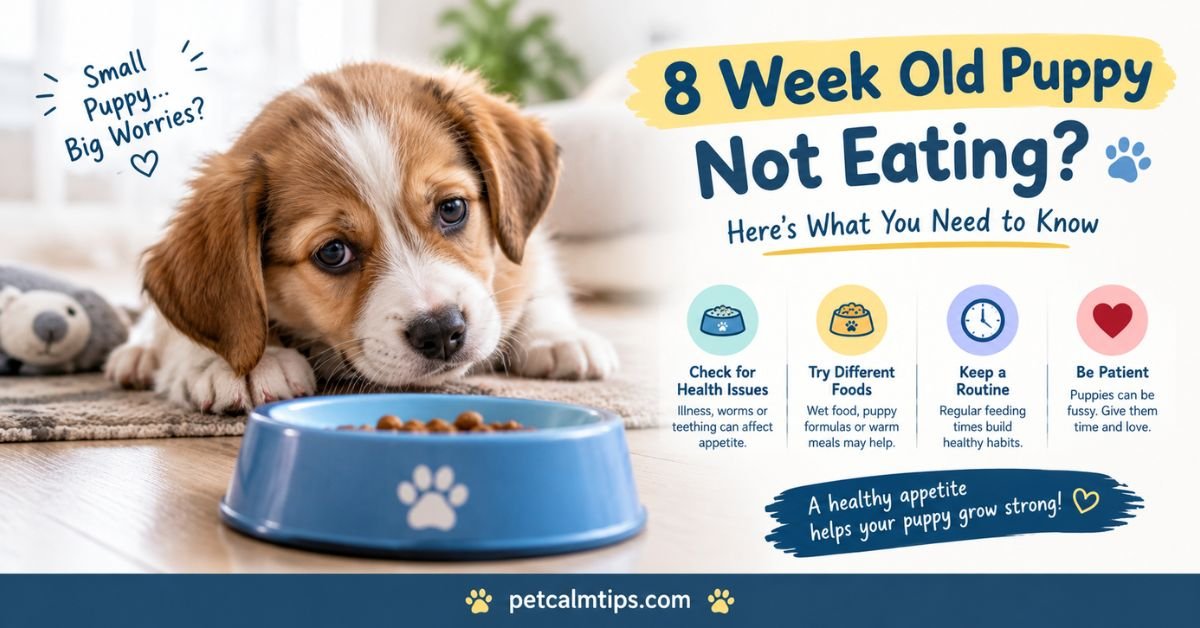
8 Week Old Puppy Not Eating? Causes & What To Do Today
Quick Answer
8 week old puppy not eating is most often caused by the stress of moving to a new home, mouth discomfort from teething, or a sudden food switch. Try warming and moistening the food, keeping meals calm and regular, and removing extra treats. Call your vet the same day if your puppy is lethargic, vomiting, has diarrhea, or skips meals for more than 12 hours (sooner for toy breeds).
Table of Contents
- Why Does an 8 Week Old Puppy Stop Eating?
- Cause 1: Stress From the New Home
- Cause 2: Teething and Mouth Discomfort
- Cause 3: Illness, Worms and Parvovirus
- What You Can Do At Home Today: 7 Step Plan
- Common Mistakes Puppy Owners Make
- When to Call Your Vet Immediately
- conclusion
- FAQs
Why Does an 8 Week Old Puppy Stop Eating?
At eight weeks, your puppy has just left its mother and littermates. Everything is new: smells, sounds, floors, people.
That’s a lot for a tiny brain. Appetite is often the first thing to pause.
A puppy this age also has a very small stomach and almost no fat reserves. (That’s why a skipped meal is a bigger deal for a puppy than for an adult dog.)
Most causes fall into three groups:
- Emotional: Stress, fear, loneliness, a noisy house.
- Physical comfort: Teething, sore gums, food that’s too hard or too cold.
- Medical: Intestinal parasites, infection, parvovirus, or other illness.
The first group is by far the most common, and the third is the one we must never miss. If your puppy still plays, wags and explores between meals, that’s a reassuring sign. If your puppy is quiet, floppy or hiding, treat it as more urgent.
Also think about what changed in the last 48 hours. A new bowl, a different brand of puppy food, a car ride, or a vaccination can each dull appetite for a day.
Cause 1: Stress From the New Home
Stress is the number one reason I see in newly adopted puppies. Your puppy may be missing its littermates, and the house probably smells like nothing familiar.
A stressed puppy often sniffs the food, walks away, then drinks water. That’s a good clue.
Here’s what usually helps:
- Give your puppy one quiet, small space, like a playpen or crate with a blanket.
- Keep the same food the breeder or shelter used, at least for the first week.
- Feed in the same spot at the same times every day.
- Sit nearby, calmly, without hovering or coaxing too hard.
Don’t pass the puppy around to guests during the first days. It feels loving, but it adds to the overload.
Most stress-related appetite loss improves within 24 to 48 hours as the puppy settles. If your puppy eats a little, even a few mouthfuls, and then gradually eats more each meal, you’re heading the right way.
If the refusal lasts beyond that window, don’t keep waiting and hoping. It’s time to look at other causes.
Cause 2: Teething and Mouth Discomfort
Puppies start losing baby teeth at around three to four months, but sore gums, mouth sores and dental issues can still show up earlier. Hard dry kibble can simply hurt.
Watch how your puppy eats. Does it pick up kibble, drop it, and whine? Does it chew on one side?
Signs of mouth discomfort include:
- Dropping food while chewing
- Pawing at the mouth
- Drooling more than usual
- Bad breath or red, swollen gums
Often the fix is simple. Soften the food with warm water for 10 to 15 minutes until it’s a soft mush. The warmth also boosts the smell, which tempts picky eaters.
You can also offer canned puppy food of the same brand, mixed in a spoonful at a time.
Kibble size matters too, especially for toy breeds. Some pieces are too big for tiny mouths, so check the label for a small-breed puppy formula.
If you see a broken tooth, a swollen face, bleeding, or your puppy refuses even soft food, don’t wait. A foreign object stuck in the mouth or a sore throat can also look like a “picky eater.”
Cause 3: Illness, Worms and Parvovirus
This is the cause nobody wants to read about, but you should know it.
Intestinal worms, coccidia and giardia are common in young puppies and can cause a poor appetite, a pot belly, or loose stool. They’re treatable, and your vet can run a simple stool test.
Parvovirus is the serious one. It’s most dangerous in puppies who aren’t fully vaccinated, which describes most 8 week olds.
Typical warning signs include:
- Sudden loss of appetite with extreme tiredness
- Repeated vomiting
- Watery or bloody diarrhea with a very strong smell
- Fever or a tucked, painful belly
A puppy who refuses food and seems weak or sick needs a vet today, not tomorrow. Early treatment improves the outlook a great deal, but I can’t promise outcomes, and neither can anyone online.
Small breeds also face a risk of low blood sugar (hypoglycemia) when they skip meals. Signs include wobbliness, weakness, glassy eyes or shaking. This is an emergency.
What You Can Do At Home Today: 7 Step Plan
If your puppy is bright, active and drinking water, try this plan.
- Check the basics. Is your puppy alert, playful, and peeing normally? Note stool and any vomiting.
- Keep the same food. Don’t switch brands. Sudden changes upset tiny stomachs.
- Warm and moisten it. Add warm (not hot) water and let it soften for 10 minutes.
- Offer small meals. Feed three to four times a day, about 15 to 20 minutes each, then pick up the bowl.
- Make mealtime calm. Quiet room, no other pets, no loud TV.
- Hold the extras. Skip treats, table scraps and chews so hunger can do its job.
- Track and decide. Write down what and when your puppy eats. If there’s no improvement by the next day, call your vet.
For toy breeds, don’t wait that long. Many vets advise calling if a tiny puppy misses even a couple of meals in a row.
Ask your vet before adding anything like chicken, rice or supplements. A small amount of plain cooked chicken mixed in is something many vets approve as a short-term tempter, but confirm first for your puppy.
6 Common Mistakes Puppy Owners Make
Worried owners do loving things that backfire. Here are the ones I’ve seen most.
- Switching foods repeatedly. Each new bowl teaches the puppy to hold out for something better and can cause diarrhea.
- Overfeeding treats. A puppy full of biscuits won’t want dinner.
- Forcing food. Pushing the bowl or handfeeding aggressively can create a food aversion.
- Waiting too long. “He’ll eat when he’s hungry” is true for adult dogs, not for an 8 week old, especially a toy breed.
- Giving human medicine. Never give ibuprofen, acetaminophen or other human drugs.
- Skipping the stool sample. Worms are easy to treat but invisible to the eye.
Another common one is leaving food out all day. It goes stale, loses smell, and your puppy loses the routine that signals mealtime.
(I once watched a family try six different foods in one weekend. The puppy had worms, and none of the foods would have helped.)
Be gentle with yourself too. You’re learning, and caring enough to search for answers is already a good sign.
When to Call Your Vet Immediately
General advice only goes so far. Some situations need a professional right away.
Call your vet or an emergency clinic now if your puppy:
- Hasn’t eaten for 12 hours or more (sooner for toy breeds)
- Vomits more than once, or has diarrhea, especially bloody
- Is very lethargic, limp or hard to wake
- Has pale gums, shaking, seizures, or wobbly walking
- Has a swollen belly or cries when touched
- Hasn’t had any vaccines and shows any illness signs
- Might have eaten something toxic or a foreign object
| Situation | What it may mean | Action |
|---|---|---|
| Skipped one meal, playful | Stress or settling in | Home plan, monitor |
| Missed 2+ meals, normal energy | Possible discomfort or worms | Call vet within 24 hours |
| Not eating plus vomiting or diarrhea | Possible infection or parvo | Vet immediately |
| Weak, shaky, toy breed | Possible low blood sugar | Emergency vet now |
If you’re unsure, call anyway. Vet staff would much rather take a “false alarm” call than see a puppy too late.
Conclusion
An 8 week old puppy not eating is scary, but most cases come from stress, teething discomfort or a food change, and they improve with calm routines and warm, softened meals. The key is watching your puppy’s energy. A bright, playful puppy gives you more time. A weak, vomiting or shaky puppy does not.
Your clear next step: tonight, offer a small warm, moistened meal in a quiet spot, and write down what happens. If your puppy refuses again or shows any warning sign, call your vet in the morning, or right away for toy breeds. You’re doing a good job, and your puppy is lucky to have you.
Explore More Expert-Reviewed Pet Care Guides: How to Calm Anxious Dog During Fireworks
Why Does My Dog Lick His Paws at Night?
FAQs
1: How long can an 8 week old puppy go without eating?
Generally no more than about 12 hours, and less for toy breeds, who can develop low blood sugar quickly. If your puppy skips two meals in a row, call your vet. Don’t wait for it to “get hungry,” because young puppies have very small energy reserves.
2: Is it normal for a new puppy not to eat the first day?
Yes, it can be. Moving homes is stressful, and many puppies eat very little the first day. Offer small, calm meals and keep the same food. If appetite hasn’t improved after 24 hours, or your puppy seems unwell, contact your vet.
3: Why is my 8 week old puppy drinking water but not eating?
Drinking is a good sign that your puppy isn’t completely shut down, and it often points to stress or sore gums. Try moistening food with warm water. If drinking is excessive, or vomiting or diarrhea appears, call your vet promptly.
4: What can I feed an 8 week old puppy that won’t eat?
Start by warming the same puppy food with a little water. You can mix in some canned puppy food of the same brand. Ask your vet before adding human foods, since some are unsafe and a sudden change can upset the stomach.
5: Should I worry if my puppy eats but then throws up?
Yes, call your vet. One small episode after gulping food may be minor, but repeated vomiting with poor appetite can signal worms, infection or parvovirus, and puppies dehydrate quickly. Don’t try home remedies first with an unvaccinated puppy.
6: Can teething cause an 8 week old puppy to stop eating?
It can cause some mouth soreness, although major teething comes a bit later. Soft, moistened food usually helps. If you see swollen gums, bleeding, a broken tooth or constant drooling, have your vet check the mouth.


One Comment