
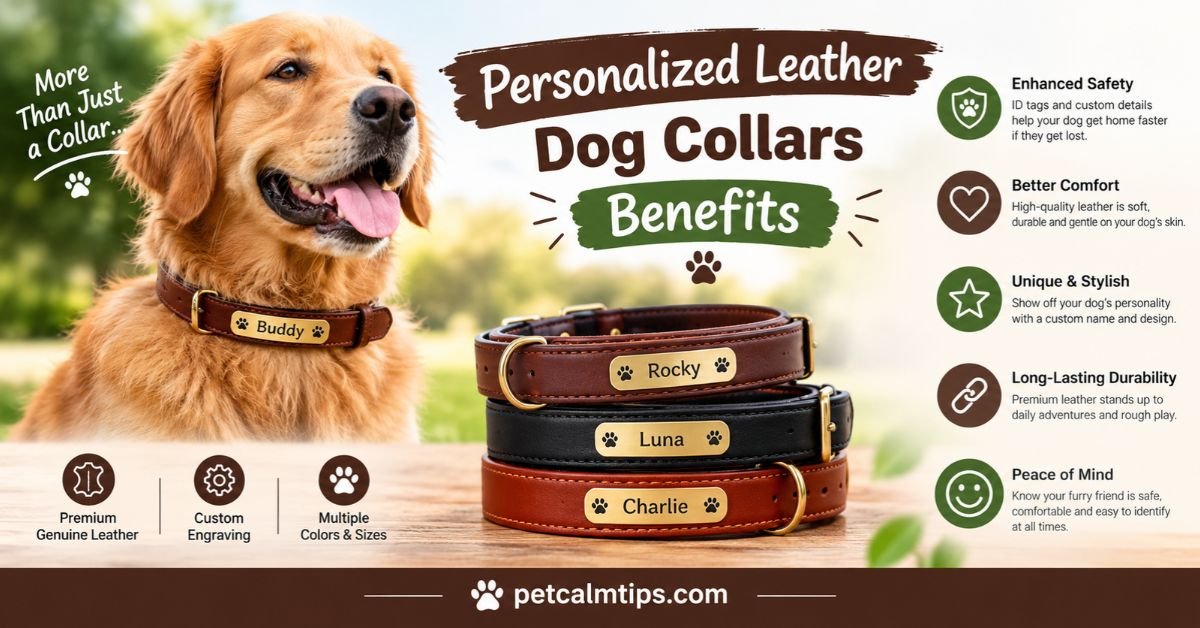
Personalized Leather Dog Collars Benefits: 7 Reasons to Buy
Quick Answer
The main benefits are permanent, readable ID that helps lost dogs get home faster, softer wear than many stiff synthetic straps, long-term durability with basic care, and a custom fit. They aren’t ideal for every dog. Heavy swimmers, dogs with skin sensitivities, and fast-growing puppies may do better with another material. Fit and upkeep matter more than the label.
Table of Contents
- Why Do Owners Choose Personalized Leather Collars?
- Benefit 1: Permanent ID That Brings Dogs Home
- Benefit 2: Comfort, Durability, and Skin-Friendly Wear
- Your 7-Step Plan to Choose and Fit One Today
- Common Mistakes Dog Owners Make
- When to Call Your Vet Immediately
- Conclusion
- FAQs
Why Do Owners Choose Personalized Leather Collars?
Most owners feel torn. You want something safe, but you also want something that doesn’t look like every other collar at the park.
That’s the real appeal. Leather checks three boxes at once. It’s practical, it’s personal, and it ages well.
The three reasons owners tell me they switch:
- Identification. Name and phone number are stitched, stamped, or engraved right into the collar, so there’s no dangling tag to jingle or fall off.
- Comfort. Good leather softens with wear and molds slightly to your dog’s neck.
- Longevity. A well-made collar can outlast several cheap nylon ones, which saves money over time.
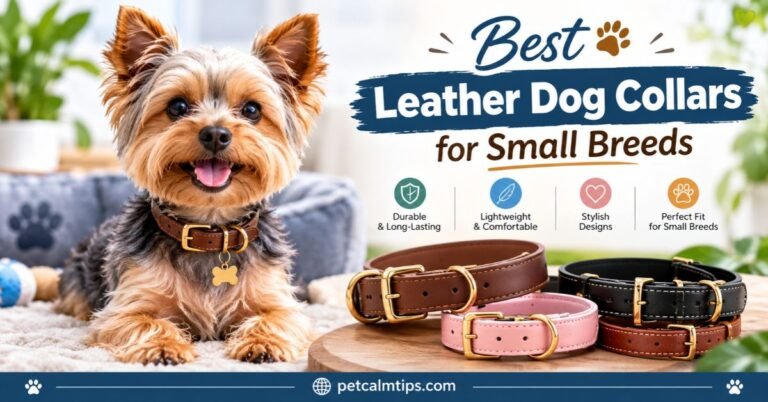
I once worked with a retriever mix named Biscuit who chewed through three nylon collars in one summer. His new owner tried a thick, stitched leather collar with his name and number on a brass plate. It wasn’t chew-proof, but it held up far longer and carried his contact info the whole time.
Here’s the catch. “Personalized” only helps if the details are accurate and readable. A phone number you changed two years ago is worse than no number at all.
Think of the collar as a tool, not a fashion statement. The style is a bonus. The safety benefit is the reason to buy.
Benefit 1: Permanent ID That Brings Dogs Home
Identification is the single biggest practical win. Microchips are essential, but they need a scanner and a registry that’s up to date. A collar tells a stranger who to call in seconds.
Why personalization beats a hanging tag:
- Tags can snag, bend, or slip off the ring.
- Metal tags clink, and some dogs get anxious about the noise.
- Embossed, engraved, or plate-riveted leather stays attached to the collar itself.
Most people who find a loose dog want to help. They just need an easy way to do it, and a readable phone number is the easiest way there is.
What to put on it:
| Include | Skip |
|---|---|
| Dog’s name (optional) | Your full home address |
| Two phone numbers if space allows | Medical details that clutter the text |
| “Microchipped” note | Long messages |
A quick note on privacy. Some owners prefer a phone number only, and that’s perfectly reasonable. Your name isn’t required for a stranger to reach you.
Remember that engraving wears down. Check the lettering every few months. If it’s fading, get it re-stamped or replaced. A collar nobody can read is just a nice belt.
Benefit 2: Comfort, Durability, and Skin-Friendly Wear
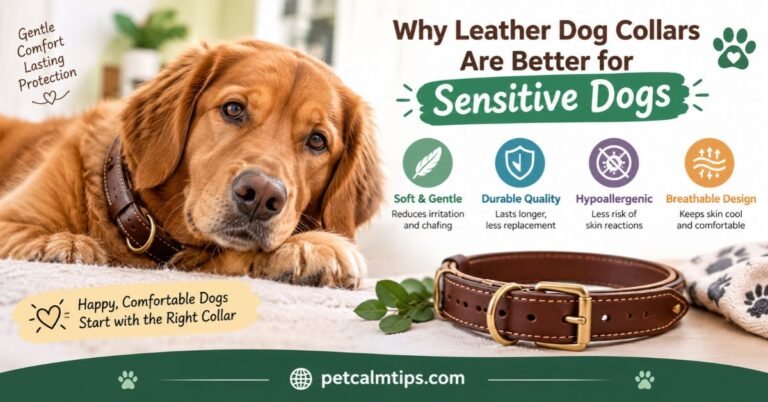
Comfort is where leather often wins, though not always. Quality matters more than material.
Where leather tends to shine:
- Softening over time. Full-grain leather breaks in and becomes more flexible.
- Less rubbing. Smooth, rolled, or padded edges can reduce friction on short coats.
- Strength. Stitched leather resists fraying better than many thin webbing straps.
- No synthetic odor build-up when it’s cared for properly.
Dogs with thin or short coats, like greyhounds and pit mixes, often rub bare patches with rough collar edges. A smooth rolled leather style can help. Always check the underside, since cheap “genuine leather” is sometimes stiff and cracks quickly.
Where leather struggles:
- Water. Swimmers and dogs who love creeks need frequent drying and conditioning.
- Puppies. They outgrow collars fast, so a premium one isn’t worth it yet.
- Dogs prone to hot spots or allergies. Dyes and tanning chemicals can irritate some skin.
If your dog has itchy skin, go for undyed or vegetable-tanned leather and watch the neck for redness during the first week.
Care is simple. Wipe it with a damp cloth, let it air dry away from heaters, and condition it every few months. Don’t soak it in the washing machine. That’s the fastest way to ruin it.
Your 7-Step Plan to Choose and Fit One Today
Don’t worry, this takes about ten minutes. Here’s what I’d do.
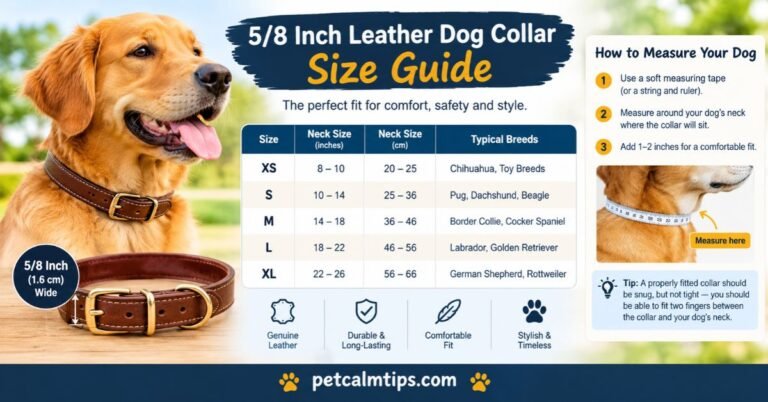
- Measure the neck. Use a soft tape around the middle of the neck where the collar naturally sits.
- Add room. You want a two-finger gap between collar and neck. Snug, never tight.
- Pick the width. Small dogs do well with narrower collars. Large breeds need wider ones to spread pressure.
- Check the leather. Look for full-grain or top-grain, smooth edges, and solid stitching.
- Choose strong hardware. Look for welded rings and sturdy buckles, not thin pressed metal.
- Personalize it. Add a working phone number and double-check the spelling before you order.
- Break it in. Let your dog wear it for short periods first, then check the neck daily for a week.
A quick test helps. Once it’s on, slide two fingers beneath it and gently tug. It shouldn’t slip over the ears or choke the throat.
Also keep a backup. Take a clear photo of your dog and the collar. If your dog ever goes missing, you’ll have a ready flyer.
And please, don’t skip the microchip. A collar can slip off. A chip can’t.
7 Common Mistakes Dog Owners Make
I’ve made some of these myself with my own dogs, so no judgment here.
- Buying for looks only. A gorgeous collar with weak hardware is a risk.
- Choosing the wrong size. Too loose means an escape artist. Too tight means rubbing and discomfort.
- Forgetting to update the phone number. After a move or a new number, redo it right away.
- Leaving it on wet for days. Damp leather cracks, smells, and can irritate skin.
- Ignoring growth. Puppies need weekly fit checks.
- Using a collar for hard pulling. If your dog pulls, a well-fitted harness is usually kinder to the neck.
- Never lifting it to look underneath. Hidden redness or hair loss gets missed.
One more thing. A leather collar isn’t a training fix. It won’t stop barking, pulling, or chewing.
When to Call Your Vet Immediately
Most collar concerns are minor and fixable at home. A few signs mean you shouldn’t wait.
Call your vet right away if you notice:
- Open sores, bleeding, or a wound under the collar
- A collar embedded in the skin (common in fast-growing puppies)
- Swelling around the neck or face
- Coughing, gagging, or noisy breathing after wearing it
- Sudden, severe itching or hives after a new collar
General advice covers things like re-fitting, switching materials, and cleaning. Vet-needed situations involve broken skin, swelling, or breathing changes. When in doubt, remove the collar gently and call your clinic. This article isn’t a substitute for professional care.
Conclusion
If you’re still on the fence, here’s the short version. The strongest personalized leather dog collars benefits are clear ID, comfortable wear, and long-lasting quality.
They shine for adult dogs who live mostly on dry land. They’re less ideal for swimmers, puppies, or dogs with sensitive skin.
Your next step is simple. Measure your dog’s neck tonight, then choose a soft, well-stitched collar with a phone number you’ll always answer.
You’re already doing right by your dog just by asking these questions. Take it one small step at a time.
Explore More Expert-Reviewed Pet Care Guides: 5/8 Inch Leather Dog Collar Size Guide
Best Probiotics for Dog Gut Health
FAQs
1. Are leather collars comfortable for dogs?
Yes, quality leather usually softens and fits well over time. Smooth edges and the right width matter most. A stiff or poorly finished collar can still rub, so check your dog’s neck regularly during the first week of wear.
2. How long does a personalized leather dog collar last?
With regular wiping and conditioning, a well-made collar can last for years. Lifespan depends on your dog’s size, activity, and exposure to water. Heavy swimmers and chewers will wear one out faster.
3. Can I put my dog’s name and phone number on the collar?
Yes. Most owners add a phone number, and many add the dog’s name too. You don’t need your home address. Make sure the details are accurate and readable, and update them whenever your number changes.
4. Are leather collars safe for puppies?
They can be, but puppies outgrow collars quickly, so a premium one often isn’t practical. Choose a lightweight, adjustable style and check the fit weekly. Look for signs of tightness before they become a problem.
5. How do I clean a leather dog collar?
Wipe it with a damp cloth and mild soap, then air dry it away from direct heat. Condition it every few months. Avoid soaking it or tossing it in the washing machine, since that cracks the leather.
6. Do leather collars cause allergies?
Rarely, but it can happen. Dyes and tanning agents sometimes irritate sensitive skin. If you see redness, itching, or hair loss under the collar, remove it and talk to your vet. Undyed leather can be a gentler option.
One Comment