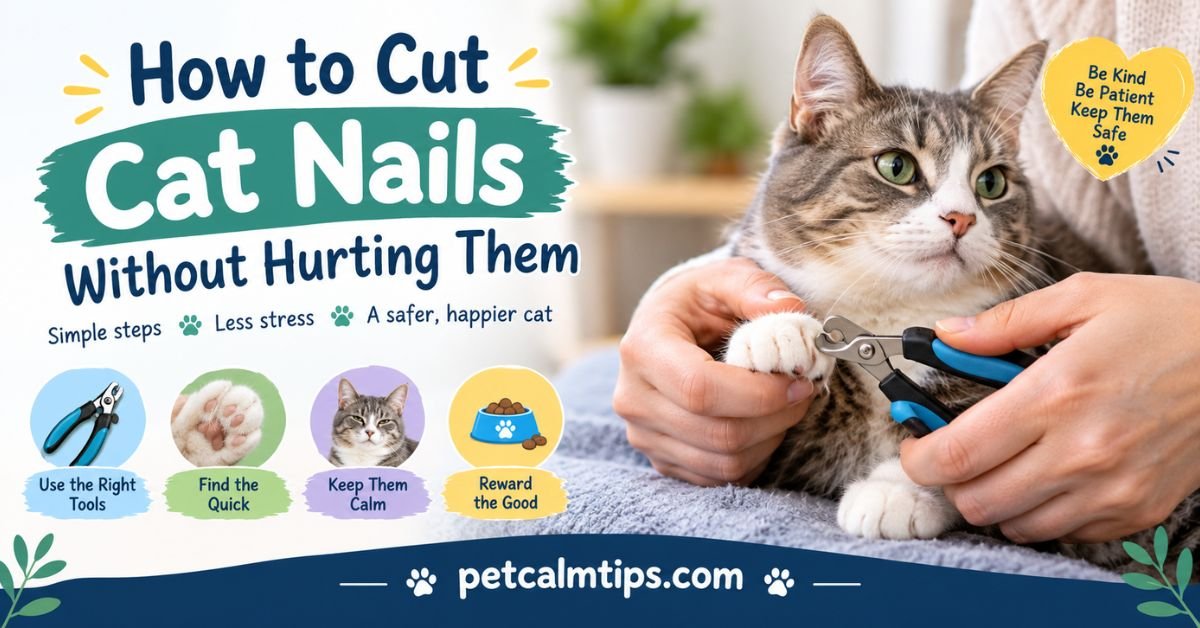
How to Cut Cat Nails Without Hurting Them: Calm 7-Step Guide
Quick Answer
Trim only the sharp, clear tip of each claw, staying well away from the pink quick inside. Use sharp, cat-specific clippers, work in bright light, and hold your cat gently in your lap. Cut one or two paws per session and offer treats between snips. Stop if your cat gets stressed. Short, calm sessions every two to four weeks work better than one big battle.
Table of Contents
- Why Do Cats Hate Nail Trims?
- Understanding the Quick
- Reading Your Cat’s Body Language
- Cutting Cat Nails at Home: 7-Step Plan
- What NOT to Do When Trimming Cat Claws
- When to Call Your Vet Immediately
- Conclusion
- FAQs
Why Do Cats Hate Nail Trims? (And Is It Normal?)
Yes, it’s normal. Cats aren’t built to enjoy having their paws handled. Paws are packed with nerve endings, and a restrained cat can feel trapped.
Most cats resist for three main reasons:
- Sensitive paws: Pressing a toe to extend the claw feels strange and exposing.
- A past bad experience: One clipped quick, and many cats remember it for months.
- Feeling restrained: Scruffing or wrapping tightly triggers a fight-or-flight response.
Indoor cats especially need regular trims because they don’t wear their claws down outdoors. Overgrown nails snag on carpet, damage furniture, and can even curl into the paw pad, which is painful. Most adult cats do well with a trim every two to four weeks, though every cat is different.
Here’s the good news. Cats learn fast when trims are short and rewarding. You aren’t fighting your cat’s nature, you’re teaching a new routine. And if your cat is a rescue or a senior, you’ll simply go slower, which is perfectly fine.
Understanding the Quick So You Never Cut Too Far
The quick is the living part of the claw. It contains a blood vessel and nerve, which is why cutting into it hurts and bleeds.
On light-colored claws, the quick looks like a pink triangle inside the nail. Aim to cut about 2 millimeters beyond it. That’s less than you’d think.
Dark or black claws are trickier because you can’t see the quick. Here’s what I teach new owners:
- Trim only the very tip of the curved hook.
- Cut tiny slivers rather than one big snip.
- Look at the freshly cut surface. If the center looks darker or moist, stop.
- Shine a small flashlight behind the claw to help you see the quick.
(Honestly, even experienced vet techs go cautious on black claws.)
Always keep styptic powder nearby. It’s sold at pet stores and helps stop minor bleeding fast. Cornstarch can work in a pinch, but styptic powder is more reliable. Knowing you’re prepared will keep your hands steady, and your cat can feel that calm.
Reading Your Cat’s Body Language Before and During the Trim
A relaxed cat is a safe cat to trim. A tense one isn’t.
Watch for warning signs: flattened ears, a lashing tail, dilated pupils, growling, or skin rippling along the back. If you see these, stop and try later. Pushing through teaches your cat that trims are scary, and the next one gets harder.
Timing matters. Pick a moment when your cat is sleepy, like after a meal or play session. Many cats are easiest to trim while drowsy in your lap.
Get your cat used to the process first:
- Gently touch and hold your cat’s paws for a few seconds each day.
- Let your cat sniff the clippers without using them.
- Reward with a treat after every little step.
Do this for about a week before your first real trim. It might feel slow, but it saves you weeks of stress later.
Also choose the right tools. Scissor-style or guillotine-style cat nail clippers both work. Replace them when they dull, because dull blades crush and split the claw, which hurts.
How to Cut Cat Nails at Home: A 7-Step Plan
Here’s the exact routine I’d follow tonight.
- Gather supplies. Sharp cat clippers, styptic powder, a towel, and high-value treats.
- Pick a calm spot. Use a quiet room with bright light, and sit with your cat in your lap, facing away from you.
- Warm up with paw massage. Stroke the paw for a few seconds and give a treat.
- Extend one claw. Gently press the top and bottom of the toe pad between your thumb and finger until the claw shows.
- Find the quick. Locate the pink area, or on dark claws, plan to take only the tip.
- Snip the tip. Cut just the sharp point at a slight angle in one smooth motion, then reward right away.
- Stop early. Do one or two paws, then end on a positive note. Finish the rest tomorrow.
You don’t need to do all eighteen claws in one sitting. Some cats only tolerate three or four nails at a time, and that’s okay.
If your cat panics, wrap them loosely in a towel with one paw out, a method sometimes called a “kitty burrito.” Keep it gentle, never tight. If you’re nervous, ask a friend to help by petting and treating while you trim.
What NOT to Do When Trimming Cat Claws
Most trimming accidents come from a few avoidable errors. I’ve seen every one of these at the shelter.
- Cutting too close to the quick. It’s the number one cause of pain and bleeding. When in doubt, cut less.
- Using human nail clippers. They’re the wrong shape and can crack or splinter cat claws.
- Using dull clippers. Crushing the nail causes pain even without touching the quick.
- Scruffing or pinning your cat down. Forceful restraint creates fear that lasts.
- Trimming when you’re rushed or frustrated. Cats read your tension instantly.
- Skipping the rewards. Treats aren’t bribery, they’re how your cat learns trims are safe.
- Punishing or yelling. It only makes your cat dread the next session.
- Waiting too long between trims. Overgrown claws get thicker quicks, making the next cut harder.
And please don’t ever consider declawing as a “solution.” It’s a surgical amputation of the last bone of each toe, and many veterinary organizations strongly discourage it. Regular trims, scratching posts, and patience solve the problem safely.
When to Call Your Vet Immediately
Most trims go fine. If you nick the quick, stay calm. Apply styptic powder with gentle pressure for a minute or two, and bleeding usually stops quickly. That’s general home care.
But some situations need a professional:
- Bleeding that doesn’t stop after about five to ten minutes of steady pressure
- A torn or broken claw, especially if it’s hanging or bleeding heavily
- Swelling, redness, pus, or a bad smell around a claw
- Limping or constant licking at one paw after a trim
- A nail that has grown into the paw pad
- A cat so fearful or aggressive that you can’t handle the paws safely
If bleeding is heavy or your cat seems weak, call your vet or an emergency clinic right away.
There’s no shame in handing this job over. Vets and groomers trim nails quickly and are often happy to show you the technique. Many clinics offer quick nail-trim visits for a small fee. Asking for a demonstration is one of the best ways to build your confidence.
Conclusion
Trimming your cat’s claws doesn’t have to be scary for either of you. Stay away from the pink quick, snip only the sharp tip, and keep sessions short and rewarding. Sharp clippers, good light, and a relaxed cat make all the difference.
Remember that small mistakes happen, and a nicked quick is usually minor with styptic powder on hand. Learning how to cut cat nails without hurting them is really about patience, not perfect technique.
Your next step is simple: tonight, just touch your cat’s paws and offer a treat. That’s it. You’re already on the right path, and your cat is lucky to have someone this caring.
Explore More Expert-Reviewed Pet Care Guides: How to Train Dog to Not Bark at Strangers
Why Does My Dog Lick His Paws at Night?
FAQs
1: How often should I trim my cat’s nails?
Most adult cats need a trim every two to four weeks. Indoor cats usually need it more often because they don’t wear claws down naturally. Check weekly for sharp tips, and trim when they start catching on fabric.
2: Can I use human nail clippers on my cat?
It’s best not to. Human clippers are shaped for flat nails and can crush or split a curved cat claw. Cat-specific scissor or guillotine clippers give a cleaner cut with less pain and are inexpensive.
3: What if I cut the quick by accident?
Stay calm. Press styptic powder onto the nail tip with gentle pressure for a minute or two. Most minor bleeding stops quickly. Give your cat a treat and some quiet time. Call your vet if bleeding continues beyond several minutes.
4: How do I trim a cat’s nails if they hate it?
Go slowly. Spend a week just handling paws and offering treats, then trim one claw at a time. Pick sleepy moments, keep sessions under a few minutes, and never force it. If your cat remains very stressed, ask your vet or a groomer for help.
5: Do indoor cats really need their nails trimmed?
Yes. Indoor cats don’t climb rough surfaces or scratch outdoors as much, so their claws grow longer and sharper. Regular trims protect your furniture, your skin, and your cat, since overgrown nails can snag or curl into the paw pad.
6: Is it okay to trim a kitten’s nails?
Absolutely, and starting early helps. Kittens have tiny, sharp claws, and getting them used to paw handling now makes adult trims much easier. Keep sessions very short, use treats, and take only the tiniest tip.