
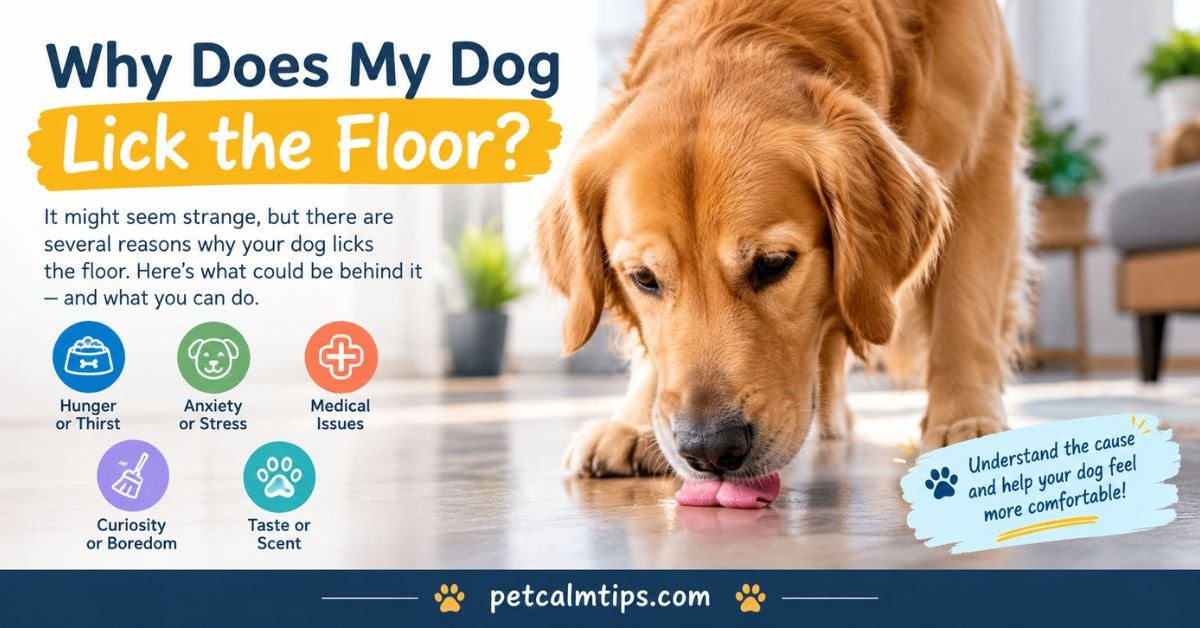
Why Does My Dog Lick the Floor? 7 Causes and Safe Fixes
Quick Answer
Why does my dog lick the floor? Dogs usually lick floors because of food smells, boredom, anxiety, or an upset stomach. Occasional licking near the kitchen is normally harmless. Frequent, intense, or sudden licking can point to nausea, pain, or a compulsive habit, and it’s worth a vet visit. Watching when it happens helps you find the cause.
Table of Contents
- Why Does My Dog Lick the Floor? 7 Common Reasons
- Cause 1: Nausea and Stomach Trouble
- Cause 2: Boredom, Anxiety and Compulsive Licking
- Cause 3: Food Smells, Crumbs and Hunger
- What to Do at Home Today: 7-Step Plan
- Common Mistakes Owners Make When Dogs Lick Floors
- When to Call Your Vet Immediately
- Conclusion
- FAQs
Why Does My Dog Lick the Floor? 7 Common Reasons
A dog’s nose and mouth are its main tools for understanding the world. Floors hold a surprising amount of information: spilled food, pet scents, salt from shoes, and old residue.
Licking is how your dog “reads” it.
Here are the seven reasons I see most often:
- Leftover food smells. Even a cleaned floor can hold traces your dog still detects.
- Nausea or an upset stomach. Licking surfaces can go along with queasiness.
- Boredom. A under-stimulated dog invents its own entertainment.
- Anxiety or stress. Licking can become a self-soothing habit.
- Compulsive behavior. What starts as a quirk can turn into a repeating loop.
- Mineral or salt residue. Some dogs seek out salty or tangy tastes.
- Medical or pain-related causes. Dental pain, digestive disease, or cognitive changes in senior dogs can all play a part.
In my 12 years at a Texas shelter, I’ve seen every one of these. The dog who licked the kitchen floor every night after dinner usually just smelled lunch. The dog who licked the same corner for an hour straight needed a closer look.
(Timing is your best clue, so start noticing it today.)
Ask yourself three quick questions. When does it happen? How long does it last? Can you easily distract your dog from it?
If a treat or a toy breaks the spell right away, you’re probably looking at curiosity or habit. If your dog ignores you and keeps going, something deeper may be driving it.
This is why one dog’s “weird quirk” is another dog’s early warning. The same behavior can have very different roots, and the pattern around it tells the story.
Cause 1: Nausea and Stomach Trouble
This is the cause owners most often miss. A dog that feels sick to its stomach may lick floors, walls, carpets, or furniture.
Veterinary research has linked excessive surface licking with digestive problems in some dogs. It doesn’t prove a stomach issue every time. It does mean persistent licking deserves attention.
Look for the companion signs. Does your dog also gulp, swallow repeatedly, smack its lips, or drool more than usual? Does it eat grass, skip meals, or seem restless after eating?
Those clues point toward the gut.
Nausea licking often looks different from food-seeking. A hungry dog sniffs along a path and searches. A nauseated dog tends to lick repeatedly in one area, sometimes with a glazed, distant look.
I once cared for a lab mix who licked the concrete floor of her kennel every morning. We assumed it was a habit. A vet check showed she had a sensitive stomach, and a diet change nearly ended the behavior within weeks.
That story is one example, not a promise. Every dog is different.
Common stomach-related triggers include:
- Food intolerance or sudden diet changes
- Eating something they shouldn’t have
- Acid irritation on an empty stomach
- Inflammatory bowel conditions
- Parasites
A simple log helps your vet enormously. Write down the time, what your dog ate, and what the licking looked like.
Please don’t try to treat suspected nausea with human medicine. Many common human drugs are dangerous for dogs. Let your vet guide any treatment.
If the licking comes with vomiting, diarrhea, or a tight, painful belly, treat it as a vet-needed situation rather than a wait-and-see one. We’ll cover the exact warning signs below.
Cause 2: Boredom, Anxiety and Compulsive Licking
Not every floor licker is sick. Plenty are simply bored, stressed, or stuck in a habit.
Dogs need both physical exercise and mental work. A dog who gets a quick walk and then spends eight hours alone can turn to repetitive behaviors for relief.
Licking releases a little comfort. That’s why it can become self-rewarding.
Anxiety works the same way. Separation stress, loud noises, a new baby, or a move can all trigger it.
You might notice the licking starts when you grab your keys or when thunder rolls in. That timing is a strong hint.
Compulsive licking is the next step. It’s repetitive, hard to interrupt, and often happens in the same spot or at the same time each day.
Here’s the key difference:
- Boredom licking stops when you offer something engaging.
- Anxiety licking rises and falls with stress triggers.
- Compulsive licking continues despite distractions and can look almost trance-like.
Don’t punish any of these. Scolding adds stress, and stress feeds the habit.
Instead, build a richer day. Try food puzzles, sniff walks where your dog leads the way, short training games, and chew toys that last.
A frozen lick mat can redirect the urge safely. Your dog still gets to lick, just on something made for it.
Some dogs also need support for the anxiety itself. A veterinary behaviorist or a certified trainer can build a plan that fits your dog’s triggers.
Sometimes your vet may discuss medication for severe anxiety or compulsion. That’s a conversation for your vet, not a decision to make alone.
I’ve watched shelter dogs calm down within days once they got predictable routines and more sniffing time. Structure is powerful.
Give it two to four weeks of consistent enrichment before judging whether it’s working, and keep your log going so you can see progress honestly.
Cause 3: Food Smells, Crumbs and Hunger
Sometimes the answer really is that simple. Your dog smells food.
A dog’s sense of smell is vastly stronger than ours. Grease from cooking, a dropped crumb, or the faint trace of a spill can remain long after you’ve wiped up.
So when your dog licks the floor near the stove or under the table, it’s often just doing cleanup duty.
Hunger plays a role too. A dog on too little food, or one fed on a schedule that leaves long gaps, may scavenge more.
Puppies and young dogs also explore with their mouths. Floor licking at that age is often curiosity.
Look at your routine. Does the licking peak right before or after meals? Does it happen mostly in the kitchen or dining area?
If yes, food is likely the driver.
Other floor flavors can attract dogs too:
- Salt from shoes or winter walkways
- Spilled drinks and sugary residue
- Pet urine traces
- Residue from cleaning products
That last one matters. Some floor cleaners and chemicals are harmful if licked, and the fumes can irritate a dog’s nose and mouth.
Check labels and choose products that are labeled safe for pets. Let floors dry fully before your dog walks across them.
Never let your dog lick up anything you suspect is toxic, such as antifreeze, pest control products, or strong chemicals. If you think your dog has swallowed one, call your vet or an animal poison hotline right away.
(Antifreeze is especially dangerous and can taste sweet to dogs, so wipe up garage spills quickly.)
For ordinary food-smell licking, the fix is easy. Clean spills promptly, feed on a regular schedule, and talk to your vet if your dog seems constantly hungry.
Constant hunger can sometimes signal a medical issue, so it’s worth a mention at your next checkup.
What to Do at Home Today: 7-Step Plan
Feeling worried? Here’s a practical plan you can start tonight.
Step 1: Watch and write it down. Note when your dog licks, for how long, and what happened just before. Even three days of notes help.
Step 2: Check the floor. Look for spills, residue, or recently used cleaners. Rinse the area with plain water and dry it.
Step 3: Look for stomach signs. Watch for gulping, lip smacking, drooling, grass eating, or changes in appetite and stool.
Step 4: Interrupt gently. Call your dog away in a cheerful voice and offer a toy or a short training game. No scolding.
Step 5: Add enrichment. Offer a puzzle feeder, a lick mat, or a sniff walk. Aim to meet both physical and mental needs.
Step 6: Keep a steady routine. Feed at consistent times, and make walks and play predictable. Dogs relax when they know what’s coming.
Step 7: Book a vet visit if it continues. If the licking lasts more than a few days, grows intense, or comes with other symptoms, schedule an exam and bring your notes.
Here’s a quick pattern guide to help with Step 1:
| What you notice | Likely direction |
|---|---|
| Licks near kitchen, around meals | Food smells |
| Licks one spot, can’t be distracted | Possible compulsion or nausea |
| Licks when left alone | Anxiety or boredom |
| Licks plus gulping or drooling | Possible stomach upset |
| Sudden new licking in a senior dog | Needs a vet check |
A small tip: take a short phone video of the licking. Vets find it incredibly useful, especially if the behavior doesn’t happen in the exam room.
Stay calm and consistent. Most dogs improve once the cause is found and their needs are met.
Common Mistakes Owners Make When Dogs Lick Floors
Good owners make these mistakes all the time. I made a few myself early on.
Scolding or punishing. It feels natural to yell. But punishment raises stress, and stress often increases the behavior.
Assuming it’s “just a habit.” Many floor lickers are quietly nauseated. Ignoring persistent licking can delay care.
Using strong cleaners and letting the dog near them. Chemical residue can irritate the mouth and stomach. Always rinse and dry.
Skipping the timeline. Without notes, it’s hard to see patterns. Vets can do much more with “it happens at 9 p.m. after dinner” than with “he licks a lot.”
Giving human medicine. Antacids, pain relievers, and anti-nausea products meant for people can be unsafe for dogs. Ask your vet first.
Changing too much at once. New food, new toys, and a new schedule all in one day makes it impossible to tell what helped.
Waiting too long with senior dogs. New repetitive licking in an older dog can sometimes link to pain or cognitive changes. Don’t just wait it out.
Over-relying on distractions. Redirecting is helpful, but if you never find the cause, the licking usually returns.
Here’s a simple do-and-don’t list:
- Do stay calm and keep notes.
- Do offer safe alternatives like lick mats.
- Don’t punish.
- Don’t self-medicate your dog.
- Don’t ignore it when it’s intense or new.
Think of it this way. Floor licking is a message, not a misbehavior.
Your job is to figure out what the message says. Once you do, solving it becomes much easier.
If you’ve already made a few of these mistakes, don’t beat yourself up. Dogs are forgiving, and the best time to adjust is the moment you notice.
When to Call Your Vet Immediately
Everything above is general advice. This section is different. These are situations where you shouldn’t wait.
Call your vet right away, or go to an emergency clinic, if floor licking comes with any of these signs:
- Repeated vomiting or retching without producing anything
- A swollen, hard, or painful belly
- Blood in vomit or stool
- Weakness, collapse, or trouble standing
- Pale gums
- Seizures, tremors, or stumbling
- Heavy drooling combined with distress
- Known or suspected contact with a toxin, such as antifreeze, rodent bait, or cleaning chemicals
Don’t wait if you suspect your dog swallowed something harmful. Time matters. Call your vet or an animal poison control service immediately.
Book a prompt (not emergency) appointment if you notice:
- Licking that has lasted more than a few days
- Licking that’s intense, hard to interrupt, or happening many times daily
- Weight loss or appetite changes
- Ongoing diarrhea or soft stool
- Bad breath, pawing at the mouth, or reluctance to chew, which can point to dental pain
- New behavior in a senior dog, such as confusion, restlessness at night, or repetitive licking
Your vet may suggest a physical exam, a dental check, bloodwork, stool testing, or further digestive workup. That’s normal, and it helps narrow the cause.
Here’s what to bring: your notes, a short video, a list of foods and treats, and any cleaning products you use. (Photos of ingredient labels are great.)
I’ve seen owners hesitate because they felt silly calling about “just licking.” Please don’t. Vets would much rather check a harmless case than miss a sick dog.
You know your dog best. If your gut says something is wrong, trust it and make the call.
Conclusion
If you’ve been asking why does my dog lick the floor, the answer is usually a mix of smell, boredom, stress, or a bit of stomach upset. Most cases are harmless and improve with better routines, enrichment, and a cleaner, safer floor.
The key is paying attention. Notice when it happens, how long it lasts, and what else is going on.
Your one clear next step is simple: start a three-day log of the licking today. Bring it to your vet if the behavior continues or worries you.
You’re not a bad owner for wondering about this. You’re a caring one, and your dog is lucky to have you watching out for them.
Explore More Expert-Reviewed Pet Care Guides: How to Stop a Dog From Jumping Up on Guests
Dog Vomiting Yellow Foam Treatment at Home
Why Is My Dog Panting for No Reason at Night?
Why Does My Dog Lick His Paws at Night?
How to Calm Anxious Dog During Fireworks
Why Does My Dog Follow Me to Bathroom?
How to Stop Dog From Barking at Mailman
FAQs
1: Is it normal for a dog to lick the floor?
Yes, occasional licking is normal, especially near the kitchen where food smells linger. Dogs explore with their tongues, so brief licking usually isn’t a concern. If it becomes frequent, intense, or hard to interrupt, it’s worth tracking and mentioning to your vet.
2: Why does my dog lick the floor at night?
Night licking often connects to a few things: an empty stomach, restlessness, or anxiety when the house gets quiet. Some dogs feel mild nausea when their stomach is empty for long stretches. Try noting the timing and ask your vet whether a small evening snack or schedule change makes sense.
3: Can licking the floor make my dog sick?
It can. Floors may carry bacteria, cleaning chemical residue, or toxins like antifreeze. Most clean indoor floors pose little risk, but dogs shouldn’t lick areas treated with harsh products or garage spills. If you suspect your dog licked something harmful, call your vet or a poison hotline right away.
4: Why does my dog lick the floor and carpet so much?
Heavy licking of floors and carpet can signal nausea, anxiety, boredom, or a compulsive habit. Persistent surface licking has been linked with digestive issues in some dogs. If it’s frequent or your dog is hard to distract, schedule an exam so your vet can rule out medical causes.
5: How do I stop my dog from licking the floor?
First find the cause, then address it. Offer lick mats, puzzle feeders, and more exercise, and calmly redirect instead of scolding. Clean spills and rinse floor cleaners thoroughly. If the habit continues or seems compulsive, ask your vet or a veterinary behaviorist for help.
6: Should I worry if my senior dog suddenly starts licking the floor?
A sudden change in an older dog deserves attention. It can be linked to pain, digestive trouble, or age-related cognitive changes. It isn’t always serious, but it’s best to book a vet visit rather than guess. Share when it started and any other changes you’ve noticed, like sleep or appetite shifts.






5 Comments