
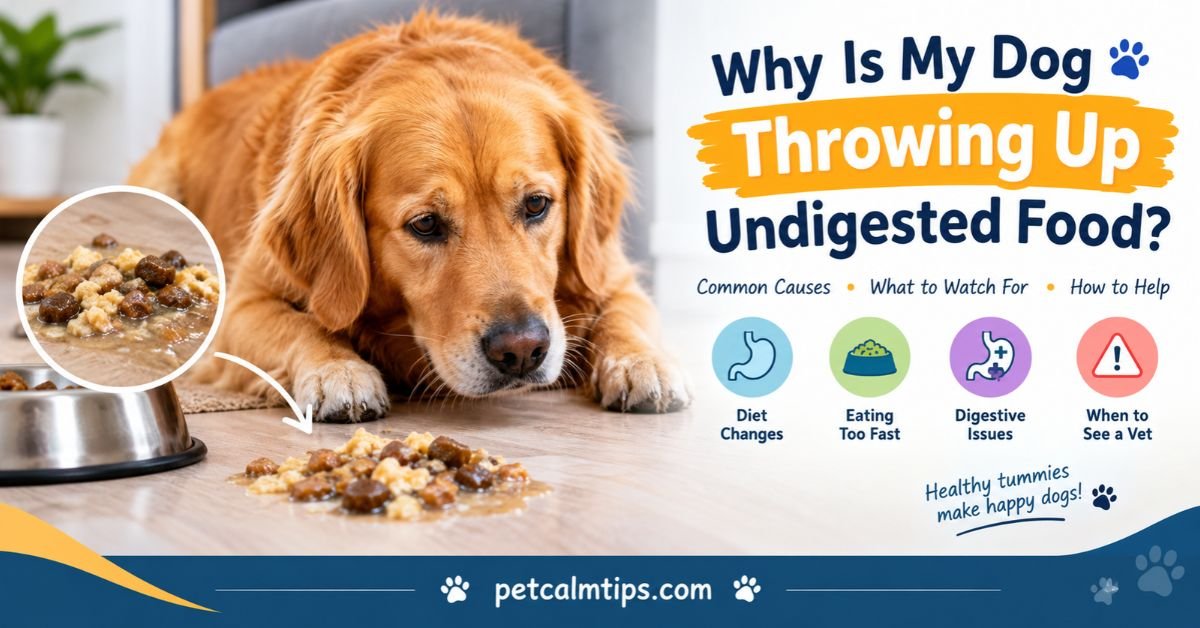
Why Is My Dog Throwing Up Undigested Food? Causes & Fixes
Quick Answer
Why is my dog throwing up undigested food? Usually because the food never reached the stomach or didn’t stay there. Common causes are eating too fast, gulping air, stress, or exercising after a meal. Less often, an esophagus problem, food intolerance, or blockage is behind it. One isolated episode in a bright, hungry dog is rarely an emergency. Repeated episodes need a vet.
Table of Contents
- Quick Answer
- Why Does a Dog Throw Up Undigested Food?
- Cause 1: Eating Too Fast
- Cause 2: Stress, Exercise, and Food Triggers
- Cause 3: Esophagus and Stomach Problems
- What You Can Do at Home Today: 7-Step Plan
- Common Mistakes Pet Owners Make
- When to Call Your Vet Immediately
- Conclusion
- FAQs
Why Does a Dog Throw Up Undigested Food?
Here’s the detail most articles skip. Vets separate regurgitation from vomiting, and the difference matters.
Regurgitation is passive. Food slides back up from the esophagus, often within minutes of eating. There’s no heaving or drooling beforehand, and the food often looks tube-shaped and covered in slime.
Vomiting is active. You’ll see drooling, lip-licking, and belly contractions first. The material is usually partly digested and may include yellow bile or foam.
So what does timing tell you?
- Within minutes of eating: Often regurgitation. Think speed, stress, or the esophagus.
- Several hours after eating: More likely true vomiting. The stomach isn’t emptying properly.
- Food from yesterday’s meal: A red flag. Call your vet.
(A quick photo of the mess helps your vet far more than a description does.)
In my 12 years at a Texas shelter, I’ve seen hundreds of dogs bring up their breakfast within minutes of gulping it down. Most just needed a new bowl and a calmer routine.
If you’ve seen this once, watch closely. If it keeps happening, read the causes below.
Cause 1: Eating Too Fast
This is the most common culprit by far.
Dogs that inhale their food swallow a lot of air. The esophagus fills up, the stomach gets overloaded, and the meal comes straight back. It’s most common in dogs that compete with other pets, rescues who learned to guard food, and enthusiastic puppies.
Signs it’s speed:
- The bowl is empty in under a minute.
- Food comes up within ten minutes.
- Your dog acts normal afterward and may try to eat it again.
Fixes that work:
- A slow-feeder bowl or puzzle mat
- A muffin tin with kibble spread across the cups
- Smaller meals three times a day instead of one big one
- Feeding competing pets in separate rooms
Don’t use a tennis ball in the bowl for large dogs. It’s a choking risk.
Most dogs improve within a week or two of changing how they eat.
Cause 2: Stress, Exercise, and Food Triggers
Sometimes the problem isn’t how fast your dog eats but what’s happening around the meal.
Stress and excitement. A new home, a houseguest, thunderstorms, or a noisy kitchen can upset digestion. Nervous dogs often gulp, which adds to the problem.
Exercise after meals. A hard run or wrestling session on a full stomach can push food back up. Wait an hour or so after eating before vigorous play.
Food changes. Switching brands overnight is a classic trigger. Dogs also react to new treats, table scraps, or a fat-heavy diet. Food intolerances and allergies can cause repeated stomach upset, though they usually come with itching or loose stool.
Grass and bits of other things. Dogs sometimes eat grass, then bring it up with the meal. It’s usually harmless if it happens occasionally.
If your dog’s food was changed recently, go back to the old one and transition slowly over seven to ten days.
Keep a simple log: what your dog ate, when it came up, and what happened beforehand. Patterns show up fast.
Cause 3: Esophagus and Stomach Problems
If speed and stress don’t explain it, a medical issue may.
Megaesophagus. The esophagus loses muscle tone and can’t push food down properly. Dogs regurgitate repeatedly, sometimes with coughing, and are at risk of inhaling food into the lungs (aspiration pneumonia).
Esophagitis or reflux. Irritation of the esophagus makes swallowing uncomfortable. You might notice drooling, gulping, or refusing food.
Blockage or foreign body. A sock, toy, or bone can stop food from moving. This often comes with repeated vomiting, belly pain, and no appetite.
Stomach emptying problems. If the stomach doesn’t empty, food sits for hours and then comes back undigested.
Bloat (GDV). Large, deep-chested dogs are most at risk. Unproductive retching, a swollen belly, and restlessness are an emergency.
Other possibilities include parasites, certain medications, and metabolic conditions. Only an exam, and sometimes X-rays or bloodwork, can sort these out.
Don’t try to diagnose this at home. Repeated episodes deserve a professional look.
What You Can Do at Home Today: 7-Step Plan
This is general advice for a healthy adult dog who is otherwise acting normal. Puppies, toy breeds, seniors, and diabetic dogs should see a vet sooner.
- Stay calm and clean up. Remove the mess so your dog can’t re-eat it.
- Check your dog. Look at gums, energy, and belly. Bright and alert is a good sign.
- Rest the stomach briefly. Many vets suggest holding food for a few hours in healthy adults. Ask first if your dog is small, young, or has a health condition.
- Offer small sips of water. Gulping a full bowl can trigger another episode.
- Reintroduce food slowly. Try small portions of a bland diet, like plain boiled chicken and rice, over several meals.
- Slow down meals. Use a slow feeder and split the daily amount into smaller portions.
- Monitor for 24 hours. Track appetite, stool, and any repeat episodes. Call your vet if it returns.
Keep activity gentle for the rest of the day. Quiet time helps the stomach settle.
7 Common Mistakes Pet Owners Make
Good owners make these mistakes all the time, usually out of love.
- Feeding right away. A hungry dog looks pitiful, but a full meal too soon often means a second round.
- Switching foods suddenly. A new brand during an upset stomach adds confusion.
- Ignoring the pattern. Once is a blip. Every week is a signal.
- Giving human medicine. Never give antacids, anti-nausea drugs, or pain relievers without veterinary guidance. Some are toxic to dogs.
- Assuming it’s “just a sensitive stomach.” That label can hide megaesophagus or a partial blockage.
- Heavy exercise after meals. Keep it calm for about an hour.
- Waiting too long with a puppy. Young dogs dehydrate quickly.
If you’re unsure, a quick phone call to your vet costs nothing and often settles the question.
When to Call Your Vet Immediately
This section is different from the home plan above. These are vet-needed situations. Don’t wait.
Go now if you see:
- Repeated retching with nothing coming up, or a hard, swollen belly
- Pale, white, or blue gums
- Collapse, extreme weakness, or trouble breathing
- Blood in the vomit or something that looks like coffee grounds
- Suspected swallowing of a toy, sock, bone, or toxin
- Signs of pain, like whining or a hunched posture
Call the same day if:
- Episodes happen more than once or twice in a week
- Your dog is a puppy, senior, or has a chronic illness
- There’s weight loss, coughing after eating, or loss of appetite
- Food comes up many hours after eating
- Your dog can’t keep water down
When you call, mention what came up, when it happened relative to the meal, and any recent changes to diet or routine. A photo or short video of the episode helps a lot.
Trust your gut. You know your dog best.
Conclusion
If you’re wondering why your dog is throwing up undigested food, the answer is most often simple: eating too fast, stress, or activity right after a meal. Smaller portions, a slow feeder, and a calm routine solve many cases within days.
Still, repeated episodes, coughing, weight loss, or sudden severe symptoms point to something more serious, and your vet is the right next step. Your next move is to watch your dog for the next 24 hours and book an appointment if it happens again. You’re clearly paying attention, and that matters more than you think. Your dog is lucky to have you.
Explore More Expert-Reviewed Pet Care Guides: Can I Feed My Dog Meat Everyday?
Can Dogs Have Peanut Butter Every Day?
How Many Puppies Does a Dog Give Birth To?
Best Probiotics for Dog Gut Health
Best Dog Anxiety Medication Over the Counter
Can Dogs Eat Banana Peel?
FAQs
1: Is it normal for a dog to throw up undigested food once?
Yes, a single episode is fairly common, especially after fast eating or excitement. If your dog is energetic, drinking, and eating normally afterward, simply monitor. Call your vet if it happens again within a few days or other symptoms appear.
2: What’s the difference between regurgitation and vomiting in dogs?
Regurgitation is effortless. Food comes up quickly, often unchanged, with no heaving. Vomiting involves nausea, drooling, and abdominal contractions, and the contents are usually partly digested or contain bile. Telling them apart helps your vet narrow down the cause.
3: How long after eating do dogs throw up undigested food?
Often within minutes to an hour, which usually suggests regurgitation or fast eating. If food comes up several hours later, the stomach may not be emptying properly, and your vet should look into it.
4: Should I feed my dog again after they throw up?
Wait a few hours, then offer a small, bland portion if your dog is healthy and alert. Puppies, small breeds, and diabetic dogs shouldn’t fast without veterinary advice.
5: Can a slow feeder really help?
Yes. It forces your dog to take smaller bites and swallow less air. Many dogs that gulp their meals improve noticeably within a couple of weeks. Pair it with smaller, more frequent meals.
6: Can dry kibble cause a dog to throw up undigested food?
It can, mostly when a dog eats it too quickly or swallows a lot of air with it. If your dog’s food brand changed recently, that could also be a factor. Persistent problems deserve a vet visit.






4 Comments