
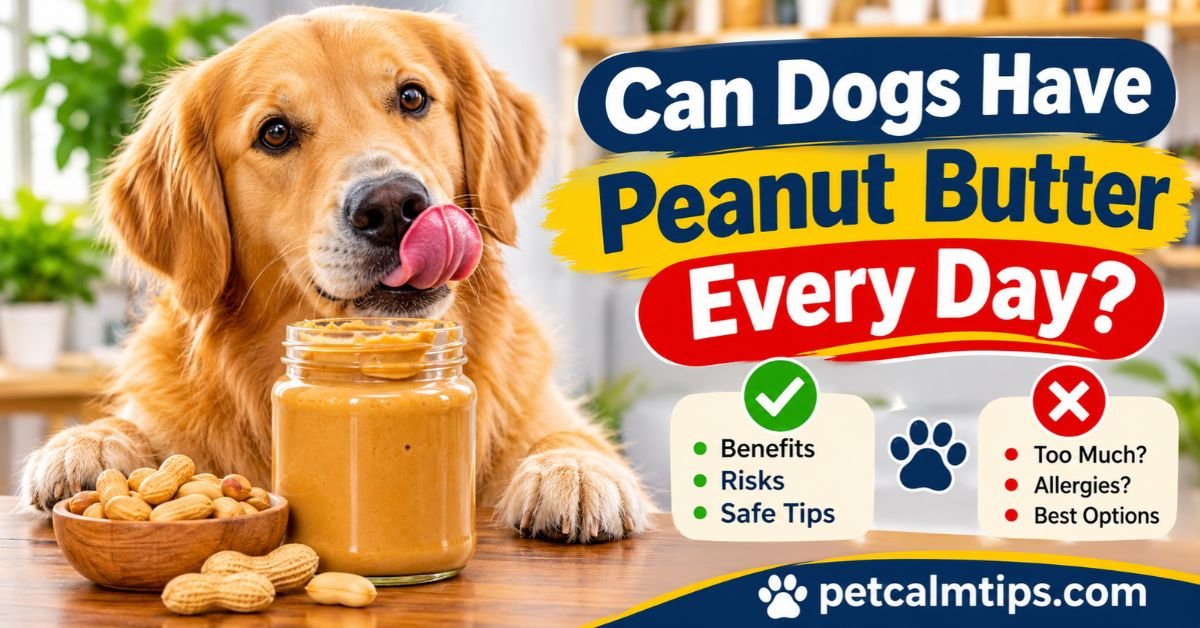
Can Dogs Have Peanut Butter Every Day? Safe Amounts Guide
Quick Answer
Yes, most healthy dogs can eat a small amount of plain, xylitol-free peanut butter daily if it fits inside their treat allowance. Treats should stay around 10% of daily calories. The danger isn’t peanut butter itself. It’s xylitol, a sweetener that’s toxic to dogs, plus extra fat, salt, and sugar that add up. Check the label every time, and ask your vet if your dog has pancreatitis, diabetes, or weight problems.
Table of Contents
- Why Do Dog Owners Worry About Daily Peanut Butter?
- 3 Reasons Vets See Peanut Butter Problems Every Day
- Tonight’s 7-Step Plan for Safe Daily Peanut Butter
- Common Mistakes and a Long-Term Prevention Plan
- When to Call Your Vet Immediately
- Conclusion
- FAQs
Why Do Dog Owners Worry About Daily Peanut Butter?
Peanut butter feels harmless. It’s a pantry staple, dogs adore it, and it makes stressful moments easier.
In my 12 years at a Texas shelter, I’ve seen one spoonful turn a trembling dog into a tail-wagger within minutes. We used it for nail trims, bath days, and hiding pills.
I’ve also seen the downside. One chunky terrier came in with an owner who gave “just a couple of spoonfuls” morning and night, and the dog had gained weight steadily for months. [Nobody meant harm, because love often shows up as snacks.]
Here’s why the daily habit deserves a second look:
- Peanut butter is calorie-dense, so small spoonfuls add up quickly.
- Some brands contain xylitol, which is toxic to dogs.
- Salt, added sugar, and hydrogenated oils hide in many jars.
- Dogs can’t tell you when something doesn’t agree with them.
So the real question isn’t “is peanut butter bad?” It’s “which jar, how much, and for which dog?”
Once you can answer those three, daily peanut butter becomes a manageable routine instead of a gamble.
Most owners feel guilty the moment they learn about xylitol. Please don’t. Nobody’s born knowing how to read a peanut butter label, and you’re learning it now.
3 Reasons Vets See Peanut Butter Problems Every Day
Almost every peanut butter problem traces back to one of three things. Knowing them helps you spot trouble before it starts.
Reason 1: Xylitol, the Dangerous Ingredient
Xylitol is a sugar substitute that’s toxic to dogs, even in small amounts. It can cause a sudden drop in blood sugar and, in serious cases, liver damage.
Some “natural,” “sugar-free,” or “low-sugar” peanut butters contain it. It may be listed as xylitol or birch sugar, so read the ingredient list instead of trusting the front of the jar.
Check again even if you’ve bought the same brand for years, because recipes can change.
Reason 2: Calories and Fat
One tablespoon of peanut butter carries roughly 90 to 100 calories. For a small dog, that’s a big slice of the day’s food.
Extra weight strains joints and the heart. Rich, fatty treats can also trigger pancreatitis, a painful inflammation of the pancreas. Dogs with a past history are especially at risk.
If your dog has had pancreatitis, ask your vet before offering any peanut butter at all.
Reason 3: Salt, Sugar, and Add-Ins
Plenty of jars are salted, sweetened, or stabilized with palm or hydrogenated oils. None of that helps a dog.
Watch for flavored spreads, too. Chocolate swirls and raisin blends are hazards on their own, since chocolate and raisins are both toxic to dogs.
The best jar has a short ingredient list, ideally just peanuts and maybe a pinch of salt.
Tonight’s 7-Step Plan for Safe Daily Peanut Butter
This is general advice for healthy adult dogs. If your dog has a medical condition, your vet’s guidance comes first.
- Read the label for xylitol. If you find it, keep that jar far away from your dog.
- Pick a plain jar. Peanuts only, or peanuts and a little salt.
- Set a treat budget. Keep all treats, including peanut butter, near 10% of daily calories.
- Measure it. Use a real measuring spoon, not a heaping “dog-sized” scoop.
- Adjust meals if needed. On heavy treat days, trim the regular meal slightly.
- Make it last. Spread it thin on a lick mat or inside a Kong so a small amount lasts longer.
- Watch for 24 to 48 hours. Look for itching, loose stool, or vomiting, and pause if anything seems off.
Here’s a conservative starting guide:
| Dog Size | Typical Daily Amount |
|---|---|
| Small (under 20 lb) | ½ to 1 teaspoon |
| Medium (20 to 50 lb) | 1 to 2 teaspoons |
| Large (over 50 lb) | Up to 1 tablespoon |
Treat these numbers as a starting point, not a prescription. Your vet can tailor them to your dog’s weight, age, and health.
5 Common Mistakes and a Long-Term Prevention Plan
Good intentions cause most of these slip-ups. Here are the ones I see most often.
Mistakes owners make:
- Eyeballing the portion. A “spoonful” can mean one teaspoon or three tablespoons.
- Trusting the word “natural.” It doesn’t mean xylitol-free.
- Forgetting to count calories. Peanut butter is a treat, not a free extra.
- Leaving the jar on the counter. Dogs can finish an entire jar in minutes, and that’s a real emergency if it contains xylitol.
- Ignoring health conditions. Diabetes, pancreatitis, and obesity change the rules.
A simple long-term plan:
Rotate your dog’s treats so peanut butter isn’t the only star. Carrot sticks, green beans, and a few blueberries are low-calorie options for many dogs.
Weigh your dog monthly, or at least check their waistline and ribs by touch. If you feel weight creeping up, cut peanut butter to three or four days a week.
Keep a quick note on your phone about the brand you use and your dog’s reactions. It takes ten seconds and helps your vet if questions come up later.
Finally, store the jar in a closed cupboard. Prevention is much easier than an emergency visit.
When to Call Your Vet Immediately
Everything above is general advice. This section is different, because these situations need a professional.
Call your vet or an emergency clinic right away if:
- Your dog ate any product containing xylitol, even if they seem fine. Don’t wait for symptoms.
- You see weakness, wobbling, tremors, seizures, or collapse.
- There’s repeated vomiting, a hunched posture, belly pain, or severe diarrhea after a fatty treat.
- You notice facial swelling, hives, or trouble breathing, which can signal an allergic reaction.
If you suspect xylitol, you can also contact the ASPCA Animal Poison Control Center or Pet Poison Helpline. Keep the jar handy so you can read the label aloud.
Acting fast gives your dog the best chance. You’d rather make an unnecessary call than miss a real emergency.
Conclusion
So, can dogs have peanut butter every day? For most healthy dogs, yes, as long as the jar is plain and xylitol-free and the portion stays small.
The recipe is simple. Read the label, measure the spoon, count it as part of the treat budget, and keep an eye on your dog’s weight and tummy.
Your next step is easy. Go grab your jar right now and read the ingredient list. If it’s clean, you’re good to go, and if you’re unsure, ask your vet before the next spoonful.
You’re clearly a loving, careful owner, and your dog is lucky to have someone who checks.
Explore More Expert-Reviewed Pet Care Guides: Why Does My Dog Shake After a Bath?
Dog Vomiting Yellow Foam Treatment at Home
Best Probiotics for Dog Gut Health
Can Dogs Eat Banana Peel?
How to Stop Dog Begging for Food at Table
Can Dogs Eat Cheese Everyday?
FAQs
1. Is peanut butter good for dogs?
In small amounts, plain peanut butter is a safe, tasty treat for most dogs. It contains some protein and healthy fats, but it’s also calorie-heavy. Think of it as a special extra, not a nutritional staple, and always confirm the jar has no xylitol.
2. What kind of peanut butter is safe for dogs?
Choose a plain jar with a short ingredient list, ideally just peanuts and maybe a little salt. Avoid anything listing xylitol or birch sugar, and skip flavored blends with chocolate or raisins. When in doubt, read the back of the jar, not the front.
3. How much peanut butter can I give my dog a day?
It depends on size and calorie needs. A common starting range is half a teaspoon to a teaspoon for small dogs, one to two teaspoons for medium dogs, and up to a tablespoon for large dogs. Treats should stay around 10% of daily calories, and your vet can fine-tune the amount.
4. Can puppies have peanut butter?
Puppies can usually have a tiny taste once they’re eating solid food, but check with your vet first. Their stomachs are sensitive, and their calorie and nutrition needs are different from an adult dog’s. Start with a very small amount and watch closely for any upset.
5. Can I hide my dog’s pills in peanut butter?
Yes, it’s one of the most popular tricks, and it often works well. Use a small dab of plain, xylitol-free peanut butter, and make sure your dog swallows the pill completely. If your dog takes medication daily, count those calories too, and ask your vet or pharmacist if the medication should be given with or without food.
6. What should I do if my dog ate peanut butter with xylitol?
Call your vet, an emergency clinic, or a pet poison hotline immediately, even if your dog seems fine. Symptoms can appear quickly, and early treatment matters. Bring the jar or take a photo of the label so the team knows exactly what and how much your dog ate.




One Comment