
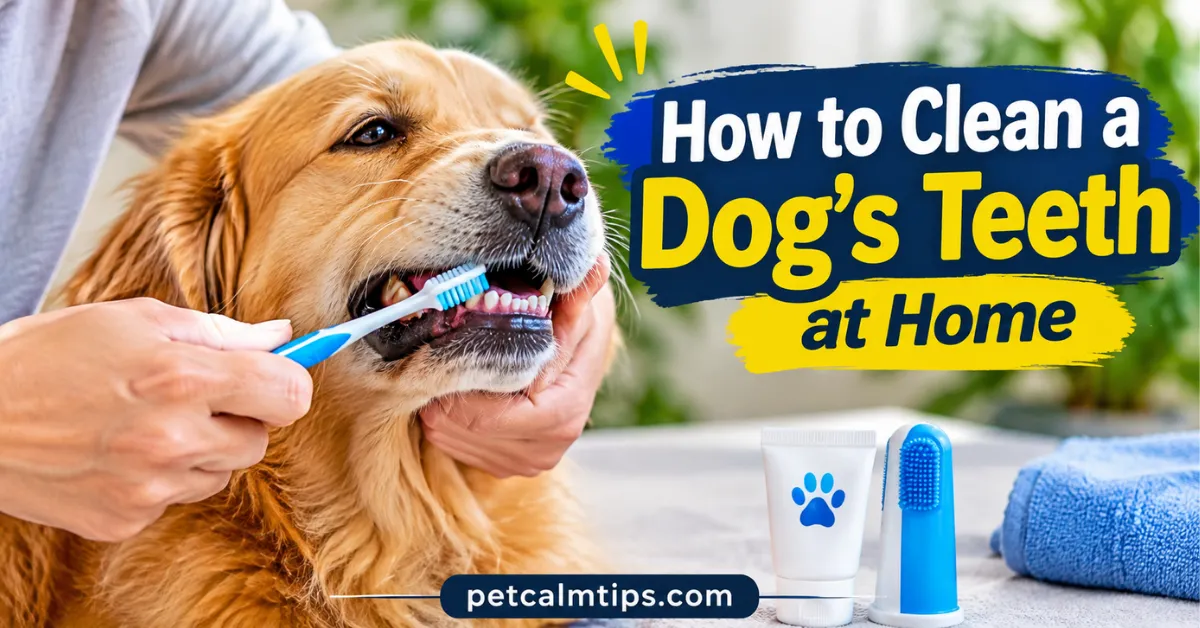
How to Clean a Dog’s Teeth at Home: Easy Vet-Safe Steps
Quick Answer
The most effective way to clean a dog’s teeth at home is daily brushing with a soft pet toothbrush and dog-specific toothpaste. Never use human toothpaste. Start slowly, let your dog taste the paste first, and build up to brushing the outer surfaces of the teeth. Dental wipes, VOHC-accepted chews, and water additives can help, but they work best alongside brushing. Tartar that’s already hardened needs a veterinarian.
Why Cleaning Your Dog’s Teeth Matters
Within hours of a meal, a thin film of bacteria called plaque begins to form on your dog’s teeth. If it stays there, minerals in saliva harden it into tartar (also called calculus) within a few days. Brushing can remove plaque. It cannot remove tartar once it has set.
Tartar irritates the gums, causing gingivitis, which is the early and reversible stage of periodontal disease. Left alone, the infection can move below the gumline, damaging the tissue and bone that hold teeth in place. Veterinary organizations widely report that periodontal disease is among the most common health problems in adult dogs, and many dogs show some signs of it by the time they’re a few years old.
Dogs rarely complain about mouth pain. Many keep eating normally even with significant dental disease, which is why bad breath, red gums, or tartar are worth acting on early rather than waiting for obvious discomfort.
Small breeds like Chihuahuas, Yorkies, and Dachshunds tend to be more prone to dental problems, partly because their teeth are crowded into small jaws. That doesn’t mean larger dogs get a pass.
What You’ll Need Before You Start
You don’t need much, but the right tools matter:
- A soft-bristled dog toothbrush. Options include long-handled brushes, angled brushes for back teeth, and finger brushes that slip over your fingertip. Pick whichever feels most comfortable for you and your dog.
- Dog-specific toothpaste. These come in flavors like poultry or peanut butter, and they’re made to be swallowed safely. Human toothpaste is not.
- Small, high-value treats for rewarding calm behavior.
- Gauze or a damp washcloth for the early introduction stages.
- A calm spot with good lighting where your dog feels relaxed.
Look for products with the Veterinary Oral Health Council (VOHC) Seal of Acceptance. The VOHC reviews products against standards for reducing plaque or tartar, so the seal is a more reliable guide than marketing claims on the label.
Why Human Toothpaste Is Off Limits
Human toothpaste often contains fluoride, which isn’t meant to be swallowed in significant amounts, and dogs can’t spit. Some brands also contain xylitol, a sweetener that’s highly toxic to dogs and can cause a dangerous drop in blood sugar and liver damage. Foaming agents and strong flavors can also upset a dog’s stomach. Always check labels, and stick with products made for dogs.
Step-by-Step: How to Brush Your Dog’s Teeth
Rushing is the number one reason dogs learn to hate brushing. Plan on one to two weeks of gradual introduction, especially with an adult dog who’s never had their mouth handled. Puppies usually adapt faster.
Step 1: Get Your Dog Comfortable With Mouth Handling
For a few days, simply touch your dog’s muzzle and lips during calm moments, then reward them. Gradually lift the lip and gently touch the outer surfaces of the teeth and gums with your finger. Keep sessions to under a minute and end while your dog is still relaxed.
Step 2: Introduce the Toothpaste
Put a small amount of dog toothpaste on your finger and let your dog lick it. Most dogs love the flavor. Repeat for a few days until they eagerly come over when they see the tube.
Step 3: Touch Teeth With a Paste-Covered Finger or Gauze
Wrap gauze around your finger, add a little paste, and gently rub the outer surfaces of the teeth in small circles. Focus on the upper back teeth first, since tartar tends to build up there.
Step 4: Introduce the Brush
Let your dog sniff and lick a brush with paste on it. Then lift the lip and touch the brush to a few teeth. Praise and reward right away. Don’t worry about actually cleaning at this stage.
Step 5: Brush the Outer Surfaces
Hold the brush at roughly a 45-degree angle to the gumline and use gentle circular or back-and-forth motions. Start with the upper teeth and work toward the back. Aim for about 30 seconds per side at first, building toward two minutes total as your dog gets used to it.
You usually don’t need to pry the mouth open. The outer surfaces, where most plaque collects, are accessible just by lifting the lips. Your dog’s tongue naturally helps clean the inner surfaces.
Step 6: Reward and Repeat
Finish with praise, a treat, or play. Brushing daily is ideal, since plaque starts hardening in a matter of days. If daily isn’t realistic, a few times a week still beats not brushing at all, though more frequent brushing generally gives better results.
If Your Dog Gets Stressed
Stop if your dog growls, snaps, struggles hard, or shows signs of pain. Forcing the issue can create fear and risks a bite. Go back a step, slow down, and consider asking your vet whether pain might be the reason for the resistance.
How to Naturally Clean a Dog’s Teeth at Home: What Helps and What Doesn’t
Many owners prefer a more natural approach, and some natural options do help. Others are less helpful than their reputation suggests, or carry real risks.
Natural Methods With Reasonable Support
- Mechanical cleaning is the most “natural” method of all. Brushing physically removes plaque, and that’s what actually works, no special ingredients needed.
- Raw carrots or crisp apple slices (no seeds or core) as occasional low-calorie treats may provide slight scrubbing action. They’re a nice bonus, but they don’t replace brushing, and they won’t remove tartar.
- Dental chews with the VOHC seal use texture to reduce buildup. Choose the right size for your dog, and count the calories toward their daily total.
- Seaweed-based supplements and water additives are marketed as natural options. Some products carry VOHC acceptance, so check for the seal rather than trusting the label alone.
Natural Remedies to Approach With Caution
- Baking soda. It’s a popular DIY suggestion, but it’s alkaline and salty, it can upset the stomach if swallowed, and dogs don’t tolerate the taste well. Most veterinary sources recommend skipping it in favor of dog toothpaste.
- Coconut oil. Some owners use it as a brushing paste or toothbrush coating. Evidence that it cleans dog teeth is limited, and it’s high in fat, which can be a concern for dogs prone to pancreatitis or weight gain. If you want to try it, talk to your vet first.
- Essential oils. Tea tree and some other oils can be toxic to dogs. Don’t put them in or near your dog’s mouth.
- Bones, antlers, hooves, and hard nylon chews. These are sometimes called natural, but they’re a leading cause of fractured teeth. A common rule of thumb: if you can’t press a thumbnail into the chew and leave a dent, it’s probably too hard for your dog’s teeth.
In short, the most natural and effective way to clean your dog’s teeth is still gentle, consistent brushing. Other natural options work best as helpers, not replacements.
Brushing Alternatives for Dogs Who Resist
Some dogs simply won’t tolerate a toothbrush, especially adults who weren’t introduced to one early. Partial care is better than none, so consider these options.
Dental wipes and gauze. Pre-moistened dental wipes or gauze rubbed along the teeth offer some mechanical cleaning and are often easier for nervous dogs to accept than a brush.
VOHC-accepted dental chews and treats. These work by abrasion as your dog chews. They’re useful additions, but they tend to be less thorough than brushing, particularly on back teeth.
Water additives and oral gels. Some products can help reduce plaque bacteria or freshen breath. Evidence varies by product, so look for the VOHC seal and follow label directions.
Dental diets. Certain veterinary dental diets use a kibble texture designed to scrub the teeth. Ask your vet whether one fits your dog’s overall nutritional needs.
Professional cleanings. No home routine replaces a veterinary dental cleaning when tartar has built up. Professional cleanings are done under general anesthesia, which allows the vet to clean below the gumline, take dental X-rays, and treat problem teeth safely.
Common Mistakes Dog Owners Make
1: Using human toothpaste. It’s the most common and most avoidable mistake, for the fluoride and xylitol reasons covered above.
2: Starting too fast. Jumping straight to a full brushing session usually backfires. Short, positive, gradual steps build lasting cooperation.
3: Brushing only the front teeth. The upper back teeth and molars collect the most tartar. Make sure the brush reaches them.
4: Relying only on chews. Chews help, but few dogs get complete cleaning from them alone.
5: Ignoring bad breath. Occasional “dog breath” is normal. Persistent or sudden foul odor can signal infection, dental disease, or a different health problem.
6: Skipping vet dental exams. Much of the damage from dental disease happens below the gumline, where you can’t see it.
7: Choosing chews that are too hard. Broken teeth are painful and expensive to treat.
When to Call Your Vet
Book a regular appointment if you notice:
- Persistent bad breath that doesn’t improve with home care
- Yellow-brown tartar buildup on the teeth
- Red, swollen, or bleeding gums
- Drooling more than usual
- Dropping food, chewing on one side, or being picky about hard food
- Pawing at the mouth or rubbing the face on furniture
- Loose or missing teeth
Contact your vet promptly, or seek emergency care, if you see:
- Facial swelling, especially under the eye, which can indicate a tooth root abscess
- A broken tooth with visible pink or bleeding tissue
- Refusal to eat for more than a day, along with mouth pain
- Pus around the gums or teeth
- Signs of significant pain, such as yelping when the mouth is touched
If you suspect your dog swallowed human toothpaste containing xylitol, call your veterinarian or an animal poison control service immediately. Don’t wait for symptoms to appear.
Also check with your vet before starting a brushing routine if your dog already has painful gums or loose teeth. Brushing an inflamed mouth can hurt and may make your dog resist it from then on.
Prevention and Long-Term Dental Care
A realistic routine works better than an ambitious one that falls apart after a week. Here’s a simple framework:
- Brush daily if you can. Tie it to an existing habit, like right before bedtime or after the evening walk.
- Add VOHC-accepted chews or water additives as extras, especially on days you skip brushing.
- Schedule annual dental checkups. Your vet will tell you how often your dog needs professional cleanings. This varies with breed, age, and mouth health.
- Start early with puppies. Handle their mouths gently and introduce brushing before their adult teeth settle in.
- Watch for changes. Take a quick look at your dog’s gums and teeth weekly. Healthy gums are typically pink (some dogs have naturally pigmented gums), not red or swollen.
- Be realistic about prevention. Even with good care, some dogs, particularly small breeds, still develop dental problems. That’s about genetics and anatomy, not failure on your part.
- Explore More Expert-Reviewed Pet Care Guides: How to Trim Dog Nails Without Hurting Them
- How Often Should You Bathe a Golden Retriever?
- How to Remove Tear Stains From White Dogs
- Best Dog Food for Dogs With Allergies
- How to Stop Dog From Whining in Car
Conclusion
Knowing how to clean a dog’s teeth at home comes down to a few essentials: use a soft brush and dog-safe toothpaste, introduce brushing slowly, and keep it as regular as you realistically can. Natural extras like crunchy veggies and VOHC-accepted chews can support the routine, but they don’t replace brushing. Avoid human toothpaste, baking soda, essential oils, and rock-hard chews. Remember that hardened tartar and mouth pain need a veterinarian, not more scrubbing at home.
Your next step is simple: pick up a dog toothbrush and toothpaste this week, and spend just a minute letting your dog taste the paste. Small, calm sessions add up to a healthier mouth over time.
Frequently Asked Questions
1: How often should I brush my dog’s teeth?
Daily brushing is ideal because plaque begins hardening into tartar within days. If that’s not realistic, aim for as often as you can manage, such as three or four times a week. Any regular brushing is better than none, and your vet can suggest a schedule that fits your dog.
2: Can I use baking soda to clean my dog’s teeth?
Most veterinary sources advise against it. Baking soda is salty and alkaline, can upset a dog’s stomach when swallowed, and tastes unpleasant to many dogs. Dog-specific toothpaste is safer, tastier, and easier to use consistently.
3: Can I remove tartar from my dog’s teeth at home?
Not safely. Brushing removes soft plaque, but hardened tartar bonds tightly to the tooth. Scraping it yourself can damage enamel and injure the gums. A veterinary dental cleaning, usually under anesthesia, is the safe way to remove it, including the tartar below the gumline.
4: Are dental chews enough to keep my dog’s teeth clean?
Usually not on their own. Chews can reduce plaque and tartar, particularly products with the VOHC seal, but they often miss the back teeth and gumline. Think of them as a helpful addition to brushing rather than a replacement.
5: What if my dog won’t let me brush their teeth?
Slow down and go back to the early steps: touching the muzzle, tasting the paste, and using gauze. Dental wipes, VOHC-accepted chews, and water additives can fill in while you build tolerance. If your dog suddenly resists, ask your vet to check for mouth pain.
6: Is coconut oil good for cleaning a dog’s teeth?
The evidence is limited. Coconut oil isn’t a proven plaque remover, and it’s high in fat, which may not suit dogs with weight problems or a history of pancreatitis. If you’re curious, ask your vet first, and don’t use it in place of proper brushing.






One Comment