
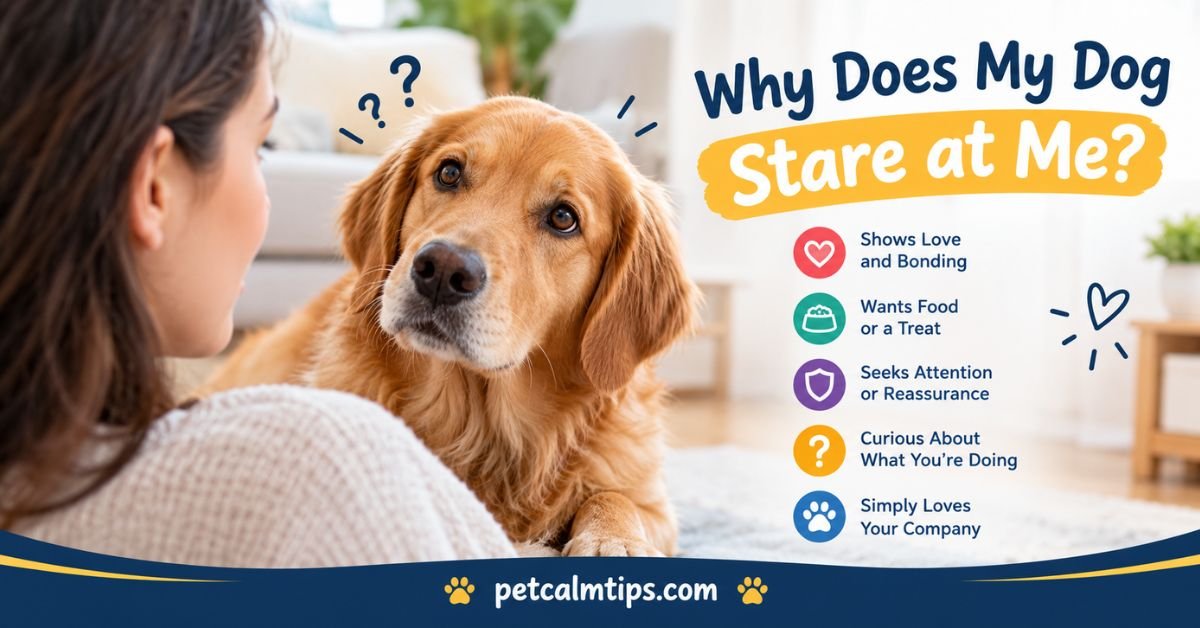
Why Does My Dog Stare at Me? 7 Real Reasons and What to Do
Quick Answer
Most dogs stare because they’re communicating. They may want food, a walk, or attention. They may be bonding with you, since mutual eye contact feels good to dogs who are comfortable with their owners. Or they may be trying to read your mood. A relaxed, soft stare is normal. A fixed, stiff stare, or staring that suddenly starts in an older dog, deserves a closer look.
Table of Contents
- Why Does My Dog Stare at Me? What’s Really Going On
- Cause 1: Your Dog Is Asking for Something
- Cause 2: Bonding and Affection Through Eye Contact
- Cause 3: Confusion, Anxiety, or a Health Change
- What You Can Do at Home Today: 7-Step Plan
- Common Mistakes Dog Owners Make With Staring
- When to Call Your Vet Immediately
- Conclusion
- FAQs
Why Does My Dog Stare at Me? What’s Really Going On
Staring is a form of communication. Dogs can’t talk, so they use their eyes, ears, posture, and timing to tell you things.
Wolves don’t stare at each other much outside of conflict. Dogs are different. Over thousands of years of living beside people, dogs learned to watch human faces closely, and that skill helped them survive.
Think about it from your dog’s side. You control the food bowl, the door, the leash, and the couch. Watching you isn’t strange for them. It’s practical.
In my 12 years at a Texas shelter, I’ve seen thousands of dogs stare through kennel doors at every person who walked by. The dogs who got adopted fastest were usually the ones who made soft, gentle eye contact.
Most staring falls into three groups:
- Asking: “I want something.”
- Bonding: “I like being near you.”
- Checking in: “I’m unsure, and I need you to tell me what’s happening.”
A smaller group involves health or behavior problems, which we’ll cover later.
The key is body language. A loose, wiggly body with soft eyes and relaxed ears is friendly. A stiff body with a hard, unblinking gaze, a closed mouth, and a still tail is a different message, and you shouldn’t ignore it.
Context matters too. A dog who stares at you only around 5 p.m. is probably asking about dinner. A dog who stares at you while you’re crying is probably tuned in to you emotionally.
(Yes, dogs really do notice when your mood changes.)
Here’s a quick way to sort the look:
| What You See | Likely Meaning |
|---|---|
| Soft eyes, relaxed face, slow tail wag | Affection or a calm request |
| Staring at the door or the food cupboard | Asking to go out or to eat |
| Staring with a tilted head | Trying to understand you |
| Stiff body, hard stare, closed mouth | Tension, so give space |
| Staring into space or at walls | Possible health issue, so see your vet |
Once you know which group your dog’s stare belongs to, you can respond calmly instead of worrying.
Cause 1: Your Dog Is Asking for Something
This is the most common reason. Your dog has learned that staring works.
It usually starts by accident. Your dog looks at you, you say “Do you need to go out?” and you open the door. That’s a reward. Do it a few times and the stare becomes a request.
Dogs repeat what gets results. It’s that simple.
Common things dogs ask for with a stare:
- Food or treats, especially when you’re eating
- A trip outside, often with a glance at the door
- Play, usually with a toy nearby or a play bow
- Attention or petting
- Water, if the bowl is empty
- A spot on the couch or bed
The stare often comes with other signals. A dog who wants outside may sit by the door and glance back at you. A dog who wants food may stare at your plate and then at your face.
Timing is your biggest clue. If the staring happens at the same time every day, it’s almost certainly a routine request.
This kind of stare isn’t “bad.” It’s smart. Your dog figured out how to get your attention without making noise, and in many ways that’s a better habit than barking.
The problem starts only when the stare becomes constant. Some dogs learn to stare for hours, and owners feel watched or pressured.
If you feel that way, the fix isn’t to punish the stare. It’s to teach your dog what to do instead, and to make sure their real needs are met. Check the basics first:
- Is your dog getting enough exercise?
- Are meals on a steady schedule?
- Is there enough mental stimulation, like puzzle toys or sniff walks?
- Does your dog know a calm way to ask, such as sitting?
A bored or under-exercised dog will often stare more, because staring is the only job they have. Give them better jobs and the staring usually drops on its own.
Cause 2: Bonding and Affection Through Eye Contact
Sometimes a stare is just love.
Research on dog-human relationships has found that when dogs and their owners gaze at each other, both can experience a rise in oxytocin, a hormone linked to bonding. It’s the same hormone involved when parents gaze at babies.
That’s a big deal. It means your dog’s soft gaze may be a real emotional connection, not just a habit.
You can usually tell a loving stare from a demanding one. A loving stare looks like this:
- Soft, slightly squinty eyes
- Relaxed eyebrows and forehead
- A loose, wiggly, or still-but-calm body
- A slow, gentle tail wag
- Slow blinking
Many dogs will also lean against you, rest their chin on your leg, or sigh while looking at you. That sigh is contentment.
Not every dog is comfortable with direct eye contact, though. Dogs from rough backgrounds, shy dogs, and some breeds may avoid it or find it stressful. That’s why you should never force a stare-down. Let your dog set the pace.
[Internal link suggestion: link here to your article on “How to Tell If Your Dog Loves You.”]
Certain breeds are known for intense eye contact because they were bred to work closely with people. Border Collies, German Shepherds, and Australian Shepherds are classic examples. These dogs often seem to watch you constantly, because watching you was literally their job.
To nurture this bond in a healthy way:
- Return the gaze softly and blink slowly.
- Speak in a calm, warm voice.
- Reward calm eye contact with a gentle “good dog.”
- Spend a few minutes each day just sitting together without phones.
Treat these moments as a gift. A dog who looks at you with trust is telling you that you’re their safe person.
Cause 3: Confusion, Anxiety, or a Health Change
This is the cause owners worry about most, and it’s the one that needs the most care.
Confusion or trying to understand you. Dogs tilt their heads and stare when they hear a word they half-know. They’re working out what you want. It’s adorable, and it’s harmless.
Anxiety and checking in. Anxious dogs watch their owners closely for reassurance. A dog who stares at you during thunderstorms, fireworks, or visitors is saying “Is this okay? Tell me what to do.”
Signs that the stare is anxiety-based include:
- Panting when it isn’t hot
- Lip licking or yawning
- Whale eye (you can see the whites of the eyes)
- Pacing or trembling
- Following you from room to room
A dog like this needs calm reassurance and a predictable routine, not a lecture.
Cognitive changes in senior dogs. Older dogs can develop canine cognitive dysfunction, which is similar to dementia in people. One sign is staring blankly at walls, corners, or into space, sometimes with confusion or restlessness at night.
If your older dog has started staring “through” things instead of at you, mention it to your vet.
Vision or hearing loss. A dog who’s losing their senses may stare at you more, because they’re trying to figure out where you are and what’s happening.
Pain or discomfort. Some dogs stare when they’re uncomfortable and unsure how to say so. Look for stiffness, reluctance to move, or changes in appetite and sleep.
Compulsive or neurological issues. Rarely, repetitive staring, “zoning out,” or staring that doesn’t break when you call the dog’s name can point to a compulsive behavior or a seizure-type problem. This is uncommon, but it’s worth a vet visit.
The big question to ask yourself is: Is this new, and does it look different from my dog’s normal staring? A lifelong starer who’s relaxed and happy is almost always fine. A dog who suddenly changes is the one to watch.
You know your dog best. Trust your gut if something feels off.
What You Can Do at Home Today: 7-Step Plan
Here’s a calm, practical plan you can start tonight.
Step 1: Read the body language.
Spend a day noticing when and how your dog stares. Jot down the time, the setting, and what their body looks like. Patterns jump out fast.
Step 2: Cover the basics.
Make sure your dog has fresh water, a recent potty break, and a regular meal schedule. Many “demand stares” disappear once real needs are met.
Step 3: Respond to the soft stare.
If the gaze is loving and relaxed, enjoy it. Give a quiet “hi, buddy,” a slow blink, or a gentle scratch.
Step 4: Teach an alternative.
Cue a “sit” or “go to your mat” before giving what your dog wants. This teaches them that calm behavior, not staring, earns rewards.
Step 5: Don’t reward the pushy stare.
If your dog stares at your dinner plate, calmly ignore it. Reward them when they lie down or look away, not when they stare.
Step 6: Boost exercise and enrichment.
Add a sniff walk, a snuffle mat, a frozen food puzzle, or 10 minutes of training. A tired, mentally satisfied dog stares less.
Step 7: Set a check-in plan.
For two weeks, watch whether the staring changes. If it increases, becomes fixed or blank, or comes with new symptoms, book a vet visit.
A few more tips can help:
- Keep your voice calm and your movements slow.
- Don’t stare back with a hard, unblinking look, especially with an unfamiliar dog.
- Be consistent. Everyone in the house should respond the same way.
- Give it time. Habits take a few weeks to shift.
Here’s a quick checklist you can screenshot:
- Needs met (water, potty, food, exercise)
- Soft stare acknowledged
- Pushy stare ignored
- Calm alternative taught
- Enrichment added
- Notes kept for two weeks
Most owners see a real difference within a couple of weeks of staying consistent.
9 Common Mistakes Dog Owners Make With Staring
Even loving owners slip into habits that make staring worse. Here are the ones I see most.
Mistake 1: Giving in every time.
It’s tough to resist those eyes. But if every stare earns a treat, you’re training a professional starer.
Mistake 2: Assuming it means dominance.
The old idea that dogs stare to “win” over you doesn’t hold up. For most pet dogs, staring is about communication, not control.
Mistake 3: Staring back hard.
A fixed, unblinking stare from you can feel like a challenge to a dog. This is especially risky with dogs you don’t know, since a hard stare can sometimes lead to a bite.
Mistake 4: Punishing or yelling.
Scolding a dog for looking at you teaches them nothing useful. It can also make an anxious dog even more nervous.
Mistake 5: Ignoring a sudden change.
A new, blank, or fixed stare isn’t something to “wait out” for weeks. Early checks help, especially in senior dogs.
Mistake 6: Skipping exercise and enrichment.
Many “stare problems” are really boredom problems. A short walk won’t cut it for a high-energy dog.
Mistake 7: Being inconsistent.
If one person gives treats for staring and another ignores it, your dog will keep trying. Mixed rules are confusing.
Mistake 8: Forcing eye contact.
Some dogs find direct eye contact stressful. Don’t hold your dog’s face and make them look at you.
Mistake 9: Googling a diagnosis.
Online lists can scare you or falsely reassure you. If you’re worried, a vet exam beats any search result.
A good rule of thumb is to reward calm, ignore pushy, and investigate new.
If you’ve made a few of these mistakes, don’t beat yourself up. Nearly every dog owner has. What matters is the next step, and you’re already taking it by learning.
When to Call Your Vet Immediately
Staring on its own is rarely an emergency. But the following signs, especially in combination, mean it’s time to pick up the phone.
Call your vet right away if the staring comes with:
- Collapse, loss of balance, or stumbling
- Shaking, twitching, or full-body seizures
- Unresponsiveness (the dog doesn’t react to your voice or touch)
- Sudden blindness, bumping into objects, or very large or uneven pupils
- Head pressing against a wall or corner
- Severe lethargy or sudden behavior change
- Signs of pain, such as crying out, hiding, or guarding a body part
- Repeated vomiting, trouble breathing, or pale gums
These can point to neurological problems, poisoning, or other serious illness, and they shouldn’t wait.
Book a regular vet appointment soon if:
- Your senior dog has started staring at walls or into space
- Your dog seems confused, lost, or restless at night
- The staring is paired with pacing, circling, or house-soiling accidents
- Your dog zones out and doesn’t respond to their name
- The staring is a major change from your dog’s normal behavior
- You simply feel something is off
Helpful things to bring to the appointment:
- A short video of the staring episode (this is gold for your vet)
- A list of when it happens and how long it lasts
- Any changes in appetite, sleep, or energy
- Current medications and supplements
General advice vs. vet-needed: everything earlier in this guide is general advice for normal, healthy staring. If any red flag above shows up, you’ve moved into vet-needed territory.
A vet can run a physical exam, check vision and neurological function, and recommend blood work or other tests if needed. Many causes, including cognitive decline, vision loss, and anxiety, are manageable, especially when caught early.
You aren’t overreacting by asking. A quick call costs far less than regret.
Conclusion
So, why does your dog stare at you? In most cases, it’s love, learning, or a simple request. Your dog is asking for dinner, checking your mood, or just enjoying your company.
The best fix is steady and gentle. Meet your dog’s needs, reward calm behavior, ignore the pushy stare, and enjoy the soft one.
Watch for changes. A blank, fixed, or suddenly new stare, especially in an older dog, is worth a vet visit.
Your next step is simple: spend one day noticing when your dog stares and what their body is saying.
You’re clearly paying attention, and that’s what a good dog owner does. Your dog is lucky to have you watching right back.
Explore More Expert-Reviewed Pet Care Guides: How to Calm Anxious Dog During Fireworks
Why Does My Dog Follow Me to Bathroom?
How to Stop Dog From Barking at Mailman
FAQs
1. Is it normal for my dog to stare at me all the time?
Yes, it’s usually normal, especially for people-focused breeds. Dogs watch their owners for cues about food, play, walks, and safety. If your dog looks relaxed and happy, there’s nothing to fix. Only worry if the staring is new, blank, or comes with other changes.
2. Does my dog staring at me mean they love me?
Often, yes. A soft, relaxed gaze with loose body language is a sign of trust and bonding. Studies suggest mutual gazing can raise oxytocin in both dogs and owners. Still, staring can also mean hunger or boredom, so check the context and body language.
3. Why does my dog stare at me while I eat?
Because they hope you’ll share. Dogs learn quickly that watching you eat sometimes leads to scraps. If you’ve ever dropped food or handed over a treat, the habit got stronger. Teach a “go to your mat” cue and reward your dog for settling away from the table.
4. Is my dog trying to dominate me by staring?
Almost never. The idea that staring is about dominance is outdated. Most pet dogs stare to communicate or connect. A hard, stiff stare with tense posture can signal discomfort or a warning, but that looks very different from everyday soft eye contact.
5. Why does my dog stare at me at night or in the middle of the night?
Night staring can mean a need to go out, hunger, anxiety, or, in senior dogs, cognitive decline or confusion. If it’s happening often or your older dog seems restless or disoriented, mention it to your vet. Keeping a regular bedtime potty routine often helps.
6. Should I stare back at my dog?
A soft gaze and slow blink are fine and can strengthen your bond with a dog you know well. Avoid hard, unblinking stares, especially with new or nervous dogs, since they can feel threatening. Let your dog look away whenever they want.




One Comment