
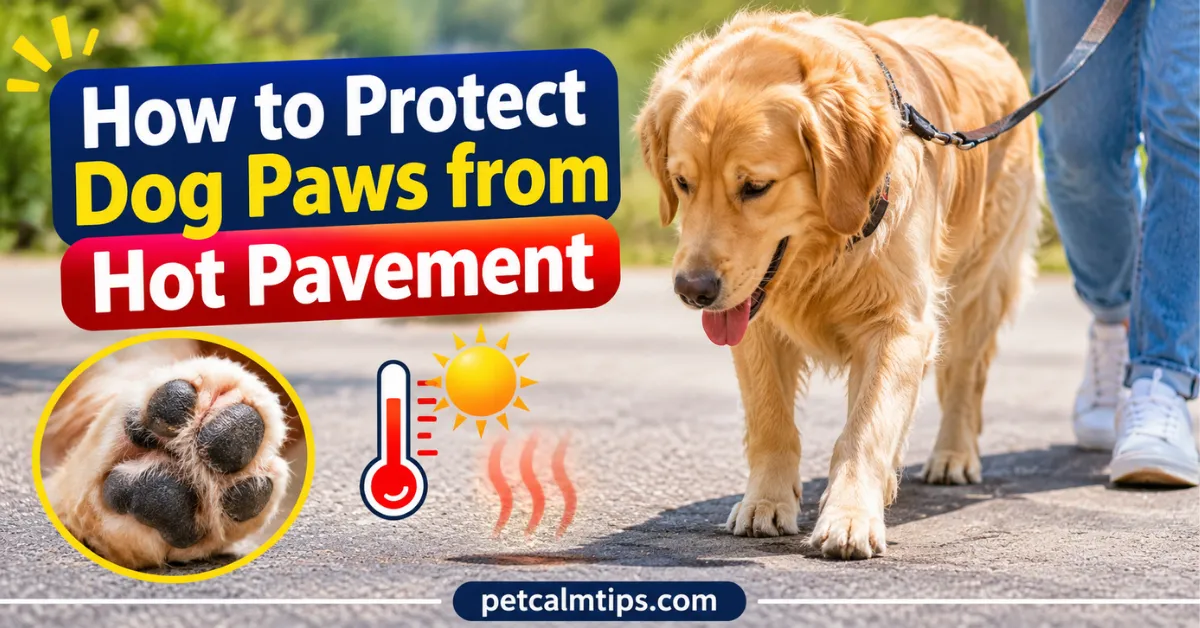
How to Protect Dog Paws From Hot Pavement: 7 Simple Steps
Quick Answer
To protect dog paws from hot pavement, test the surface with the back of your hand before every walk. If you can’t comfortably hold it there for five seconds, it’s too hot for your dog. Walk early in the morning or after sunset, stick to grass or shade, and carry water. Properly fitted dog boots add protection. If you see limping, blisters, or raw pads, call your vet.
Why Hot Pavement Is Dangerous for Dog Paws
A dog’s paw pad is made of thick, fatty tissue covered by a tough outer layer. It cushions joints, provides traction, and helps with balance. It also contains blood vessels and nerve endings, which means it can burn, blister, and hurt much like your own skin.
Dogs also don’t have a good way to dodge the problem. A person feels a hot surface and steps off it immediately. A dog that is excited, anxious, or focused on you may keep walking, and some dogs won’t show obvious discomfort until they’re already injured. By the time a dog limps or stops, the damage may be done.
Heat also affects the whole dog, not just the paws. Dogs cool themselves mainly by panting, with a small amount of sweating through their paw pads. Hot ground radiates heat upward, and dogs are close to the surface. A walk on blistering pavement can raise the risk of overheating even when the air temperature feels manageable to you.
How Hot Does Pavement Actually Get?
Pavement can be far hotter than the air above it. Dark asphalt absorbs sunlight and holds heat, and it can stay hot well into the evening. The figures below are approximate and widely cited in pet safety guidance. Real surface temperatures vary with sun exposure, surface color, wind, and time of day.
| Air Temperature | Approximate Asphalt Temperature in Direct Sun |
|---|---|
| 77°F | About 125°F |
| 86°F | About 135°F |
| 95°F | About 140°F |
| 100°F and above | 150°F or more |
Skin can burn in under a minute at the lower end of that range, and faster as the temperature climbs. That’s why a pleasant 77°F afternoon can still be risky for paws.
Concrete is often slightly cooler than asphalt, but it can still get hot enough to hurt. Other surfaces that cause problems include:
- Sand at the beach
- Metal surfaces like truck beds, ramps, and grates
- Artificial turf
- Stone or brick patios
- Painted or sealed decks
How to Test the Ground Before You Walk
You don’t need a thermometer. The simplest method is the back-of-the-hand test.
- Press the back of your hand flat against the pavement.
- Hold it there for five seconds.
- If it’s uncomfortable or you have to pull away, it’s too hot for your dog.
Some people use the bare palm or bare foot, but the back of the hand is easier and keeps you from stepping on something dangerous. Test the exact spot where your dog will walk, not just the first patch of sidewalk. Shaded and sunny sections can differ a lot.
Keep in mind that this test is a rough safety check, not a guarantee. A surface that feels borderline to you is likely too hot for a dog, whose paws are lower to the ground and may be pressing for longer. When in doubt, choose another route or skip the walk.
7 Practical Steps to Protect Dog Paws From Hot Pavement
1. Walk at cooler times of day
Early morning and late evening are usually safest. Even then, check the ground. Asphalt can hold heat for hours after sunset, so a walk at 8 p.m. is not automatically safe on a very hot day.
2. Choose grass, dirt, and shade
Plan routes that include grass, shaded trails, or tree-lined streets. Parks, dirt paths, and shaded woodland trails are generally much cooler than sidewalks and parking lots. If part of your route is paved, keep that stretch short.
3. Shorten the walk on hot days
You can still meet your dog’s needs without a long walk. Swap one extended outing for a few short bathroom breaks, and add indoor enrichment such as sniffing games, puzzle feeders, short training sessions, or a gentle game of tug.
4. Carry water and offer it often
Bring water and a collapsible bowl, and offer it regularly. Hydration doesn’t protect the paws directly, but it supports your dog’s ability to handle heat.
5. Use dog boots when needed
If you can’t avoid warm ground, boots can create a barrier between the paw and the surface. The next section covers how to choose and introduce them.
6. Stay off the hottest surfaces entirely
Avoid beach sand at midday, metal surfaces, and big parking lots in full sun. If you need to cross a hot stretch, carry a small dog or take the shortest path to a cooler area.
7. Check paws after every outing
Look at the pads and between the toes after each walk. Check for redness, swelling, blisters, cracks, or anything stuck in the paw. Catching problems early makes them easier to treat, and a quick check also helps you notice patterns, like a certain route that seems to bother your dog.
Dog Boots, Paw Balms, and Other Protection: What Helps
Dog boots
Boots are the most reliable physical barrier on hot ground, but only when they fit and your dog accepts them. A few tips:
- Measure carefully. Follow the manufacturer’s sizing guide, which usually involves measuring paw width. Boots that are too loose slip, and boots that are too tight can rub or restrict circulation.
- Look for breathable materials and a sturdy sole. Thin, non-breathable boots can trap heat, so choose designs made for warm weather.
- Introduce them gradually. Many dogs find boots strange at first. Let your dog wear them for a few minutes indoors, with treats, before trying a walk.
- Check your dog’s feet afterward. Look for rubbing or irritation around the ankle and between the toes.
Boots don’t make every surface safe. On extremely hot pavement, the sole can still heat up, so keep using the hand test.
Paw balms and waxes
Paw balms and waxes are widely marketed for summer. They may help keep pads moisturized and offer some protection from friction and drying, but they are not a heat shield. Don’t count on a balm to make hot pavement safe. If you use one, choose a product made for dogs, and apply a thin layer so your dog doesn’t lick off a large amount. If your dog licks it constantly, it may not be the right option.
Other options
- Booties for specific outings. If you only face hot ground occasionally, keep a pair in your bag for emergencies.
- Carrying small dogs. For short stretches of hot ground, picking up a small dog is the simplest solution.
- Shaded rest breaks. Pause in shade to let paws and body cool down.
Which Dogs Are at Higher Risk?
All dogs can burn their paws, but some face extra risk:
- Puppies: Their pads are often softer and less conditioned, and they tire easily.
- Senior dogs: Older dogs may be slower to move off a hot surface and often have mobility issues or less tolerance for heat.
- Flat-faced (brachycephalic) breeds: Bulldogs, pugs, and similar breeds have a harder time cooling themselves, so hot-weather walks are riskier overall.
- Overweight dogs: Extra weight presses more firmly on the pads and makes heat harder to manage.
- Dogs with thick coats or dark coloring: They can overheat faster in the sun.
- Dogs with existing paw problems: Cracked or irritated pads are more vulnerable to injury.
- Dogs with medical conditions: Heart, breathing, or other health issues can increase heat risk. Ask your vet about summer exercise limits.
Common Mistakes Dog Owners Make
1: Assuming “my dog’s feet are tough.” Pads are durable, but they can still burn. Conditioning doesn’t make them heatproof.
2: Judging by air temperature alone. A comfortable-feeling day can still produce hot asphalt.
3: Relying on the dog to tell you. Many dogs keep going even when it hurts. Don’t wait for limping to take action.
4: Walking in the evening without checking. Pavement can stay hot long after sunset.
5: Using boots without introducing them. A dog who panics in new boots may not be safer, and an ill-fitting boot can cause blisters.
6: Skipping the hot-weather rest of the body. Paws are only one part of heat safety. Watch for signs of overheating too, including heavy panting, drooling, weakness, or a very red tongue.
6: Leaving a dog on a hot surface. Tying a dog outside on a patio, deck, or driveway in full sun can injure the paws and lead to heatstroke.
Signs of Paw Burns and First Aid
What a paw burn can look like
- Limping or reluctance to walk
- Licking or chewing at the feet
- Red, swollen, or darker pads
- Blisters
- Pads that look raw, or pieces of pad that appear to peel away
- Whining or pulling the foot away when touched
Basic first aid while you contact your vet
If you suspect a burn:
- Move your dog to a cool, shaded surface. Carry larger dogs if you can, or use grass or shade.
- Rinse the paws with cool water. Use cool, not icy, water.
- Don’t pop blisters or peel loose skin. Leave it for your vet to evaluate.
- Prevent licking. Gentle bandaging may help, but a loose, clean wrap is better than a tight one. A cone may help if your vet recommends it.
- Skip home remedies. Don’t apply ointments, oils, or human burn creams unless your vet specifically tells you to.
- Call your vet. Even mild-looking burns can become painful or infected.
When to Call Your Vet
Contact your vet promptly if you notice:
- Blisters, open wounds, or peeling pads
- Limping that lasts more than a short time
- Constant licking or chewing at the paws
- Swelling, discharge, or a bad smell, which may suggest infection
- Pads that look dark, unusually pale, or damaged
Seek emergency veterinary care right away if your dog shows signs of heatstroke:
- Heavy, frantic panting
- Thick or excessive drooling
- Bright red or very pale gums
- Vomiting or diarrhea
- Stumbling, weakness, or collapse
- Seizures or unresponsiveness
Heatstroke is a medical emergency. Move your dog out of the heat and contact an emergency vet immediately, even if your dog seems to be recovering.
Prevention and Long-Term Paw Care
Protecting your dog’s paws isn’t just a one-time decision. A few habits make a difference all season:
- Check pavement every time. Make the hand test automatic, like grabbing the leash.
- Plan walks around the weather. Look at the forecast and adjust timing, not just clothing.
- Build gradual tolerance for varied surfaces. Regular short walks on different terrain keep pads healthy, but this doesn’t make them immune to burns.
- Keep nails trimmed. Overgrown nails change how a dog’s foot hits the ground and can cause discomfort.
- Trim excess fur between the pads. This helps you see problems and keeps debris from collecting.
- Moisturize only when needed. Dry, cracked pads can benefit from a dog-safe balm, but overly soft pads can be more vulnerable, so avoid overdoing it.
- Keep a summer kit. Pack water, a bowl, boots, a towel, and a small first-aid kit in your bag or car.
- Know your dog’s limits. If your dog slows down, lags behind, or seems reluctant, take that seriously.
You can’t prevent every injury, but these steps reduce the risk considerably.
- Explore More Expert-Reviewed Pet Care Guides: How to Protect Dogs From Heat in Summer
- How to Tell if Your Dog Is Too Cold
- Best Dog Food for Dogs With Allergies
- How to Stop Dog From Whining in Car
Conclusion
Protecting your dog from hot pavement comes down to awareness and a few small habits. Test the ground with the back of your hand, walk during cooler hours, favor grass and shade, and shorten outings when it’s hot. Boots can help when you can’t avoid warm surfaces, and a quick paw check after each walk helps you catch problems early. Remember that paws are only part of the picture, so watch for signs of overheating too.
If you take only one step today, make it this: before your next walk, put your hand on the pavement for five seconds. If it’s too hot for you, it’s too hot for your dog, and that’s the easiest way to protect dog paws from hot pavement.
Frequently Asked Questions
1: How hot is too hot for dogs to walk on pavement?
There’s no single number, because it depends on the surface, sun exposure, and your dog. As a practical rule, if the pavement is uncomfortable to the back of your hand after five seconds, it’s too hot. Asphalt can reach dangerous temperatures even when the air feels mild, so test before every walk.
2: Can dogs get used to walking on hot pavement?
Regular walks can help pads become tougher and more resilient, but they won’t make them heat-proof. Even dogs who walk outdoors every day can burn their paws on very hot surfaces. Gradual exposure to varied terrain is good for paw health, but it isn’t a substitute for checking the ground.
3: Do dog boots really protect paws from hot pavement?
They can, when they fit properly and are designed for warm weather. Boots create a barrier between the pad and the surface. However, the sole can still absorb heat on extremely hot ground, so keep testing the pavement, and introduce boots gradually so your dog accepts them.
4: Is paw wax enough to protect my dog from hot pavement?
No. Paw balms and waxes may help moisturize pads and reduce friction, but they aren’t designed to insulate against heat. Use them as part of routine paw care if you like, but don’t rely on them to make hot pavement safe.
5: What should I do if my dog burned their paws?
Move your dog to a cool, shaded area, rinse the paws with cool water, and keep your dog from licking them. Don’t pop blisters or apply human creams or home remedies. Call your vet, who can assess the injury and recommend treatment, especially if you see blisters, raw pads, or limping.
6: Is it safe to walk my dog in the evening on hot days?
It can be, but check first. Asphalt and concrete can stay hot for hours after the sun goes down. Use the five-second hand test before you head out, and choose grass or shaded areas when you can. If the ground still feels warm, wait longer or skip the walk.




One Comment