How to Keep a Dog Safe During a Power Outage: Simple Steps
Quick Answer
To keep a dog safe during a power outage, stay home with them if you can, keep fresh water available, and manage indoor temperature with shade, ventilation, or blankets. Use battery-powered lights instead of candles, and never run a generator indoors. Keep medications properly stored, keep your dog leashed or contained, and make sure their ID is current. Call your vet if you see heavy panting, shivering, vomiting, or collapse.
Why Power Outages Create Real Risks for Dogs
A blackout rarely harms a dog directly. The danger comes from what the outage takes away: climate control, light, refrigeration, and normal routines.
Temperature is the biggest concern. Without air conditioning or heating, a home can become dangerously hot or cold depending on the season. Dogs can’t cool themselves the way people can. They rely mostly on panting, which works poorly in hot, humid, or stuffy air.
Stress is the second concern. Storms and other events that cause outages often come with thunder, wind, sirens, or generator noise. Many dogs find these frightening, and a frightened dog may bolt through an open door or chew something dangerous.
Hidden hazards are the third. Candles, space heaters, portable generators, and charcoal grills (never safe indoors) bring fire and carbon monoxide risks that can affect pets and people alike. Spoiled refrigerated food is another risk, especially if you feed fresh, raw, or home-prepared meals.
Understanding these three categories makes the rest of your planning easier.
Build a Dog-Ready Outage Kit Before You Need It
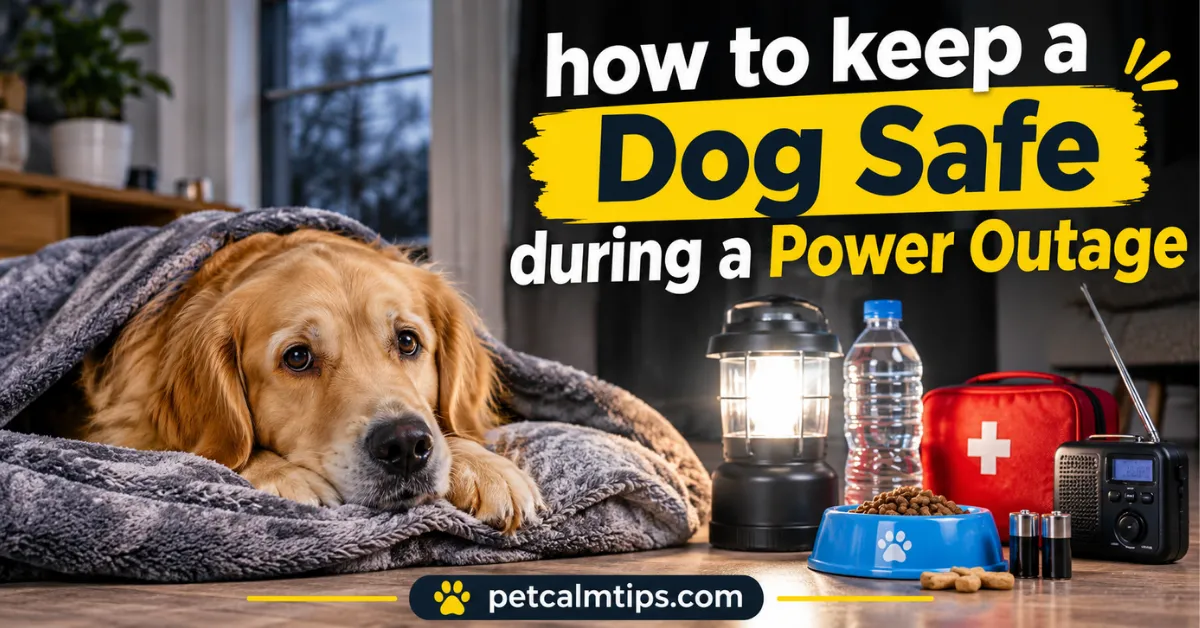
The best time to prepare is on a calm, sunny day. A basic kit can live in a bin or bag near your family’s emergency supplies. Consider including:
- Water: Several days’ worth for your dog, stored separately from your own supply. Large dogs, nursing mothers, and dogs in hot weather drink more.
- Food: A few days of your dog’s regular food in a sealed container, plus a manual can opener if you use canned food.
- Medications: At least a week’s supply of anything your dog takes regularly, with a printed list of names and doses.
- Records: Copies of vaccination records and your vet’s phone number, stored in a waterproof bag.
- Leash, collar, and harness: Keep an extra set where you can find it in the dark.
- Battery-powered light: A small flashlight or lantern, plus spare batteries.
- Comfort items: A blanket, a favorite toy, or a worn T-shirt that smells like you.
- Waste bags and paper towels: Accidents are more likely when routines change.
- A recent photo: If your dog gets lost, a clear picture of you and your dog together helps.
- Cooling and warming supplies: A battery-operated fan, cooling mat, or damp towels for heat, and extra blankets for cold.
Check the kit twice a year and rotate food, water, and batteries.
Step-by-Step: What to Do When the Power Goes Out
These steps work for most outages, whether they last an hour or a day.
1. Stay Calm and Check Your Dog
Dogs read your mood closely. Speak in an even voice and check your dog for early signs of stress or discomfort, like panting, pacing, or trembling.
2. Keep Your Dog Close and Contained
Doors and gates may be open more often than usual, and your dog may be anxious. Keep your dog on a leash or in a safe room, especially if you need to leave the house to check on something. Make sure your dog is wearing a collar with a current ID tag.
3. Use Safe Lighting
Choose flashlights, headlamps, or LED lanterns. Avoid candles around dogs. A wagging tail can knock one over in a second, and curious noses can get burned. Also keep cords and charging cables out of reach, since chewing on live cords is a real hazard when power returns.
4. Offer Fresh Water Regularly
Place a bowl in each room your dog uses. In warm weather, add a few ice cubes if your dog tolerates them, but don’t rely on ice alone.
5. Control the Temperature
Move your dog to the coolest or warmest part of the house as needed. The next section covers this in detail.
6. Protect Medications
Some medications, such as certain insulin products or liquid antibiotics, require refrigeration. Keep them closed in the fridge as long as possible, and call your vet or pharmacist if the outage lasts long enough to worry you. Don’t guess about whether a medication is still good.
7. Maintain Routines When You Can
Feed and walk your dog at normal times. Familiar structure is calming. Walks should happen in daylight when possible, since unlit streets, downed lines, and debris can be hazardous after storms.
Managing Heat and Cold Without Power
Keeping a Dog Cool
In hot weather, the goal is to help your dog lose heat without causing a shock to their system.
- Close blinds and curtains on sunny windows to keep rooms shaded.
- Open windows on opposite sides of the house for cross-ventilation if it’s safe and secure.
- Let your dog rest on tile, concrete, or other cool floors.
- Use a battery-powered fan, a cooling mat, or a damp (not soaking wet) towel.
- Offer small, frequent drinks of cool, not ice-cold, water.
- Limit exercise to early morning or after sunset.
If the house becomes uncomfortably hot, consider moving your dog to an air-conditioned location, such as a friend’s home, a pet-friendly hotel, or a community cooling center that accepts pets. Never leave a dog in a parked car, even with the windows cracked and even with the AC briefly running.
Flat-faced breeds like Bulldogs, Pugs, and French Bulldogs, along with senior dogs, puppies, overweight dogs, and dogs with heart or breathing problems, overheat faster. Treat them as higher-risk and act sooner.
Keeping a Dog Warm
In cold weather, small dogs, short-coated dogs, seniors, and puppies lose heat quickly.
- Choose one room and close the door to hold in warmth.
- Provide blankets, a raised bed off the floor, and a dog sweater if your dog wears one comfortably.
- Block drafts with towels along door gaps.
- Share body heat. A dog curled up with you under blankets is often warmer and calmer.
Avoid heating a space with a gas oven, charcoal grill, or camp stove indoors. These produce carbon monoxide. Be extremely careful with space heaters and make sure they aren’t left unattended around pets.
Keeping Your Dog Calm in the Dark
A power outage is often loud, unpredictable, and unfamiliar, which is a recipe for anxiety in sensitive dogs.
Create a safe space. A crate with a blanket over it, a quiet interior room, or a bathroom can feel secure. Let your dog choose where they feel safest.
Reduce noise. Close windows and play soft music from a battery-powered speaker or a phone. Even a calm podcast can mask outside noise.
Offer a distraction. Food puzzles, lick mats, chew toys, and gentle training games give anxious dogs something to focus on.
Stay close, but don’t over-soothe. Calm, steady attention helps. Dramatic reassurance can sometimes make a dog feel that something truly is wrong.
Think about pressure wraps. Some dogs seem calmer in snug-fitting wraps, though results vary from dog to dog.
If your dog panics during storms or loud events every time, talk with your veterinarian ahead of time about behavior plans or, if appropriate, anti-anxiety medication. Never give your dog human anxiety medications or sedatives without veterinary guidance.
Dogs Who Need Extra Planning
Some dogs are more vulnerable during an outage, and their owners should plan more carefully.
Dogs on medication or with chronic conditions. Dogs with diabetes, heart disease, seizure disorders, or kidney disease may depend on stable routines and properly stored medications. Ask your vet in advance what to do if you can’t keep insulin cold or can’t feed on schedule.
Dogs using powered equipment. Some dogs rely on devices such as oxygen concentrators or heated bedding. Ask your vet about backup options, and contact your utility company about priority restoration if medical equipment is involved.
Senior and mobility-challenged dogs. Dark rooms and slick floors make falls more likely. Use nightlights that run on batteries and put down rugs or yoga mats for traction.
Puppies. They chew everything. A dark house with live cords and fallen objects is risky, so keep them in a playpen or crate.
Dogs who are blind or hard of hearing. Familiar scents and a predictable layout matter even more. Don’t rearrange furniture, and keep your dog on a leash in unfamiliar areas.
Food and Water Safety During a Blackout
If your freezer and refrigerator stay closed, food generally stays safe for a limited time, but that window isn’t long. Treat your dog’s perishable food with the same caution you’d apply to your own.
- Refrigerated or fresh dog food, including raw diets, cooked home meals, and opened canned food, should be discarded if it has been above safe temperatures for too long. When in doubt, throw it out and use shelf-stable backup food.
- Dry kibble stored in a sealed container is usually the most outage-friendly option.
- Don’t give your dog scraps from thawed or questionable human food.
- If tap water may be unsafe, such as during a boil-water advisory after a storm, give your dog the same safe or bottled water you’d drink yourself.
Sudden diet changes can upset a dog’s stomach, so stick with familiar foods whenever possible.
Common Mistakes Dog Owners Make
1: Assuming the house is fine because it feels okay to you. Dogs wearing a full coat in a stuffy room may be struggling when you’re still comfortable.
2: Using candles for light. They’re one of the most common causes of preventable fires and pet burns during outages.
3: Running a generator in a garage or near open windows. Carbon monoxide can build up quickly and can’t be seen or smelled. Generators must be used outdoors, well away from doors, windows, and vents.
4: Skipping the leash. Fireworks-like thunder, strangers, and open doors lead many dogs to bolt. Even calm dogs can surprise their owners.
5: Forgetting about cords and surges. When power returns, chewed cords and overloaded outlets are a hazard. Unplug sensitive electronics and keep cables away from your dog.
6: Leaving the dog alone for long stretches. If you must leave, arrange for someone to check on them and make sure the space is safe and temperature-appropriate.
7: Waiting too long to relocate. If the temperature is becoming dangerous, moving to a safer location early is usually better than waiting to see how it goes.
When to Call Your Vet
Some situations call for monitoring, and others call for immediate help. This section is general guidance and can’t replace a veterinarian’s examination.
Call your vet promptly if your dog:
- Refuses food or water for a day or more.
- Has repeated vomiting or diarrhea.
- Seems unusually lethargic, restless, or confused.
- Misses medication doses because of the outage.
- Has insulin, heart, seizure, or other medications that may have been stored improperly.
Seek emergency veterinary care right away if you notice:
- Signs of heatstroke: heavy or noisy panting, bright red or pale gums, drooling, stumbling, vomiting, collapse, or seizures.
- Signs of hypothermia: intense shivering that stops, weakness, slow breathing, or unresponsiveness.
- Possible carbon monoxide exposure: weakness, vomiting, confusion, difficulty breathing, or unusual drowsiness, especially if people in the home also feel unwell. Get everyone into fresh air first, then call for help.
- Burns, electrical injuries, or chewed live cords.
- Ingestion of spoiled food, candles, batteries, or other hazards.
If you suspect heatstroke, move your dog to a cooler place and use cool (not ice-cold) water while you head to the clinic. Call ahead if you can, and ask whether an emergency clinic near you has power.
Planning Ahead for Longer Outages
Short outages are mostly an inconvenience. Longer ones, caused by hurricanes, winter storms, wildfires, or grid failures, require more planning.
Know where you would go. Identify pet-friendly hotels, friends or relatives with power, and boarding facilities within driving distance. Not all emergency shelters accept pets, so confirm in advance.
Update identification. Make sure your dog has a collar with an ID tag and a microchip registered with your current phone number.
Practice crate comfort. A dog who already accepts a crate or carrier will be easier to transport and settle.
Keep the car fueled. Your vehicle may be your best backup for air conditioning or heat, and you’ll want it ready if you need to evacuate.
Make a buddy plan. Agree with a neighbor to check on each other’s pets if one of you is away.
Create a printed emergency sheet. Include your dog’s medications, feeding schedule, vet contact, and any behavior concerns, so a caretaker can help if you can’t.
Preparation helps your dog and reduces your own stress, which dogs pick up on.
- Explore More Expert-Reviewed Pet Care Guides: How to Prepare Your Dog for a Long Road Trip
- How to Protect Dog Paws From Hot Pavement
- How to Keep Dogs Safe Around Swimming Pools
- How to Protect Dogs From Heat in Summer
Conclusion
Knowing how to keep a dog safe during a power outage comes down to a few priorities: manage the temperature, provide plenty of water, avoid fire and carbon monoxide hazards, and keep your dog secure and calm. Extra care matters for puppies, seniors, flat-faced breeds, and dogs with medical conditions.
Your next step is simple. Put together a small outage kit today, including food, water, medications, ID, and a flashlight, and talk with your veterinarian about any special needs your dog has. A little planning now means you can focus on comforting your dog when the lights go out.
Frequently Asked Questions
1: How long can a dog stay in a house without power?
It depends on the weather, your dog’s age and health, and how well the house holds temperature. In moderate weather, many dogs do fine for a day or more. In extreme heat or cold, conditions can become unsafe within hours, so consider relocating your dog if the house becomes uncomfortable.
2: Is it safe to use candles when I have a dog?
It’s best to avoid candles. Tails and curious noses can knock them over, and burns or house fires are a real risk. Battery-powered LED lanterns, flashlights, and headlamps are much safer choices around pets.
3: How do I keep my dog cool without air conditioning?
Close curtains, open windows for airflow if safe, and let your dog rest on cool floors. Use a battery fan, cooling mat, or damp towels, and offer small drinks of cool water. If your dog starts panting heavily, drooling, or acting weak, treat it as an emergency and call a vet.
4: What should I do if my dog is scared of the dark?
Create a quiet safe space with a blanket and familiar toys, and use a battery-powered nightlight. Keep your voice calm and offer a chew or puzzle toy. If darkness or storms cause severe panic, ask your vet about long-term behavior support.
5: Can I leave my dog alone during a power outage?
Short absences may be fine in mild weather, but it’s risky in heat, cold, or storms. Make sure your dog has water, a safe space, and a comfortable temperature, and ask someone to check on them. If the home becomes unsafe, bring your dog with you or move them elsewhere.
6: What if my dog’s medication needs refrigeration?
Keep the refrigerator closed as much as possible and use a cooler with ice packs if the outage lasts. Call your vet or pharmacist for guidance on whether the medication is still safe, since the answer depends on the specific product. Don’t give a medication you suspect has spoiled.