
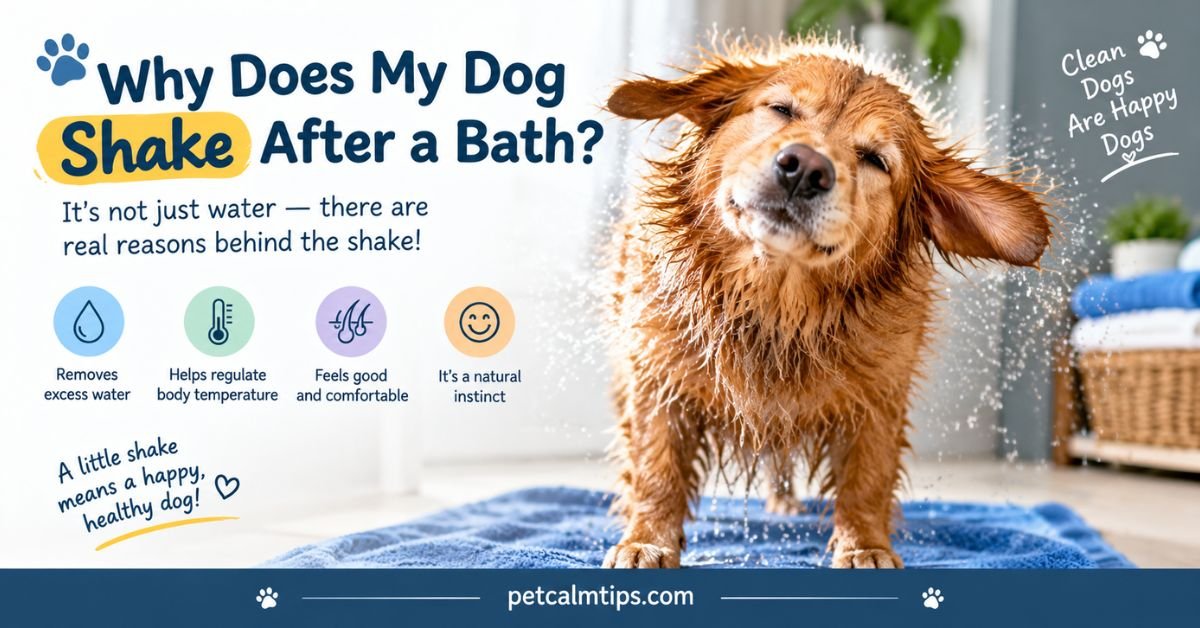
Why Does My Dog Shake After a Bath? Causes & Quick Fixes
Quick Answer
Dogs shake after a bath mainly because it’s a natural reflex that flings water off the coat and helps warm the body. Cold water, a drafty room, or bath-time stress can add trembling on top. Normal shaking fades within a few minutes once your dog is dry and relaxed. Shaking that lasts longer, or comes with other symptoms, deserves a call to your vet.
Table of Contents
- Is It Normal for a Dog to Shake After a Bath?
- Top Causes of Dogs Shaking After a Bath
- Cause 1: The Drying Reflex and Temperature Drop
- Cause 2: Bath-Time Stress, Fear, and Excitement
- What You Can Do at Home Today: 7-Step Plan
- Common Mistakes Owners Make After Baths
- When to Call Your Vet Immediately
- Conclusion
- FAQs
Is It Normal for a Dog to Shake After a Bath?
Yes, in most cases it’s completely normal. Dogs have been shaking off water for as long as there have been wet dogs.
Here’s what normal usually looks like:
- Short, full-body shakes that roll from head to tail
- Shaking that fades within about five to ten minutes
- A dog who stays alert, wags, and still wants treats
- A burst of zoomies afterward
Not normal looks different. Think constant tremors, whining, hiding, a stiff posture, or a dog who won’t settle even when he’s warm and dry.
A bath is also one of the few times your dog gets thoroughly wet, so it can expose problems you’d otherwise miss, like sore skin or irritated ears. That’s why it pays to watch what happens after the shake, not just the shake itself.
Top Causes of Dogs Shaking After a Bath
Several things can overlap, which is why one dog’s shaking doesn’t always match another’s. These are the usual suspects:
- Drying reflex: The most common reason by far
- Feeling cold: Wet fur loses heat quickly
- Stress or fear: Slippery tubs, restraint, and noisy dryers add up
- Excitement or relief: Some dogs shake off tension when it’s over
- Water in the ears: Dogs shake their heads to clear it
- Shampoo irritation: Residue or the wrong product can itch or sting
- Pain or illness: Rare, but it’s the cause you can’t ignore
The first four explain almost every case I’ve seen. We’ll dig into the top two next.
Cause 1: The Drying Reflex and Temperature Drop
Wet fur is heavy, and your dog can’t grab a towel. So he shakes. It’s efficient, too, because one good shake removes a surprising amount of water.
There’s a second job hiding in there. As water evaporates from skin, it pulls heat away, and shivering-type muscle movement helps him rebuild warmth.
Some dogs feel this more than others. Small breeds, puppies, seniors, and short-coated or hairless dogs lose heat fastest, while thick double coats hold water against the skin for a long time.
Water and room temperature matter more than people expect. Lukewarm water in a cold bathroom still leaves a dog chilled the moment he steps out.
If your dog’s shaking eases as he dries and warms up, that’s a strong sign this is the cause. A quick towel and a warm spot usually settle it.
Cause 2: Bath-Time Stress, Fear, and Excitement
Some dogs shake because they’re nervous, not cold. Running water, a slick tub floor, being held in place, and a loud dryer are a lot to take in.
Dogs often “shake off” after tense moments, the same way you might exhale hard after a stressful meeting. (You’ve probably seen this at the vet’s office too.)
Look for these stress signals alongside the shaking:
- Lip licking or yawning
- Tucked tail and lowered body
- Wide eyes showing the whites
- Panting when he isn’t hot
- Trying to escape or hide afterward
Excitement can look similar. A dog who shakes, wiggles, and then races around the house is usually celebrating, not suffering.
The fix is making baths predictable and rewarding. A rubber mat, a lick mat smeared with peanut butter (xylitol-free), and calm handling can change how your dog feels about the whole routine over a few weeks.
What You Can Do at Home Today: 7-Step Plan
Tonight’s bath doesn’t have to end in shivers. Try this routine:
- Warm the room first. Close the door and let the bathroom heat up before you start.
- Use lukewarm water. If it feels hot on your wrist, it’s too hot for him.
- Protect the ears. Gently place a cotton ball at each ear opening, and remove it afterward.
- Rinse until the water runs clear. Leftover shampoo is a top cause of itching.
- Towel him the second he’s out. Let him shake, then wrap him right away.
- Dry him thoroughly. Use a second towel or a dryer on low heat, kept at a distance.
- Reward and relax. Offer a treat, a cozy bed, and quiet time.
Watch him for ten to fifteen minutes afterward. If the shaking fades as he warms, you’ve found your answer.
7 Common Mistakes Owners Make After Baths
Most of these come from good intentions, so don’t beat yourself up. Here are the ones I see most often:
- Hot water. It can irritate skin and leave dogs more chilled when it cools.
- Sending him outside wet. In cool weather, this is an invitation to shiver.
- Using human shampoo. Dog skin has a different pH, so use a dog-specific product.
- Skipping the rinse. Residue causes itching, scratching, and more shaking.
- Scolding the shake. He’s not misbehaving, and punishment adds stress.
- Rushing a scared dog. Fast, forceful baths make fear worse next time.
- Ignoring the ears. Trapped water can lead to head shaking and, sometimes, infection.
Fix even two of these and you’ll likely notice a calmer dog.
When to Call Your Vet Immediately
Everything above is general advice. This section is different, because these signs point to a possible medical problem.
Call your vet right away if you see:
- Shaking that continues more than 30 minutes after he’s dry and warm
- Vomiting, diarrhea, or sudden weakness
- Pale gums, collapse, or difficulty breathing
- Facial swelling, hives, or intense itching (possible allergic reaction)
- Head tilting, ear odor, or constant ear scratching
- Red, raw, or painful skin
Puppies, seniors, and small dogs can get dangerously cold faster, so don’t wait long with them.
I can’t diagnose your dog from an article, and no guide can. If your gut says something’s off, trust it and make the call.
Conclusion
So, why does my dog shake after a bath? Most of the time it’s a normal drying reflex, sometimes with a little chill or bath-time nerves mixed in. It’s rarely a sign that something’s wrong.
Warm the room, use lukewarm water, dry him quickly, and reward calm behavior. Those small changes solve the problem for most dogs.
Your next step is simple: at the next bath, towel him immediately and watch how long the shaking lasts. If it fades quickly, relax. If it doesn’t, call your vet.
You’re clearly a caring owner, and your dog’s lucky to have someone who notices.
Explore More Expert-Reviewed Pet Care Guides: How to Stop My Dog From Chewing Furniture
Why Does My Dog Sleep With His Eyes Open?
How to Make Dog Drink More Water
Can Dogs Eat Raw Eggs?
Why Is My Dog Panting for No Reason at Night?
How to Stop a Dog From Jumping Up on Guests
FAQs
1: Is it normal for a dog to shake after a bath?
Yes, it’s very common. Shaking removes water and helps your dog warm up. It should fade within several minutes once he’s dried off. If it continues well past that, or he seems unwell, contact your vet.
2: Why is my dog shivering after a bath instead of just shaking?
Shivering usually means he’s cold. Wet fur loses heat fast, especially in small, short-coated, young, or older dogs. Wrap him in a dry towel, move him somewhere warm, and finish drying him. If shivering persists once he’s warm, call your vet.
3: How long should a dog shake after a bath?
Most dogs settle within five to ten minutes. A few extra minutes is fine if the room is cool or he’s anxious. Anything lasting half an hour after he’s warm and dry deserves a vet’s attention.
4: Can bath-time stress make my dog shake?
Absolutely. Slippery tubs, restraint, and loud dryers can all make dogs nervous. Watch for lip licking, panting, or a tucked tail. Treats, a non-slip mat, and calm handling can gradually make baths easier.
5: Should I let my dog shake off before drying him?
Yes, a quick shake in the tub or with a towel loosely draped over him is fine and removes plenty of water. Then dry him right away. Don’t let him stay damp for long, particularly in cool weather.
6: Why does my dog get zoomies after a bath?
Zoomies are usually relief and excess energy. Bath time is tense for many dogs, and running around helps them let it go. It’s harmless as long as he’s dry and the floors aren’t slippery.






3 Comments