
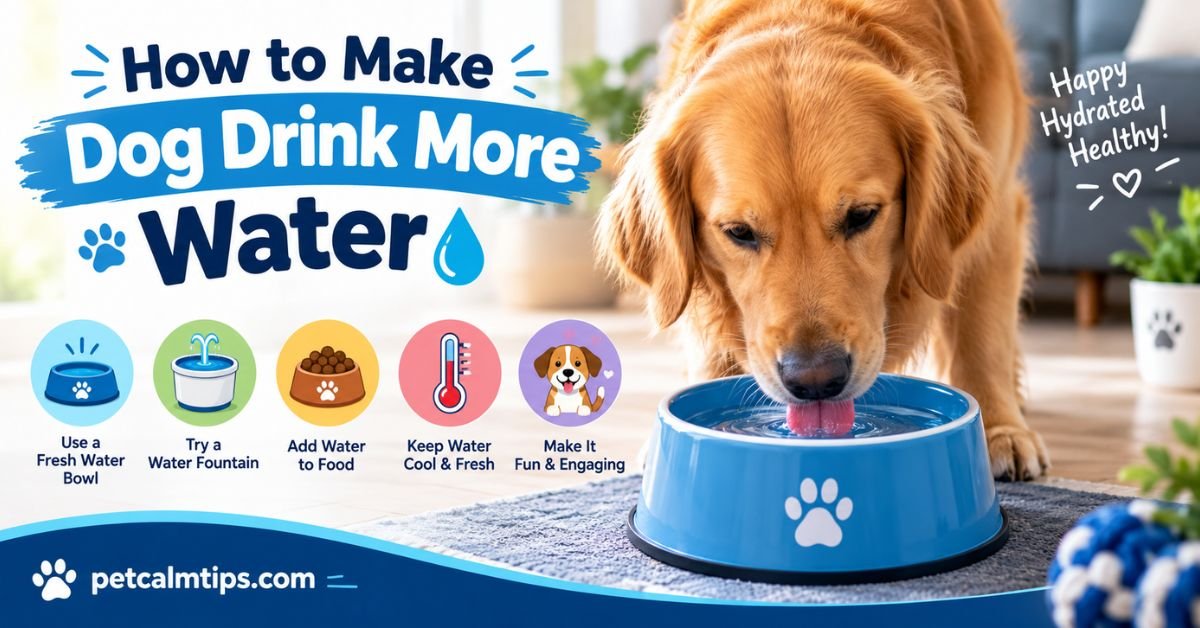
How to Make Dog Drink More Water: (7 Gentle Tips That Work)
Quick Answer
How to make dog drink more water. Offer fresh, cool water in a clean, wide bowl, and place several bowls around your home. Add water to meals, try a pet fountain, and offer safe flavor boosters like low-sodium broth. Encourage drinking after walks and play. If your dog refuses water for 24 hours or seems unwell, call your vet.
Table of Contents
- Why Won’t My Dog Drink Enough Water?
- Cause 1: The Bowl and Water Setup
- Cause 2: A Dry Kibble Diet
- Cause 3: Pain, Nausea, or an Underlying Illness
- What You Can Do At Home Today: 7-Step Plan
- Common Mistakes Dog Owners Make
- When to Call Your Vet Immediately
- Conclusion
- FAQs
Why Won’t My Dog Drink Enough Water?
Dogs don’t drink on a schedule. They drink when they feel thirsty, and a few small things can quietly switch that signal off.
A rough guideline many vets use is about one ounce of water per pound of body weight each day. That’s only a starting point, though. A hot day, a long hike, or a salty treat changes the number a lot.
In my 12 years at a Texas shelter, I’ve seen dogs ignore a perfectly good bowl for days. Then they’d gulp down water from a muddy puddle outside within minutes. The water wasn’t the problem. The setup was.
Here are the usual reasons a dog drinks less than you’d like:
- The bowl smells, feels, or sounds unpleasant.
- The water is warm, stale, or tastes of chlorine.
- Their food already contains plenty of moisture.
- A new home, new pet, or new routine is causing stress.
- They have mouth pain, nausea, or joint pain that makes drinking uncomfortable.
Some dogs also just forget. Puppies that get absorbed in play and seniors with foggy memory may skip drinks without feeling thirsty enough to notice.
Here’s the key idea to hold onto. Behavior and environment explain most low-water days. Illness explains fewer, but those cases matter most.
Watch the pattern, not a single day. One lazy afternoon is normal. Three days of barely touching the bowl is a signal worth acting on.
You can also check hydration at home. Gently lift the skin between the shoulder blades. It should snap back quickly, and the gums should feel moist, not tacky.
The next three sections break down the biggest causes so you can match your dog to the right fix.
Cause 1: The Bowl and Water Setup
This is the most common cause I see, and the easiest to fix. Dogs have a far stronger sense of smell than we do. A bowl that looks clean to you can smell off to them.
Bowl material matters. Plastic holds onto odors and can develop a thin, slimy film called biofilm. Stainless steel or ceramic is usually easier to keep fresh. Some dogs also dislike the clang of a metal tag hitting a steel bowl.
Bowl shape matters too. Flat-faced breeds like pugs and bulldogs struggle with deep bowls. Dogs with long ears can dip them in the water and get annoyed. A wide, shallow bowl often solves both problems.
Location counts. A bowl in a noisy hallway or right beside the litter box puts some dogs off. Shy dogs may avoid drinking when someone is watching or when another pet guards the area.
Water quality is the other half. Many dogs prefer cool, fresh water, and some turn their nose up at heavily chlorinated tap water. Letting tap water sit for a bit or using filtered water can help.
Here’s a quick checklist to run through tonight:
- Wash the bowl with soap and hot water daily.
- Refill with fresh water at least twice a day.
- Move the bowl to a calm, easy-to-reach spot.
- Try a different material or a wider shape.
- Add a second bowl on another floor.
Moving water is another trick. Many dogs love running water, which is why they chase the garden hose. A pet fountain can turn a bored drinker into an interested one. (Keep the filter and pump clean, or you’ll recreate the slimy bowl problem.)
If your dog starts drinking more after one simple change, you’ve likely found your answer.
Cause 2: A Dry Kibble Diet
Food is the sneaky cause. Dry kibble contains only a small amount of moisture, often around ten percent. Canned food can contain roughly three-quarters water.
A dog eating wet food can look like a low drinker simply because the meal does the work. A dog on all-kibble needs to make up the difference at the bowl.
This is why a change in diet often changes drinking habits. Switching from wet to dry can leave a dog mildly under-hydrated before you notice. Switching the other way can make the bowl seem almost untouched.
Salt also plays a role. Salty treats and table scraps make dogs thirstier, while very bland diets may leave them less motivated to drink.
Here are easy ways to add moisture without changing your dog’s whole diet:
- Soak the kibble. Add warm water and let it sit for a few minutes.
- Mix in wet food. Even a spoonful adds moisture and flavor.
- Add low-sodium broth. Make sure it contains no onion or garlic, which are toxic to dogs.
- Offer water-rich snacks. Cucumber, watermelon (seedless), and plain cooked pumpkin are common vet-approved options.
- Freeze treats. Ice cubes, or frozen broth in a tray, make hydration feel like play.
Introduce new foods slowly. A sudden big change can upset a sensitive stomach, and a sick tummy will make your dog drink even less.
Check with your vet before adding supplements or changing meals if your dog has kidney, heart, or digestive problems. Those dogs often need carefully measured sodium and fluids.
I once worked with a shy beagle who barely touched her water. Adding warm water to her kibble got her drinking again within two days. Sometimes it really is that simple.
Cause 3: Pain, Nausea, or an Underlying Illness
This is the cause you need to take seriously. A dog who can’t drink comfortably, or doesn’t feel well enough to want to, may be hiding a health problem.
Mouth and dental pain. Cracked teeth, gum disease, or an oral infection can make lapping painful. You may notice drooling, dropped food, or a dog who approaches the bowl and then backs away.
Nausea. Dogs who feel queasy often avoid food and water. Lip licking, swallowing repeatedly, and eating grass can all point to an upset stomach.
Joint pain and mobility trouble. Senior dogs with arthritis may find it hard to bend down to a floor-level bowl. A raised bowl or a spot on a non-slip mat can make a big difference.
Systemic illness. Infections, fever, and other conditions can reduce thirst. Be aware that some diseases, such as kidney disease and diabetes, usually increase thirst, but advanced illness can lead to a drop in drinking later. Any big change in either direction deserves attention.
Look for these warning signs alongside low water intake:
- Lethargy or hiding
- Vomiting or diarrhea
- Loss of appetite
- Dry, tacky gums
- Sunken eyes
- Bad breath that’s suddenly worse
Don’t try to diagnose this at home. Only a vet can examine your dog, run bloodwork if needed, and tell you what’s behind the change.
If your dog seems otherwise bright, eats well, and plays, a simple setup fix is usually enough. But if two or three of these signs show up together, don’t wait.
Trust your instincts here. You know your dog’s normal better than anyone, and a gut feeling that something’s off is worth a phone call.
What You Can Do At Home Today: 7-Step Plan
This plan works for healthy dogs who are drinking a bit less than usual. Try the steps in order, and give each a day or two before judging the result.
Step 1: Refresh and reset the bowl. Wash it with hot, soapy water and refill with cool, fresh water. Do this every day, without exception.
Step 2: Add more water stations. Place bowls in two or three rooms. Dogs drink more when water is easy to find, especially seniors.
Step 3: Try a pet fountain. Moving water attracts many dogs. Pick one that’s easy to clean and quiet enough that it won’t scare a nervous pup.
Step 4: Boost the meals. Add a few tablespoons of warm water or wet food to kibble. It’s the gentlest way to raise daily fluid intake.
Step 5: Flavor the water safely. Add a splash of low-sodium, onion-free chicken or beef broth. You can also drop a few ice cubes in the bowl.
Step 6: Make drinking part of routine. Offer water after walks, play sessions, and naps. Praise gently when your dog drinks, so it becomes a happy habit.
Step 7: Track intake for three days. Measure the water you put out and what’s left. It’s the best way to see whether your changes are working.
A few extra tips help the plan along:
- Bring a collapsible bowl on walks and car rides.
- Use a lick mat with a thin layer of water or broth for picky dogs.
- Keep water out of direct sun so it stays cool.
If your dog is drinking noticeably more within a few days, you’re on the right track. If nothing changes after a week, or your dog seems unwell at any point, call your vet.
8 Common Mistakes Dog Owners Make
Good intentions lead to plenty of well-meaning errors here. I’ve made some of them myself, so no judgment.
1: Forcing water. Squirting water into your dog’s mouth or holding their head over the bowl can create fear around drinking. It also carries a small risk of choking or inhaling water.
2: Using flavorings that aren’t safe. Never use broth with onion or garlic. Avoid sweetened drinks, milk (many dogs are lactose intolerant), and anything containing xylitol, which is poisonous to dogs.
3: Ignoring the bowl itself. Topping off old water without washing the bowl is one of the biggest mistakes. Biofilm builds up fast, especially in warm weather.
4: Changing too much at once. New bowl, new food, new fountain, and new location in one day makes it impossible to see what’s helping. It can also stress a sensitive dog.
5: Restricting water at night without a vet’s advice. Some owners do this to prevent accidents, but healthy dogs generally need access to water. Talk to your vet if house training is the real issue.
6: Assuming thirst always means health. Drinking a lot more than usual can signal diabetes, kidney problems, or other conditions. More water isn’t always a good sign, so mention big increases to your vet too.
7: Waiting too long. Many owners hope it’ll sort itself out. A day or two of watching is reasonable for a bright, active dog. Longer than that, or any worrying sign, deserves a call.
8: Skipping the hot-weather rules. Dogs can become dehydrated faster in heat, humidity, or after hard exercise. Plan extra water, shade, and rest breaks, and never leave a dog in a parked car.
A simple rule keeps you safe. Make one change at a time, keep things calm, and write down what you notice.
When to Call Your Vet Immediately
Everything above is general advice for a healthy dog who’s just a little under-hydrated. This section is different. These are situations where home remedies aren’t enough.
Call your vet or an emergency clinic right away if your dog:
- Refuses all water for 24 hours
- Has vomiting or diarrhea that continues
- Seems extremely tired, weak, or confused
- Has dry, pale, or sticky gums
- Has sunken eyes or very dry skin that stays “tented” when lifted
- Is panting heavily with no clear reason
- Collapses, stumbles, or has a seizure
Puppies, seniors, small breeds, and dogs with existing conditions can become dangerously dehydrated much faster. For them, call sooner rather than later.
Heatstroke is an emergency too. Signs include heavy panting, thick drool, bright red gums, and weakness. Move your dog to a cool place and head to a vet right away.
Prepare a few notes before you call. Your vet will want to know:
- How long your dog has been drinking less
- Any changes in food, treats, or routine
- Vomiting, diarrhea, or changes in urination
- Medications or supplements your dog takes
Don’t be embarrassed about calling “for nothing.” Vets would much rather hear from you early than see a dog who’s become seriously ill.
Dehydration can progress quickly, and it isn’t something to manage by guesswork. When in doubt, make the call.
Conclusion
Most dogs just need a gentler, smarter setup. A clean bowl, cool fresh water, extra water stations, and a little moisture in meals solve the problem for the majority of owners.
If you’re wondering how to make your dog drink more water, start tonight with Step 1 and add one change at a time. Watch your dog’s energy, gums, and appetite as you go.
Your next step is simple: wash the bowl, refill it, and place a second one in a different room. Then check back in a day or two.
If things don’t improve, or your dog seems unwell, your vet is the right partner. You’re clearly paying attention, and that’s what keeps dogs healthy.
Explore More Expert-Reviewed Pet Care Guides: Why Is My Dog Panting for No Reason at Night?
Dog Vomiting Yellow Foam Treatment at Home
Can Dogs Eat Watermelon Rind Safely?
Why Does My Dog Follow Me to Bathroom?
FAQs
1: How much water should a dog drink each day?
A common rule of thumb is about one ounce per pound of body weight daily. Activity, heat, diet, and age all change this. Dogs on wet food may drink less. If your dog’s habits shift suddenly, mention it to your vet.
2: How do I know if my dog is dehydrated?
Check the gums, which should be moist and slippery. Gently lift the skin on the back of the neck, and it should snap back quickly. Lethargy, sunken eyes, and dry nose or mouth can also show dehydration. Call your vet if you’re unsure.
3: Can I add flavor to my dog’s water?
Yes, but carefully. Low-sodium, onion-free and garlic-free broth is a popular choice, and ice cubes can make water more fun. Avoid sweetened drinks, milk, and anything with xylitol. Introduce flavors slowly and check with your vet if your dog has health issues.
4: Why is my dog suddenly drinking less water?
Common causes include a dirty bowl, a diet change, stress, hot or cold weather shifts, or feeling unwell. If your dog is playful and eating well, simple setup changes usually help. If low drinking lasts more than a day or comes with other symptoms, see your vet.
5: Is it okay to give my dog ice cubes?
Most dogs enjoy ice cubes, and they’re a handy way to encourage hydration. Choose sizes that suit your dog so they aren’t a choking risk, and watch small breeds. Avoid them if your dog has dental problems, since hard ice may hurt sensitive teeth.
6: Should I worry if my dog drinks a lot more than normal?
Yes, it’s worth a call. Sudden, ongoing increases in thirst can point to diabetes, kidney disease, infections, or other conditions. Hot weather and exercise explain some cases. But if you notice constant thirst along with more urination, book a vet visit.






3 Comments