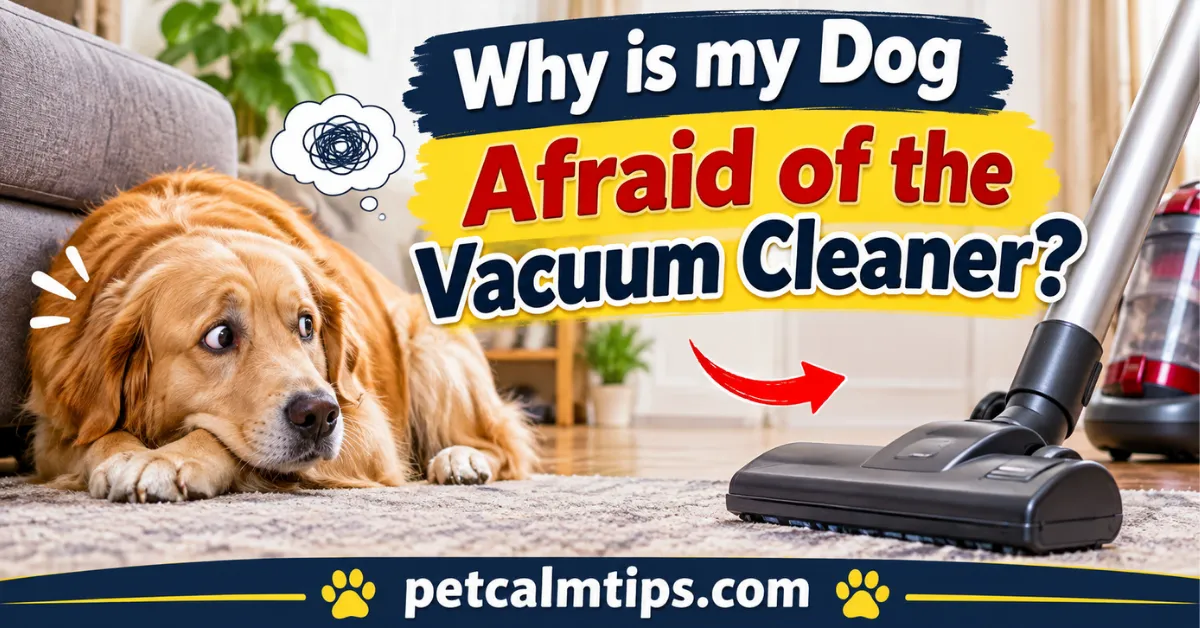
Why Is My Dog Afraid of the Vacuum Cleaner? Causes & Fixes
Quick Answer
Most dogs fear vacuum cleaners because the machine is loud, unpredictable, and unfamiliar. It makes sharp noise, moves in odd patterns, and appears suddenly in a place where dogs expect to feel safe. Limited early exposure, a bad past experience, noise sensitivity, or an anxious temperament can make the fear stronger. Gradual, reward-based training often helps. If the fear is extreme or appears suddenly, check with your veterinarian.
Why Dogs React This Way
Dogs experience the world differently than we do. Their hearing is more sensitive than ours, and they can detect higher frequencies. A vacuum that sounds merely annoying to you may sound harsher and more intense to your dog.
Dogs also read their environment for patterns. Most household objects are quiet and predictable. A vacuum breaks both rules. It roars to life without warning, rolls toward them, changes direction, and chases dust into corners where dogs like to rest.
There’s also no way to explain it. A person understands “this is a cleaning tool and it will stop in ten minutes.” Your dog only knows that something loud and strange is moving through the house. Fear is a normal response to that uncertainty, not a sign of weakness or bad behavior.
Main Causes of Vacuum Fear
Often several factors combine. Understanding which ones apply to your dog helps you choose the right approach.
1: Loud, High-Pitched Noise
Sound is usually the biggest trigger. Vacuums produce loud, sustained noise, and some models have motors or brush rolls with a piercing pitch. Dogs who also dislike thunderstorms or fireworks tend to dislike vacuums, and noise sensitivity can generalize across sounds.
You’ll often see this in dogs who flinch at beeping appliances, dropped pans, or hair dryers too.
2: Unpredictable Movement and Odd Shape
A vacuum moves, but not like a living thing. It has no face, no body language, and no scent a dog can read. It lunges forward, pulls back, and sometimes seems to follow the person holding it. Because dogs rely on body language to judge safety, an object they can’t “read” can feel threatening.
Upright models with a tall body can look especially looming, and robot vacuums add another layer of surprise by moving on their own.
3: Limited Early Exposure
Puppies go through a sensitive socialization period in early life when new sights and sounds are more easily accepted. A puppy who never heard a vacuum, or only met it once in a stressful way, may react strongly as an adult. Dogs adopted from shelters or rescues often have gaps in their history, so owners may never know what they experienced.
4: A Bad Past Experience
Sometimes a single event sets the fear. A hose might have bumped the dog, the vacuum might have started suddenly nearby, or the dog was cornered while it ran. Dogs can form strong associations quickly, especially with frightening experiences, and they don’t always need repeated bad encounters to remember one.
5: Noise Sensitivity or General Anxiety
Some dogs are simply more sensitive by nature. Genetics, temperament, and early life all play a role. A dog who startles easily, struggles with separation, or seems nervous in new situations is more likely to find a vacuum overwhelming.
6: Pain or Health Problems
Don’t overlook the medical side. Dogs in pain, those with hearing changes, and older dogs with cognitive changes can become more reactive to noise. If your dog’s fear of the vacuum is new, sudden, or accompanied by other behavior changes, a health issue may be contributing. Only a veterinarian can sort that out.
7: Your Dog Picking Up on Your Mood
Dogs are very tuned in to people. If vacuuming is stressful for you, or your dog has learned that it comes with raised voices or rushing, that mood can add to the fear. This is rarely the sole cause, but it can make things worse.
Signs Your Dog Is Afraid
Fear isn’t always dramatic. Some signs are obvious, and others are easy to miss. Common signs include:
- Hiding, leaving the room, or trying to get behind furniture
- Trembling, panting, or pacing
- Tucked tail, lowered body, flattened ears
- Whale eye (showing the whites of the eyes)
- Lip licking, yawning, or turning away
- Drooling or refusing treats they’d normally accept
- Barking, lunging, or snapping at the machine
That last one can be confusing. A dog who attacks the vacuum may look brave, but barking and lunging often come from fear or frustration, not confidence. Some dogs, particularly herding breeds, may also be chasing or trying to control the moving object. The behavior can look similar, but the approach is the same: lower the stress and teach calm.
A quick tip: if your dog won’t eat a high-value treat while the vacuum is in view, they’re likely too stressed to learn at that distance.
How to Help Your Dog Step by Step
The standard approach is gradual exposure paired with something good, usually called desensitization and counterconditioning. In plain terms, you show the vacuum at a level your dog can tolerate and connect it with rewards, then slowly increase the challenge. Go at your dog’s pace, not a schedule.
Here’s an example (hypothetical, for illustration): Imagine a dog who runs from the room when the vacuum is brought out. A trainer would start by simply placing the silent vacuum in a far corner while the dog gets treats, long before turning anything on.
1. Give your dog a safe retreat. Provide a quiet room, crate, or bed away from the noise. Let your dog choose to be there. During vacuuming, close the door and offer a chew or snuffle mat.
2. Start with the vacuum off. Place it in the room at a distance where your dog stays relaxed. Offer small, tasty treats, then put the vacuum away. Repeat over several short sessions.
3. Reduce the distance gradually. Over days, move the vacuum slightly closer while rewarding calm behavior. If your dog stiffens, hides, or refuses food, you’ve gone too fast. Back up a step.
4. Add small movements. Move the silent vacuum a few inches, then more, rewarding after each change. Let your dog sniff it if they’re curious, but never push them toward it.
5. Introduce sound from far away. Start the vacuum in another room or even another part of the house, with a treat or play session going on. Turn it off quickly at first, and make sure your dog stays relaxed.
6. Bring the sound closer over time. Increase the duration and proximity only when your dog remains comfortable. Short sessions of a few minutes are plenty.
7. Practice real vacuuming. Once your dog tolerates the running machine at a distance, vacuum a small area while rewarding calm behavior. Keep early sessions short, then build up.
Progress is rarely a straight line. Some dogs improve in a couple of weeks, and others need months. Setbacks are normal and don’t mean you’ve failed.
If the sound is the main issue, you might practice with a quieter model or lower setting. Some owners also find it easier to vacuum while the dog is out on a walk, which avoids stress entirely while training continues separately.
Common Mistakes to Avoid
1: Forcing your dog to “face” the vacuum. Flooding a scared dog doesn’t teach them it’s safe. It can intensify the fear and damage trust.
2: Punishing or scolding. Yelling at a dog who barks or hides adds more stress and may teach them that showing fear is unsafe, so they stop warning you.
3: Going too fast. Many people skip straight to a running vacuum. If your dog is already panicking, the training isn’t working.
4: Over-comforting in a way that signals panic. Calm reassurance is fine, but frantic fussing can raise anxiety. Stay relaxed and matter-of-fact.
5: Letting a child chase the dog with the vacuum. Never use the machine to herd, tease, or corner a dog.
6: Ignoring the early signs. Lip licking, yawning, or turning away tell you your dog is uncomfortable. Respond before the fear escalates to barking or biting.
7: Expecting it to be fixed in one session. Fear changes slowly. Short, positive repetitions work better than long, stressful ones.
When to Call Your Vet or a Behavior Professional
Most vacuum fear is manageable at home, but some situations call for professional help.
Schedule a veterinary visit if:
- The fear started suddenly or got much worse
- Your dog also seems to be in pain, has trouble hearing, or is showing other behavior changes
- Your dog is older and seems confused or newly anxious
- Fear reactions include repeated destructive behavior, house soiling, or loss of appetite
Consider a professional trainer or veterinary behaviorist if:
- Your dog panics, escapes, or injures themselves
- They bite or snap when the vacuum is near
- The fear extends to many sounds or situations
- Home training hasn’t helped after consistent effort
For severe anxiety, a veterinarian may discuss behavior plans and, in some cases, medication as part of a broader approach. Never give your dog human medications or supplements without veterinary guidance, because some are dangerous to dogs.
Seek emergency care right away if your dog hurts themselves while fleeing, such as through a window, glass door, or fence, or if they are collapsing, struggling to breathe, or seriously injured.
Prevention and Long-Term Care
You can’t prevent every fear, but a few habits lower the odds.
- Introduce the vacuum early. With puppies, let them see and hear it at a low level, paired with treats, during the socialization period.
- Keep sessions predictable. Using the vacuum on a consistent schedule, with a calm routine beforehand, reduces surprise.
- Offer a safe space. A familiar room with a chew or toy gives your dog an escape.
- Support overall confidence. Gentle exposure to other everyday sounds, plus regular exercise and enrichment, can help anxious dogs cope.
- Watch for early signs. Respond to mild unease before it grows into a strong fear.
- Maintain the training. Even after your dog is comfortable, an occasional treat-paired vacuum session keeps the association positive.
Some dogs will always be a little wary, and that’s okay. The aim is a dog who can recover quickly and feel safe, not necessarily one who loves the vacuum.
Explore More Expert-Reviewed Pet Care Guides: Why Does My Dog Follow Me Everywhere in the House?
How to Calm Dog During Vet Visit
Why Does My Dog Eat Grass Everyday?
How to Stop Dog From Barking in Crate at Night
Why Does My Dog Sleep on My Feet?
Conclusion
If you’ve been wondering why your dog is afraid of the vacuum cleaner, the answer is usually a mix of loud sound, strange movement, and little chance to learn that it’s harmless. Past experiences, temperament, and sometimes pain or health changes can make the reaction stronger.
The most effective response is patience. Give your dog a safe place, introduce the vacuum gradually, reward calm behavior, and avoid forcing or punishing. If the fear is sudden, severe, or paired with aggression or other changes, talk to your veterinarian.
Your next step: put the silent vacuum in a far corner today, offer a few treats, and put it away. Small, calm sessions add up.
FAQs
1: Is it normal for dogs to be scared of vacuum cleaners?
Yes, it’s very common. Vacuums combine loud noise, unpredictable movement, and an unfamiliar shape. Many dogs react with hiding, barking, or avoidance. It becomes a concern when the fear is severe, getting worse, or leads to panic, injury, or aggression.
2: Will my dog ever get used to the vacuum?
Many dogs improve with gradual, reward-based training, though timelines vary. Some adapt within weeks, others need longer, and a few stay somewhat wary. Progress depends on your dog’s temperament, history, and how consistently you practice at a comfortable pace.
3: Why does my dog bark at or attack the vacuum?
It may be fear, frustration, or a chase instinct, especially in herding breeds. Barking and lunging can look brave but often reflect stress. Keep your dog at a distance where they stay calm, and work with a trainer if the behavior is intense.
4: Should I put my dog outside or in another room while vacuuming?
A quiet room with the door closed, a chew toy, and perhaps soft background sound is a good choice. It prevents stress while you train separately. Avoid sending a frightened dog outside alone, since they could escape or become more anxious.
5: Can a dog’s fear of the vacuum come on suddenly?
Yes. A new scare, a painful experience, hearing changes, or age-related changes can trigger it. If the fear appears out of nowhere or comes with other behavior changes, schedule a veterinary checkup to rule out medical causes.
6: Do robot vacuums scare dogs less?
It depends on the dog. Robot vacuums are often quieter, but they move on their own, which some dogs find unsettling. Introduce one gradually, with the device off first, and watch your dog’s body language the same way you would with a regular vacuum.