
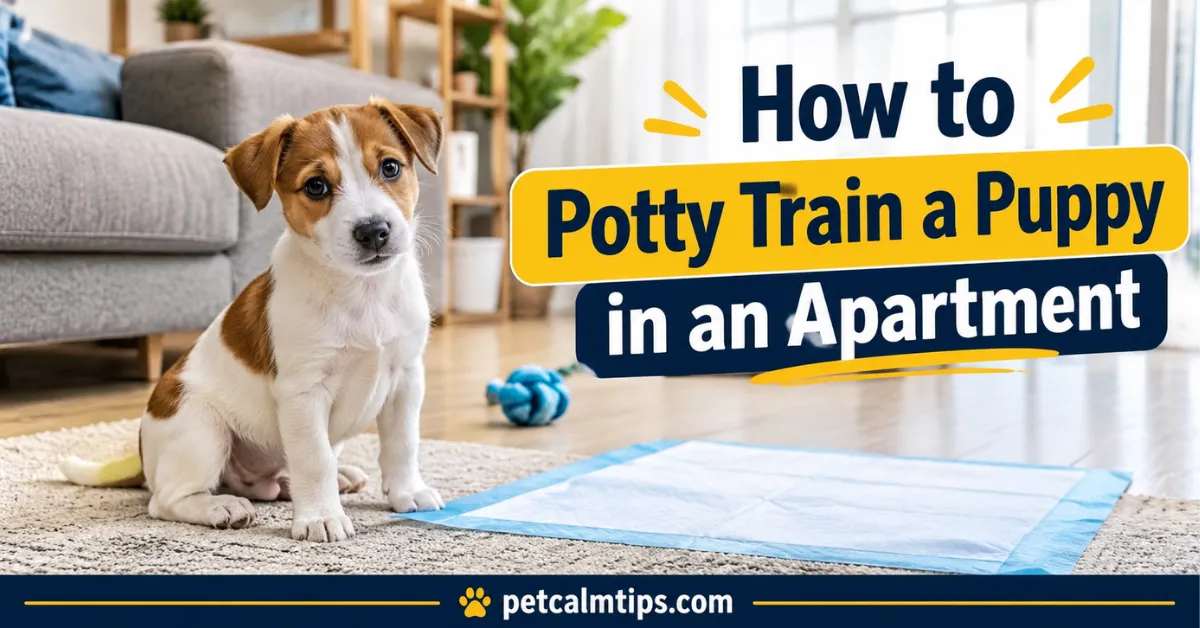
How to Potty Train a Puppy in an Apartment: Simple Plan
Quick Answer
To potty train a puppy in an apartment, set a strict routine. Take your puppy to one designated spot (outdoors, or a pad or turf patch) after waking, eating, drinking, and playing, and at least every couple of hours. Reward immediately after they go. Supervise or crate them between trips, and clean accidents with an enzymatic cleaner. Most puppies need several weeks to a few months of consistency.
Why Apartment Potty Training Is Different
Puppies have small bladders and limited control. They also tend to go wherever they happen to be unless they learn otherwise. In a house with a yard, you can open the door and let them out. In an apartment, every bathroom trip takes planning.
That has a real downside: when a puppy has to go right now, you may have a long walk to the exit. Many owners lose the race on the way to the elevator. It also has an upside. A smaller living space makes it easier to spot the signs that a puppy needs to go: sniffing in circles, whining, suddenly leaving play, or heading toward a corner.
Plan around the apartment from day one rather than treating it as an obstacle.
What You Need Before Day One
Gather your supplies before your puppy comes home:
- A properly sized crate or a small playpen. Puppies generally avoid soiling where they sleep, so a crate helps build bladder control. It should be big enough to stand and turn around in, but not so big that one end becomes a bathroom.
- Small, soft treats that your puppy can swallow quickly.
- A leash, harness, and waste bags kept right by the door.
- An enzymatic cleaner made for pet urine. Regular cleaners can leave a scent that draws your puppy back to the same spot.
- Potty pads, a turf patch, or a litter-style tray if you plan to use an indoor option, especially if you live on a high floor.
- A written schedule you can share with everyone in the household.
Choosing Your Method: Outdoor, Indoor, or Both
There isn’t one correct method. The best choice depends on your building, your work schedule, and your puppy’s age and vaccination status.
Outdoor Training
Outdoor training teaches your puppy the habit you ultimately want. It’s usually the better long-term choice if you can get outside quickly and often. The drawbacks are bad weather, long elevator waits, and the number of trips required.
Ask your vet when it’s safe to take a young puppy to public ground. Until vaccinations are complete, many vets suggest limiting exposure to areas where unvaccinated or unknown dogs have been.
Indoor Training
A pad, turf patch, or tray can work well for small breeds, high-rise residents, owners with mobility limits, or puppies who aren’t yet cleared to go outside. The drawback is that your puppy may learn that going indoors is acceptable, which can make the switch to outdoors harder later.
The Hybrid Approach
Many apartment owners use both. They take the puppy outside during the day and keep an indoor spot for overnight or emergencies. If you choose this route, keep the indoor spot in one consistent location. Plan how you’ll phase it out later. That could mean moving it gradually closer to the door, then outside.
The Step-by-Step Potty Training Plan
Step 1: Pick One Potty Spot
Choose a single place and always lead your puppy there. The smell of previous visits helps trigger the habit. Carry small puppies if you need to, since they may not make it down the hall on their own.
Step 2: Take Your Puppy Out at Predictable Times
Puppies usually need to go:
- Right after waking up
- Shortly after eating or drinking
- After play or excitement
- Before and after crate time
- Before bed
Between those moments, a common rule of thumb is that a puppy can hold their bladder for about one hour per month of age, plus one. That’s only a rough guide, and many young puppies need to go more often. Start frequently and extend the gaps as your puppy succeeds.
Step 3: Use a Cue Word
When you reach the spot, stay calm and quiet. Say a short cue such as “go potty” once, then wait. Don’t play or chat yet. If nothing happens after a few minutes, go back inside, crate or supervise your puppy, and try again shortly.
Step 4: Reward Immediately
The reward has to come within seconds of finishing. Praise warmly and give a treat right at the spot, not after the elevator ride home. Timing is what teaches your puppy that going there is the right choice.
Step 5: Supervise or Confine Between Trips
When you can’t watch your puppy, use the crate or a playpen. When you can, keep them in sight, or use a leash tied to you indoors so they can’t sneak off. Most accidents happen when no one is watching.
Step 6: Keep Meals and Water Predictable
Feed at set times, usually the same few times each day for a young puppy. Predictable meals lead to more predictable bathroom trips. Follow your vet’s advice on food amounts and on when to pick up the water bowl in the evening. Never withhold water to avoid accidents.
Step 7: Extend Freedom Slowly
Once your puppy goes accident-free for a good stretch, allow access to one more room or an extra hour of free time. If accidents return, go back a step. Setbacks are a normal part of training.
A Sample Daily Schedule
This is an example, not a prescription. Adjust it to your puppy’s age and your own routine.
| Time | Activity |
|---|---|
| 6:30 a.m. | Straight to the potty spot, then breakfast |
| 7:00 a.m. | Potty trip again, then short play |
| 9:30 a.m. | Potty trip, then nap in crate |
| 12:00 p.m. | Potty trip, lunch, another trip after |
| 3:00 p.m. | Potty trip, play, training |
| 6:00 p.m. | Dinner, then potty trip |
| 8:30 p.m. | Last water check, play, potty trip |
| 10:30 p.m. | Final trip before bed |
Very young puppies often need at least one overnight trip. Keep it boring: no play, low lights, calm voice, then back to bed.
As for a realistic timeline, many puppies begin showing progress within a few weeks. Fully reliable habits often take a few months, and some puppies, especially small breeds, take longer. Progress is rarely a straight line, so judge by the overall trend.
Solving Common Apartment Challenges
Long trips to the door. Keep the leash and shoes by the exit and carry your puppy until they’re reliable. Small puppies often make it if you move fast.
High floors and slow elevators. If the wait is long, use an indoor option for the earliest and most urgent trips, such as first thing in the morning, and move outdoors for the rest.
Bad weather. Some puppies refuse to go in rain, snow, or cold. A covered area, a puppy-safe coat for small or short-haired breeds, and a short, calm routine can help. Keep an indoor backup for severe weather.
Noise and distractions. Hallway sounds, other dogs, and busy sidewalks can keep a puppy from focusing. Pick the quietest spot you can and stay boring until they go.
Neighbors. Excited barking or crying in the crate can bother neighbors. Exercise and a potty trip before crating help. Never leave a crying puppy to “cry it out” if they might need the bathroom.
Working long hours. A young puppy can’t wait all day. Arrange a midday visit from a friend, family member, or dog walker. Without one, a playpen with a pad area is safer than forcing a puppy to hold it.
Mistakes to Avoid and How to Handle Accidents
1: Punishing accidents. Scolding or rubbing a puppy’s nose in a mess usually teaches them to hide when they go, not where to go. Interrupt calmly if you catch them in the act, then take them to the right spot and reward success.
2: Poor timing on rewards. Treats given after you return indoors don’t connect to the behavior.
3: Too much freedom too soon. A puppy who has had a few good days isn’t fully trained yet.
4: Inconsistent routines. If household members follow different rules, your puppy learns that the rules are optional.
5: Cleaning with the wrong products. Ammonia-based cleaners can smell like urine to a dog. Use an enzymatic cleaner and let it work as directed.
When an accident happens, stay calm. Clean it thoroughly, review what led to it, and adjust. Usually the answer is more frequent trips or closer supervision.
When to Call Your Vet
Most potty training trouble comes from timing and routine. But sometimes the cause is medical. Contact your vet if you notice:
- Frequent urination in small amounts, straining, or crying while peeing
- Blood in the urine
- Sudden accidents in a puppy who had been doing well
- Constant thirst with very frequent urination
- Diarrhea, constipation, or vomiting that persists
- Licking at the genital area more than usual
Urinary tract infections, parasites, and digestive problems can all disrupt house training. A vet is the only one who can diagnose the cause.
Get urgent care right away if your puppy can’t urinate, seems to be in pain, has repeated vomiting, seems very lethargic, or shows other signs that worry you. When in doubt, call your vet or an emergency clinic.
- Explore More Expert-Reviewed Pet Care Guides: When Do Puppies Lose Their Baby Teeth?
- How to Take Care of a Newborn Puppy Without Mother
- When Can Puppies Go Outside for the First Time?
- 8 Week Old Puppy Not Eating?
Conclusion
Learning how to potty train a puppy in an apartment comes down to a few habits: frequent trips, one consistent spot, instant rewards, and close supervision. Choose the outdoor, indoor, or hybrid method that fits your building and schedule, and plan for the challenges unique to apartment life, such as elevators, weather, and long workdays.
Expect accidents. They’re part of the process and not a sign of failure. If progress stalls or you notice signs of a health problem, check in with your vet.
Your next step is simple: write down a schedule tonight, put the leash by the door, and get everyone in your household to follow it.
Frequently Asked Questions
1: How long does it take to potty train a puppy in an apartment?
Many puppies show progress within a few weeks, but reliable habits often take a few months. Small breeds may take longer because of their tiny bladders. Age, consistency, and the number of supervised opportunities all matter. Judge progress by trends, not single accidents.
2: Should I use puppy pads or take my puppy outside?
Both can work. Outside is usually better for long-term habits, while pads suit puppies who can’t go out yet, small breeds, or high-rise residents. A hybrid approach is common. If you use pads, plan how you’ll transition to outdoors later.
3: How often should a puppy go out?
Young puppies often need a trip every one to two hours, plus after waking, eating, drinking, and play. As a rough guide, many puppies can hold their bladder about one hour per month of age plus one. Start with more frequent trips and extend gradually.
4: What if my puppy won’t go outside?
Pick a quiet spot, stay calm, and wait a few minutes. If nothing happens, return inside and supervise or crate, then try again shortly. Weather, noise, and distractions can interfere. Reward immediately when they do go.
5: Is crate training helpful for apartment potty training?
Yes, for most puppies. Dogs generally avoid soiling their sleeping area, so a properly sized crate helps build control. It shouldn’t be used for long stretches beyond what your puppy can handle, and it should never be used as punishment.
6: Why is my puppy having accidents after doing well?
Common reasons include too much freedom too soon, a change in routine, or excitement. If the change is sudden or comes with frequent urination, straining, blood, or other symptoms, see your vet to rule out a medical problem.





One Comment