
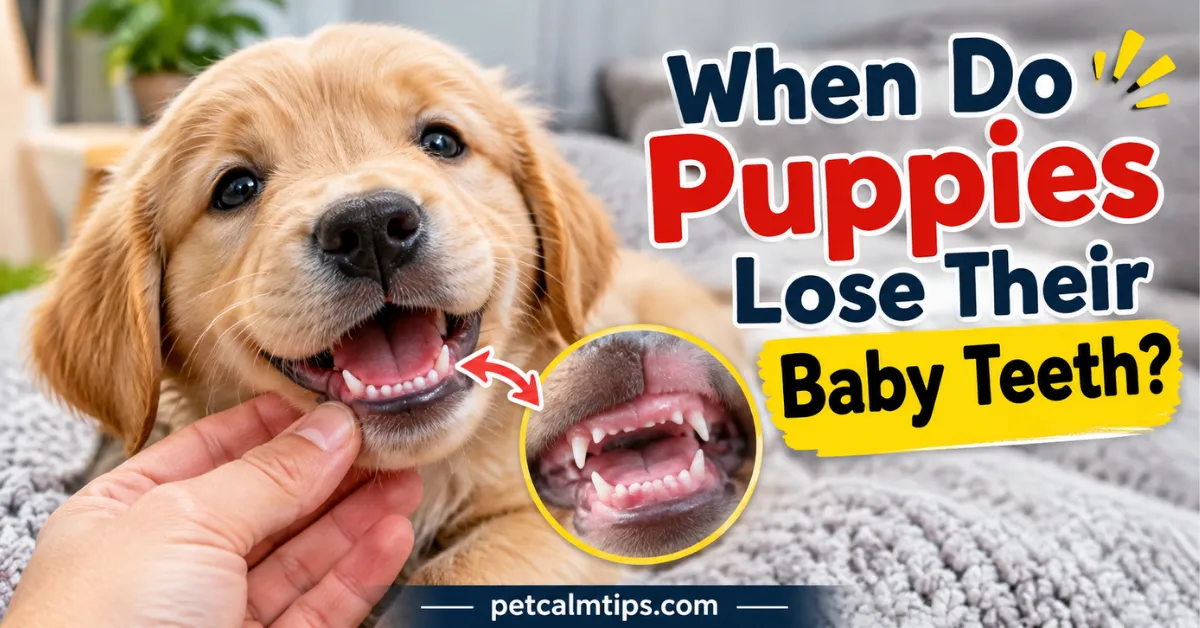
When Do Puppies Lose Their Baby Teeth? Timeline & Vet Tips
Quick Answer
Most puppies start losing their baby teeth at about 3 to 4 months old. The process usually wraps up by around 6 months, when all 42 adult teeth are in. The tiny front teeth (incisors) fall out first, followed by the canines and premolars. If baby teeth are still in place after 6 months, or an adult tooth is growing beside one, have your vet take a look.
Puppy Teeth 101: From 28 Baby Teeth to 42 Adult Teeth
Puppies, like people, get two sets of teeth. Unlike people, they don’t wait years between sets. The whole swap happens in just a few months.
Puppies are born without visible teeth. Their baby teeth, also called deciduous or primary teeth, begin breaking through the gums at roughly 2 to 4 weeks old. By around 8 weeks, most puppies have a full set of 28 sharp little teeth. Those needle-like points are the reason puppy bites hurt so much.
Adult dogs have 42 permanent teeth, which means a puppy gains 14 teeth that have no baby predecessor. Those extra teeth are the molars, which only come in as permanent teeth.
Here’s how the process works. As each adult tooth develops under the gum, it pushes against the root of the baby tooth above it. The baby tooth’s root gradually dissolves, and the tooth loosens and falls out. In a healthy mouth, the baby tooth is gone or nearly gone by the time the adult tooth shows up.
Puppy Teething Timeline by Age
Every puppy runs on a slightly different schedule, and breed, size, and genetics all play a part. Still, the general pattern is predictable. Use the table below as a rough guide, not a deadline.
| Age | What’s Typically Happening |
|---|---|
| 2–4 weeks | First baby teeth start breaking through the gums |
| About 8 weeks | Full set of 28 baby teeth is usually in |
| 3–4 months | Teething begins; baby incisors start loosening and falling out |
| 4–5 months | Adult canines (the “fangs”) come in; baby canines fall out |
| 4–6 months | Premolars replace baby premolars; adult molars erupt behind them |
| About 6 months | Most or all 42 adult teeth are in place |
Veterinary sources describe teething as starting somewhere between 3 and 4 months and ending around 6 months, and the sub-stages above fall within that window. If your 5-month-old is still missing a few adult teeth, don’t panic. If your 7-month-old still has baby teeth in place, that’s a different story, and we’ll cover it below.
Do Small and Large Breeds Teethe at Different Times?
Smaller breeds often finish teething a little earlier than giant breeds, but the differences are modest. The bigger distinction is in problems, not timing. Retained baby teeth are more common in small breeds like Chihuahuas, Yorkies, and Pomeranians, and in flat-faced breeds. Large-breed puppies can have them too, so owners of every breed should keep an eye on the calendar.
What Normal Teething Looks Like
Teething can look dramatic, but most of what you’ll see is routine. Watching for these signs can help you tell normal from not-normal.
Common signs of normal teething:
- Chewing on everything, including furniture, shoes, and your hands
- Mild gum redness or tenderness
- Extra drooling
- A slightly lower appetite on rough days
- Finding tiny teeth on the floor or in toys
- A small spot of blood on a chew toy or in the water bowl
- A distinct “puppy breath,” which usually fades when teething ends
Why You Might Never Find a Tooth
Plenty of owners worry because they never see any teeth. Puppies swallow baby teeth all the time, usually while eating or chewing. Veterinary sources say this is common and harmless, so there’s no need to go looking through the yard.
Why Puppies Chew and Bite More During Teething
Chewing relieves gum pressure, which is why a normally mellow puppy can suddenly turn into a chewing machine. Some breeds are naturally mouthier, and retrievers are a well-known example. Biting that spikes at 3 to 6 months is often tied to teething, but it’s also a good time to start teaching your puppy what’s okay to put in their mouth.
What Is Not Normal
Teething should be uncomfortable, not miserable. Signs that deserve attention include:
- Refusing to eat for more than a day
- Heavy bleeding or bleeding that doesn’t stop
- Pus, foul odor beyond ordinary puppy breath, or facial swelling
- Obvious pain when the mouth is touched
- Lethargy or acting unwell
Retained Baby Teeth: When Puppy Teeth Don’t Fall Out
Most puppies lose their baby teeth without any trouble. Some don’t, and that leads to what vets call retained or persistent deciduous teeth.
What Are Retained Baby Teeth?
A retained baby tooth is one that stays put after the adult tooth has come in. Dogs end up with two teeth trying to occupy the same spot. Veterinary sources describe any baby tooth still present after about 6 months of age as abnormally persistent.
Which Teeth Are Most Often Affected?
The upper canines are the most commonly retained teeth. Incisors and premolars follow. Small breeds are at higher risk, and there may be a genetic component, since the problem seems to run in some family lines.
Why Retained Teeth Matter
A retained tooth isn’t just cosmetic. The adult tooth needs that space, so it may grow in at an odd angle, which can lead to:
- Poor tooth alignment and a misaligned bite
- Food and debris trapped between the baby tooth, the adult tooth, and the gum
- Plaque and tartar buildup, which increases the risk of gum disease
- Discomfort when chewing or closing the mouth
How Vets Handle Retained Teeth
Veterinarians generally recommend removing retained baby teeth rather than waiting for them to fall out. Many do it during a puppy’s spay or neuter surgery, so it requires only one round of anesthesia. Your vet will decide the timing based on your puppy’s mouth, age, and overall health. Don’t try to pull a tooth at home. Baby teeth have long, thin roots that can snap, and a fragment left behind can cause infection.
How to Help a Teething Puppy at Home
You can’t speed teething up, but you can make it more comfortable and protect your belongings. A few practical steps go a long way.
- Offer safe chew toys. Choose soft rubber toys made for puppies, or textured toys with some give. Rotate them so they stay interesting.
- Try something cool. A dampened washcloth, twisted and chilled in the fridge, can soothe sore gums. Supervise your puppy so they don’t swallow pieces.
- Redirect, don’t punish. When your puppy mouths your hands or a table leg, calmly swap in an appropriate toy. Praise them when they take it.
- Puppy-proof your space. Move cords, shoes, and valuables out of reach. Use baby gates or a playpen when you can’t supervise.
- Check toys regularly. Remove anything that is cracking, shredding, or losing chunks. Broken pieces are a choking and obstruction risk.
- Keep up gentle mouth handling. Briefly lift your puppy’s lips and touch their gums each day, with treats and praise. It builds tolerance for future tooth brushing and vet exams.
- Check in on the calendar. Around 6 to 7 months, look over your puppy’s mouth. Are there any baby teeth still in place next to adult ones?
If your puppy seems very uncomfortable, ask your vet what’s safe. Never give human pain medications, which can be dangerous for dogs.
What Makes a Chew Toy Safe for Teething Puppies?
Hard objects can fracture young teeth. Avoid things like real bones, antlers, hooves, and very hard plastic or nylon products. A good rule of thumb many veterinary dentists use is that if you wouldn’t want to be hit on the knee with it, it’s probably too hard for a puppy’s teeth. Your vet can recommend specific products.
6 Common Teething Mistakes to Avoid
A few well-meaning habits can make teething harder than it needs to be.
1: Pulling on a loose tooth. It’s tempting to help, but a wiggling tooth should come out on its own. Pulling can break the root or hurt your puppy.
2: Giving hard chews. Bones and antlers feel natural, but they’re a common cause of broken teeth in dogs of all ages.
3: Skipping the vet check. Many owners assume everything is fine because the puppy is eating and playing. Retained teeth often cause no obvious pain at first, so a quick exam at 6 months can catch problems early.
4: Scolding for chewing. Chewing is how puppies cope with sore gums. Punishment can create fear without solving the underlying need.
5: Ignoring hand-biting. Some owners assume biting is only teething and will vanish by itself. Teething explains part of it, but consistent redirection teaches good habits that last.
6: Using ice as the go-to solution. Very hard frozen items can be rough on tender teeth and gums. Cool and soft is better than rock-solid.
When to Call Your Vet
Most teething needs only patience. Here’s how to decide what’s worth a call.
Mention It at Your Next Visit
- Your puppy is nearing 6 months and still has several baby teeth
- A baby tooth is loose but hasn’t fallen out in a few weeks
- Your puppy’s bite looks uneven or the teeth look crowded
Book an Appointment Soon
- An adult tooth is visible beside a baby tooth that hasn’t fallen out
- Gums look very red, swollen, or are bleeding repeatedly
- Your puppy drops food, chews on one side, or paws at their mouth
- Bad breath seems strong or unusual, beyond typical puppy breath
Call Right Away
- Facial swelling, pus, or signs of infection
- Heavy bleeding that doesn’t stop
- Refusing food and water, or seeming weak or lethargic
- A broken tooth with visible pink or red tissue inside
If you’re unsure, a quick call to your veterinary office is a reasonable place to start. They know your puppy’s history and can tell you whether it can wait.
Caring for Your Puppy’s Adult Teeth
The adult teeth coming in now have to last your dog’s whole life, so teething is a perfect time to start good habits.
- Start brushing early. Use a soft brush or finger brush and dog-safe toothpaste. Human toothpaste isn’t safe for dogs. Go slow and keep sessions positive.
- Schedule regular dental checks. Your vet will examine your dog’s mouth at routine visits and can tell you when a professional cleaning might help.
- Choose chews wisely. Ask your vet about dental chews and toys appropriate for your dog’s size and chewing style.
- Watch for changes. Bad breath, reluctance to chew, or red gums in a young dog are worth mentioning to your vet.
Dental disease is common in adult dogs, but daily care and regular exams can lower the risk. No routine can promise a perfect mouth, though, and some dogs are simply more prone to problems.
- Explore More Expert-Reviewed Pet Care Guides: How to Take Care of a Newborn Puppy Without Mother
- When Can Puppies Go Outside for the First Time?
- 8 Week Old Puppy Not Eating?
Conclusion
When do puppies lose their baby teeth? Typically between 3 and 6 months, as 28 baby teeth give way to 42 adult teeth. Along the way, expect plenty of chewing, a bit of drool, and the occasional tiny tooth on the floor. A little bleeding and some puppy breath are normal, and so is swallowing a tooth.
What isn’t normal is a baby tooth that sticks around past 6 months, an adult tooth growing beside a baby tooth, or signs of pain and infection. Those situations call for your vet, who can often fix them with a simple extraction.
Your next step is simple. Offer safe chew toys now, and book a quick mouth check around 6 months so any retained teeth are caught early. With a little patience, your puppy will come out of this stage with a healthy set of adult teeth.
Frequently Asked Questions
1: At what age do puppies’ baby teeth start falling out?
Most puppies begin losing baby teeth around 3 to 4 months of age, starting with the small front incisors. Canines and premolars follow over the next couple of months. Timing varies a little between individual puppies and breeds, so a few weeks either way is usually nothing to worry about.
2: How long does puppy teething last?
Teething generally lasts about 2 to 3 months, finishing around 6 months of age. Some puppies keep chewing for a while after their adult teeth are in, but that’s usually habit or boredom rather than active teething. If you see baby teeth after 6 months, ask your vet.
3: Is it normal for a puppy to bleed when losing teeth?
A small amount of blood is normal, often showing up as a pink spot on a toy or a faint tinge in the water bowl. Heavy or continuous bleeding, swelling, pus, or a puppy who seems to be in significant pain is not normal and needs prompt veterinary attention.
4: Should I pull my puppy’s loose baby tooth?
No. Let it fall out on its own. Baby teeth have long, delicate roots, and pulling can break them or cause pain and infection. If a tooth has been loose for weeks, or an adult tooth has erupted beside it, your vet can safely remove it.
5: What happens if my puppy’s baby teeth don’t fall out?
Retained baby teeth can push adult teeth into the wrong position, trap food and plaque, and raise the risk of gum disease. Vets generally recommend removing them, often during spay or neuter surgery. Small breeds are more likely to have this problem, but any puppy can.
6: Do puppies lose their molars?
No. Puppies don’t have baby molars. Their 28 baby teeth include incisors, canines, and premolars. The molars come in only as permanent teeth, at around 4 to 6 months, and they’re a big reason adult dogs have 42 teeth instead of 28.




One Comment