
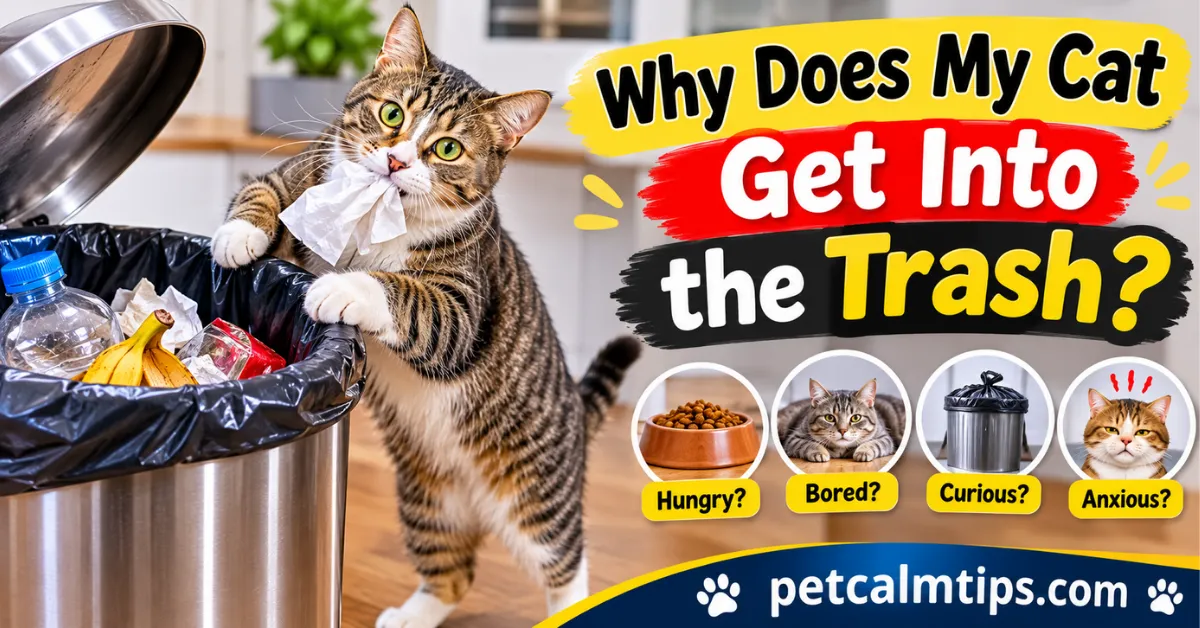
Why Does My Cat Get Into the Trash? 6 Reasons + How to Stop
Quick Answer
Most cats get into the trash because it smells like food, offers interesting textures and sounds, and rewards their natural scavenging and hunting instincts. Boredom, hunger, and stress can make the habit stronger. Occasionally, a sudden or intense interest in garbage points to a medical issue like increased appetite from a health condition. Because trash can contain hazards, secure the bin first, then look for the underlying cause.
Why Trash Is So Tempting to Cats
To understand why your cat keeps going back to the bin, it helps to think like a small predator. Cats are hunters and opportunistic feeders by nature. Their sense of smell is far more sensitive than ours, so a chicken carcass, fish skin, or an empty tuna can may smell like a buffet to them, even when it’s been sitting there for hours.
A trash can also gives a cat something a food bowl doesn’t: a bit of a challenge. There are lids to push, bags to pull apart, and crinkly packaging to bat around. For an indoor cat with limited stimulation, that can be genuinely entertaining.
Add in the fact that cats learn by repetition. If your cat found something tasty once, the bin becomes a place worth checking again. Even occasional rewards keep the behavior going.
6 Reasons Cats Dig Through Garbage
1: Food Smells and Scavenging Instinct
This is the most common reason. Meat trimmings, fish packaging, greasy wrappers, and dairy containers all carry strong scents. Even if you feed your cat well, the smell of “found food” can be hard to resist. Scavenging is an old survival habit, and a full bowl doesn’t switch it off.
Cats who were strays or lived outdoors earlier in life may be especially persistent. Foraging through scraps might have been how they got by, and the habit can stay with them for years.
2: Boredom and Lack of Enrichment
An indoor cat with nothing to stalk, chase, or explore will often invent entertainment. Trash offers lots of it: movement, noise, new smells, and things to carry off and bat across the floor.
Signs that boredom may play a role include trash raiding that happens mostly when you’re out or asleep, other destructive habits like climbing curtains or knocking things off shelves, and a cat who seems restless or follows you around demanding attention.
3: Hunger or Feeding Schedule Gaps
Some cats go into the trash because they’re hungry. This can happen when meals are spaced too far apart, portions are too small, or a cat is on a weight-management plan and feels unsatisfied. Cats who are used to eating several small meals a day may also look for extra food if they only get one or two large ones.
If you’re feeding a measured diet on your vet’s advice, don’t just increase portions. Talk to your vet about ways to help your cat feel fuller, such as splitting meals into smaller servings or using puzzle feeders.
4: Curiosity About Textures and Sounds
Not every trash raid is about food. Some cats are drawn to the texture of paper, plastic, or tissue. The rustling sound of a bag can trigger the same instinct that makes a cat pounce on a toy mouse.
Cats are also curious about anything that’s off-limits or new. A fresh bag, a new bin, or something unfamiliar inside can spark investigation.
5: Attention-Seeking
If your cat tips the bin and you come running, even to scold, they may learn that the trash is an effective way to get your attention. For a bored or under-stimulated cat, negative attention can still feel like a win.
6: Stress or Changes at Home
A move, a new pet, a change in your schedule, or other household disruption can show up as new behaviors. Some stressed cats become more destructive or more food-focused. If the trash habit appeared suddenly alongside other changes, such as hiding, over-grooming, or litter box problems, stress may be part of the picture.
Is It Ever a Medical Problem?
Usually trash raiding is behavioral. But sometimes it’s one piece of a bigger health picture, and that’s worth knowing so you don’t miss it.
Health issues that can increase appetite or change eating habits in cats include:
- Hyperthyroidism: More common in older cats, it can cause increased appetite along with weight loss, restlessness, and increased thirst.
- Diabetes: It can cause a big appetite along with weight loss and more drinking and urination.
- Intestinal parasites: These can affect how well a cat absorbs nutrients and may cause a ravenous appetite.
- Gastrointestinal disease: Digestive conditions can change appetite and eating behavior.
- Pica: Some cats compulsively chew or eat non-food items like plastic, fabric, or paper. This can have behavioral or medical roots, and a vet should look into it.
- Cognitive changes in senior cats: Older cats may become more confused, vocal, or unusual in their habits.
A general rule: if your cat’s interest in trash is new, sudden, or intense, and especially if it comes with weight loss, more thirst, vomiting, diarrhea, or a change in energy, schedule a vet visit. Only a veterinarian can sort out what’s going on. A web article can’t diagnose your individual cat.
What’s Actually Dangerous in the Trash
Even a well-fed, healthy cat can get hurt by what’s in a garbage bin. Here’s what to watch for:
- Cooked bones: They can splinter and injure the mouth, throat, or digestive tract.
- String, thread, dental floss, and ribbon: These “linear foreign bodies” are particularly risky for cats because they can tangle in the intestines.
- Plastic, foil, and wrappers: They can cause choking or intestinal blockages if swallowed.
- Onions and garlic: These are toxic to cats and may damage red blood cells.
- Chocolate and coffee grounds: Both contain compounds that are harmful to cats.
- Spoiled or moldy food: It can cause vomiting, diarrhea, or more serious illness.
- Sharp edges: Open can lids, broken glass, and razor blades can cause cuts.
- Medications and cleaning products: Discarded pills, wipes, and household chemicals can be poisonous.
- Plastic bags: A cat can get stuck in one, which creates a suffocation risk.
If you suspect your cat swallowed something harmful, don’t wait to see what happens. Call your vet or an animal poison control service right away.
How to Stop Your Cat From Getting Into the Trash
The best approach has two parts: make the trash harder to access, and make the rest of your cat’s life more satisfying. Try these steps in order.
1. Secure the bin. Choose a can with a tight-fitting, locking lid, or a step-can that’s heavy enough for a cat not to tip. Lightweight, lidless bins and cans with a simple flip-top often don’t hold up against a determined cat.
2. Put the trash out of reach. Store it inside a closed cabinet, under a sink with a childproof latch, or in a pantry with a door that latches. A cat can’t raid what they can’t reach.
3. Take out smelly items promptly. Wrap meat, fish, and greasy packaging before throwing it away, or place it in the outdoor bin the same day. Rinse cans before tossing them.
4. Check your cat’s meals. Make sure your cat is getting appropriate amounts of a complete and balanced food at regular times. If your cat seems hungry between meals, ask your vet about meal frequency and portions rather than guessing.
5. Add enrichment. Daily play sessions with a wand toy, puzzle feeders, window perches, cat trees, and rotating toys can reduce the boredom that drives trash raiding. Aim to include a short play session before meals and in the evening, when many cats are most active.
6. Offer a legal alternative. If your cat loves crinkly textures, give them safe options like a crinkle tunnel or a paper bag with the handles removed (always supervised). If it’s the foraging they like, try scatter-feeding a portion of their kibble or hiding treats in a snuffle mat.
7. Reward the behavior you want. When your cat ignores the bin or plays with their own toys instead, calmly give praise or a small treat. Rewarding good choices helps more than reacting to bad ones.
Be patient. Cats who’ve had a habit for months may need a few weeks of consistency before things settle.
Common Mistakes Cat Owners Make
1: Punishing the cat. Yelling, chasing, or spraying a cat with water usually doesn’t teach them to avoid trash. It often teaches them to be wary of you, and can add stress that makes the problem worse. Cats also tend not to connect punishment with something they did earlier.
2: Treating it only as a bin problem. A better lid helps, but if the cause is boredom or hunger, the behavior may just move to another target, like the pantry or countertops.
3: Leaving tempting items within reach. A bin might be secure, but a pizza box on the counter or a bag of takeout beside the sink is just as inviting.
4: Reacting only when it happens. If you rush over each time, your cat may learn the bin is a way to get you to respond. Try to make the bin boring and your attention predictable instead.
5: Ignoring other symptoms. Increased appetite, weight loss, or changes in thirst alongside the trash habit shouldn’t be brushed off as “just bad behavior.”
6: Giving table scraps to compensate. Feeding people food can turn a trash habit into a begging habit, and some human foods are harmful to cats.
When to Call Your Vet
Some situations call for monitoring, and others call for action.
Schedule a vet visit if your cat:
- Suddenly becomes much more interested in food or trash than usual.
- Is losing weight despite eating well.
- Drinks or urinates more than normal.
- Eats non-food items regularly, like plastic, fabric, or paper.
- Has ongoing digestive upset, such as soft stools or occasional vomiting.
- Has trash-raiding behavior that continues despite the changes above.
Call your vet or an emergency clinic right away if your cat:
- Has swallowed string, thread, floss, or a bone, or you see string hanging from their mouth or rear. Don’t pull it out.
- Is vomiting repeatedly, can’t keep water down, or is retching without producing anything.
- Seems lethargic, weak, or hides and won’t move.
- Has a swollen or painful belly.
- Is drooling heavily, pawing at their mouth, gagging, or having trouble breathing.
- Has eaten something you know is toxic, like onions, garlic, chocolate, or medication.
- Has a bleeding cut from a can lid or glass.
If you’re not sure whether it’s an emergency, calling is always the safer choice.
Long-Term Prevention
Once you’ve addressed the immediate issue, a few habits can help keep trash raiding from returning.
- Keep a predictable feeding routine. Regular mealtimes help cats feel secure.
- Maintain daily play and mental stimulation. Even 10 to 15 minutes of interactive play, a couple times a day, can make a difference for many cats.
- Make your kitchen less rewarding. Wipe counters, store food in sealed containers, and take out smelly garbage promptly.
- Cat-proof new items. If you bring home a new bin or move furniture, test whether it’s really cat-proof.
- Watch your older cat. Changes in appetite or behavior in senior cats are worth mentioning at checkups.
- Keep up with vet visits. Regular exams help catch conditions that can affect appetite and behavior before they become bigger issues.
No setup is guaranteed to work with every cat. Some cats are simply very determined, and a layered approach, using a secure bin, good enrichment, and consistent feeding, tends to work better than any single fix.
- Explore More Expert-Reviewed Pet Care Guides: Why Does My Cat Sleep on Me When Im Sick?
- How to Cut Cat Nails Without Hurting Them
Conclusion
If you’ve been asking yourself, “Why does my cat get into the trash?”, the answer is usually a mix of strong smells, natural scavenging instincts, curiosity, and not enough stimulation. It’s rarely a sign that your cat is misbehaving on purpose.
Start by making the bin inaccessible, since trash can hide real hazards like bones, string, and toxic foods. Then look at what your cat might be missing, whether that’s play, regular meals, or a mentally engaging routine. Skip punishment and focus on rewarding better choices.
Your next step: spend a few days noticing when and how your cat goes for the trash, and take note of any other changes in appetite, weight, or energy. If anything seems off, bring those notes to your vet. A little observation now can save a lot of worry later.
Frequently Asked Questions
1: Is it normal for cats to dig through the trash?
Yes, it’s very common. Cats are curious, scent-driven animals, and trash often smells like food. Occasional raiding usually isn’t a sign of a problem. But a new, intense, or frequent interest, especially alongside weight loss or other changes, is worth discussing with your vet.
2: Can eating trash make my cat sick?
It can. Spoiled food may cause stomach upset, and items like bones, string, plastic, or foil can cause blockages or injuries. Some foods, like onions, garlic, and chocolate, are toxic to cats. If your cat vomits, seems lethargic, or you know they ate something dangerous, call your vet.
3: Why does my cat only go in the trash at night?
Cats are naturally most active around dawn and dusk, and many are lively at night. With the house quiet and no one to interrupt, a bin can be an appealing nighttime activity. More daytime and evening play, plus a secured bin, often helps.
4: Will a spray bottle stop my cat from going in the trash?
It’s not recommended. Spraying can frighten your cat and damage trust without addressing why they’re raiding the bin. It may also teach them to do it when you’re not around. Securing the trash and meeting your cat’s needs works better.
5: Could my cat be hungry even though I feed them regularly?
Possibly. Meal timing, portion size, and food type can all affect how satisfied a cat feels. A medical condition can also increase appetite. Don’t just increase portions on your own, since extra weight carries its own risks. Ask your vet to review your cat’s diet and rule out health causes.
6: How can I keep my cat out of the trash when I’m not home?
Put the trash in a latching cabinet or pantry, or use a heavy bin with a lid your cat can’t open. Take out smelly items before you leave, and leave safe enrichment like puzzle feeders or a window perch so your cat has something better to do.


One Comment