
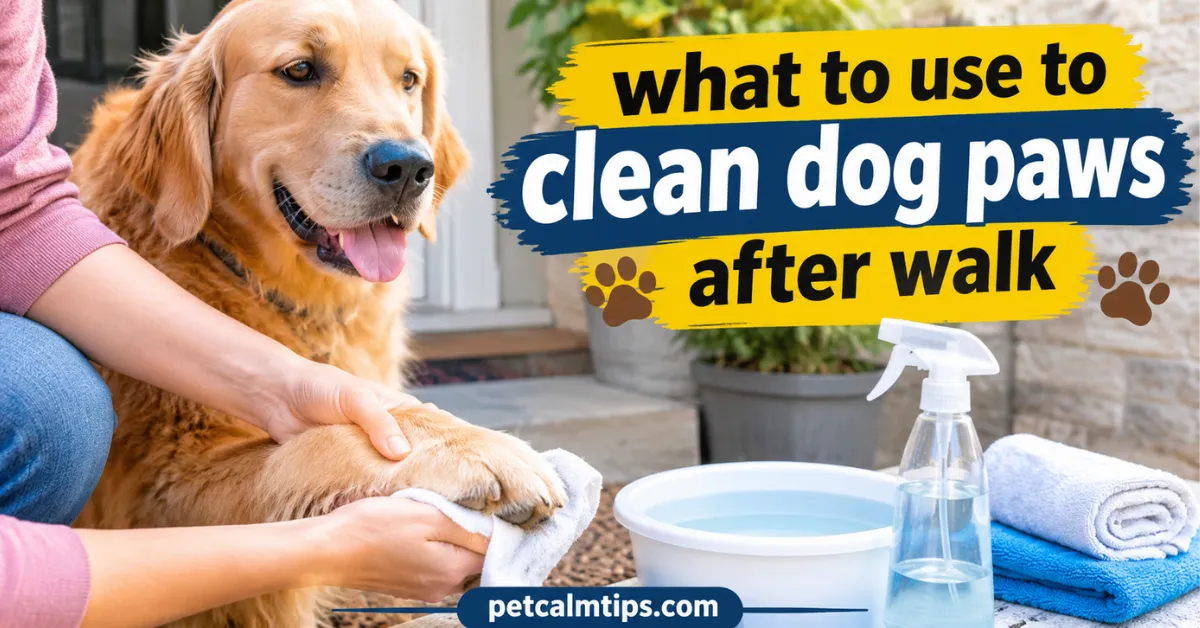
What to Use to Clean Dog Paws After Walk: 6 Safe Picks
Quick Answer
For most walks, lukewarm water and a clean, damp washcloth or towel are enough. Fragrance-free pet wipes are a convenient backup, and a mild dog-safe shampoo helps with heavier mud or grime. Dry the paws thoroughly, especially between the toes. Avoid alcohol, bleach, hydrogen peroxide, essential oils, and harsh disinfectants, since dogs often lick their paws afterward.
Why Paw Cleaning After Walks Matters
Paws are tough, but they aren’t invincible. Pads are made of thick, textured skin that cushions and grips, and the spaces between the toes are sheltered, warm, and easy to overlook. Anything the dog steps in can collect there.
There are three practical reasons to clean up after a walk.
Dogs lick their paws. Whatever is on the paw can end up in the mouth. That matters most for lawn chemicals, de-icing products, antifreeze drips, and residue from cleaning products.
Moisture and debris can irritate skin. Damp fur between toes and trapped dirt can contribute to irritation. Dogs that already deal with itchy or yeasty paws often do better when paws are kept clean and fully dry.
It keeps your home cleaner. Mud, pollen, and outdoor grime travel indoors on paws. A quick routine at the door cuts down on cleaning later.
Cleaning also gives you a daily chance to check the paws for small problems before they grow.
Best Options for Cleaning Dog Paws
You don’t need a cabinet full of products. These options cover nearly every situation.
1: Lukewarm Water and a Washcloth
This is the simplest and often the best choice. Wet a soft cloth with lukewarm water, wipe each paw, and gently work between the toes and around the nail beds. Keep a small stack of cloths by the door so you can toss them straight into the wash.
It works for everyday dirt, light dust, and damp grass. It costs nothing, and there’s no residue for your dog to lick.
2: Dog-Specific Paw Wipes
Wipes are handy for quick cleanups, travel, and busy mornings. Look for products made for dogs, ideally fragrance-free, alcohol-free, and gentle on skin. Check the label for the ingredients and the intended use.
Wipes work well for light dirt but can struggle with caked-on mud or salt. You may need two or three per dog, and they add up in cost and waste if you use them daily.
3: Mild Dog Shampoo for Heavy Mud
If your dog has been wading through mud, a quick paw wash with a mild shampoo made for dogs does a better job than wiping. Human shampoo isn’t formulated for a dog’s skin and can be drying or irritating for some dogs, so a dog-formulated product is the safer choice.
4: Paw Washers and Soaking Cups
A paw washer is a small handheld cup with soft silicone bristles. You add a little water, push the paw in, and twist. These can be good for dogs with lots of mud on their feet. Some dogs love them, and some are suspicious, so introduce them with treats.
5: A Shallow Soak at Home
For a stubborn mess, a shallow basin or tub with a couple of inches of lukewarm water works well. Let each paw stand in it briefly and rinse away debris. If your veterinarian has recommended a medicated soak for a specific skin problem, follow their instructions exactly, including dilution and frequency, rather than improvising.
6: Unscented Baby Wipes
Some owners use unscented baby wipes in a pinch. They aren’t designed for dogs, and ingredients vary by brand, so they’re best kept as an occasional backup rather than a daily habit. If you try them, choose fragrance-free and alcohol-free versions, and consider rinsing or wiping again with a damp cloth.
Step-by-Step Paw Cleaning Routine
This routine takes a few minutes and works for most dogs.
- Set up at the door. Keep a towel, a damp cloth, and a treat jar handy so the routine happens before your dog heads for the carpet.
- Remove loose debris first. Brush off dried mud, burrs, or gravel with a soft brush or your fingers. Wiping wet mud can smear it deeper.
- Rinse or wipe. Use lukewarm water or a damp cloth. Cool water is fine for hot days, but hot water can irritate skin.
- Spread the toes gently. Wipe between the toes, around each pad, and along the edge of the nails. This is where grime hides.
- Use shampoo only if needed. If the paws are heavily soiled, lather a small amount of dog shampoo, then rinse completely. Leftover soap can be itchy.
- Dry thoroughly. Use a clean towel and press between the toes. Damp spaces are more likely to cause trouble than dirt is.
- Look and feel. Check for cuts, cracks, swelling, redness, or anything stuck in the fur or pads.
- Reward your dog. A treat helps your dog associate paw handling with something pleasant.
Some dogs hate having their feet touched. If yours pulls away, start by just touching a paw and giving a treat, then build up to wiping one paw at a time. Short, positive sessions work better than wrestling through a full cleanup.
Matching the Cleanup to the Mess
The right approach depends on what your dog walked through.
Everyday sidewalk dirt: A damp cloth or dog wipe is usually enough.
Mud and wet grass: Let mud dry slightly, brush it off, then rinse or wash. Dry carefully afterward, since damp fur between the toes holds moisture.
Road salt and de-icers: Wipe or rinse paws as soon as you get inside. Salt can irritate the skin and cause stinging, and dogs may lick it off. Some de-icing products can be harmful if swallowed in more than small amounts. If your dog has licked a large amount or acts unwell, contact your veterinarian or a pet poison hotline right away.
Antifreeze or chemical spills: Treat this as an emergency. Ethylene glycol antifreeze is highly toxic, and even small amounts can be dangerous. Don’t wait for symptoms. Call your veterinarian, an emergency clinic, the ASPCA Animal Poison Control Center at (888) 426-4435, or Pet Poison Helpline at (855) 764-7661. Consultation fees may apply.
Freshly treated lawns: If you know a lawn was recently treated with fertilizer or pesticides, wipe or rinse the paws and avoid letting your dog lick them. Following the label’s waiting period for treated areas also helps, and you can ask neighbors or parks about their schedules.
Hot pavement: Pavement can burn paw pads on warm days. Test it with the back of your hand for several seconds. If it’s too hot for you, it’s too hot for your dog. After a hot walk, check for redness, blisters, or limping.
Beach or saltwater: Rinse with fresh water to remove sand and salt, then dry between the toes.
Sticky substances (gum, tar, sap): Don’t scrub hard or use solvents. Ask your veterinarian or groomer what’s safe. Some products used to remove sticky residue are toxic to dogs.
What Not to Use on Dog Paws
Dogs lick their feet, so anything on the skin may be swallowed. A product that’s fine on your hands may not be safe on theirs.
- Alcohol, hand sanitizer, and alcohol-based wipes: These can sting, dry the skin, and cause problems if swallowed.
- Bleach and household disinfectants: These can burn skin and irritate the mouth and stomach.
- Hydrogen peroxide: It can damage healthy tissue and irritate wounds, so it isn’t a good routine paw cleaner.
- Essential oils, especially tea tree oil: Some essential oils are toxic to dogs, even in small amounts.
- Scented or heavily fragranced wipes: Fragrance can irritate sensitive paws and tempt a dog to lick.
- Human soap, strongly scented shampoo, or bubble bath: These may strip natural oils or leave irritating residue.
- Undiluted vinegar: It can sting, particularly on cracked or irritated skin.
- Hot water: Warm is fine, but hot water can burn or irritate.
If you’re unsure whether a product is safe for your dog, check with your veterinarian before using it.
7 Common Mistakes Owners Make
1: Skipping the drying step. Many owners rinse well but leave toes damp. A thorough towel dry matters as much as the cleaning.
2: Over-washing. Daily shampooing can dry the skin. Water or a damp cloth is enough for most routine cleanups, with shampoo saved for heavy messes.
3: Using strong products because they smell clean. A clean smell isn’t the same as a safe product. Ingredients matter more than scent.
4: Ignoring what the dog was walking through. Salt, chemicals, and spills deserve more attention than ordinary dust.
5: Forcing the process. If your dog panics, they’re more likely to resist the next time. Take it slowly, use treats, and cut the session short if needed.
6: Overlooking the nails and between the toes. Debris, small stones, and plant material often hide near the nail beds and in the webbing.
7: Never checking. Cleaning is the best time to spot problems early. A few seconds of looking can save a vet visit.
Aftercare: Drying, Checking, and Moisturizing
Once the paws are clean, spend a moment on aftercare.
Dry fully. Press a towel between each toe rather than rubbing. For dogs with long fur between the pads, a quick trim (done carefully, or by a groomer) can make drying and cleaning easier.
Inspect each paw. Look for:
- Redness or swelling
- Cuts, cracks, or blisters
- Thorns, burrs, grass seeds, or splinters
- Torn or overgrown nails
- Unusual odor or discharge between toes
Consider paw balm in dry conditions. In winter or in very dry climates, a balm made for dogs may help protect pads. Choose a product designed for dogs, apply a thin layer, and keep your dog from licking it off for a few minutes by distracting them with a treat or walk. Heavy use isn’t always needed, and some dogs do fine without it.
Try booties if your dog tolerates them. Booties can limit contact with salt, hot pavement, and rough terrain. They need to fit well to avoid rubbing, and many dogs need practice getting used to them. Wash them regularly.
Wipe before the dog comes inside. A “paws first” routine at the door becomes automatic quickly, and it keeps both the dog and your floors cleaner.
When to Call Your Vet
Most paw cleaning is routine, but some signs point to something that needs attention. Contact your veterinarian if you notice:
- Persistent licking or chewing of the paws
- Redness, swelling, or warmth in a paw
- A bad smell or discharge between the toes
- Limping or favoring a paw
- Cracked, bleeding, or blistered pads
- Something stuck in a paw that you can’t remove easily
- Brownish staining of fur from constant licking
- Paw problems that keep coming back
Frequent licking can have many causes, including allergies, infection, pain, or boredom, and it takes a veterinarian to sort them out. Please don’t guess or try strong home remedies on irritated skin.
Emergency Warning Signs
Get immediate veterinary help if your dog may have walked in or licked antifreeze, rodent poison, or a chemical spill. The same goes for symptoms such as vomiting, drooling, tremors, weakness, disorientation, or trouble breathing after contact with a chemical. Severe burns, deep cuts with heavy bleeding, and a paw that’s very swollen or painful also need prompt attention. If you’re unsure, call your vet or an emergency clinic and ask.
- Explore More Expert-Reviewed Pet Care Guides: Signs Your Senior Dog Is Healthy at Night
- How to Remove Dog Smell From Your House
- How to Keep a Dog Safe During a Power Outage
- How to Prepare Your Dog for a Long Road Trip
- How to Protect Dog Paws From Hot Pavement
Conclusion
For most dogs, knowing what to use to clean dog paws after a walk comes down to a short list: lukewarm water, a soft damp cloth, fragrance-free pet wipes for quick jobs, and a mild dog shampoo when the mess is heavy. The most important steps are drying thoroughly between the toes and looking over the paws as you clean. Skip alcohol, bleach, peroxide, essential oils, and heavily scented products, since your dog may lick whatever is left behind.
Your next step is simple: set up a small paw station at your door with a towel, a damp cloth, and treats. Once it becomes habit, it takes only a couple of minutes, and it gives you a chance to catch problems early. If a paw looks painful, swollen, or irritated, or if your dog may have contacted a toxic substance, call your vet.
Frequently Asked Questions
1: Can I use baby wipes to clean my dog’s paws?
Occasionally, yes, if you choose unscented, alcohol-free wipes. They aren’t made for dogs, though, and ingredients vary. Fragrance and other additives can irritate some dogs or be a problem if licked. Dog-specific wipes or a damp cloth are a safer everyday choice.
2: Should I clean my dog’s paws after every walk?
Not always with a full wash. A quick wipe is reasonable after most walks, and a more thorough cleaning makes sense when paws are muddy, wet, salty, or exposed to chemicals. If your dog walked on clean, dry ground, checking the paws may be enough.
3: Is it safe to use vinegar or apple cider vinegar on dog paws?
It’s best to avoid it unless your veterinarian recommends it. Vinegar can sting and irritate skin, especially if the paws are cracked, raw, or already inflamed. Diluted soaks are sometimes suggested online, but recipes and results vary, so check with your vet first.
4: Can I just wash my dog’s paws with water?
Yes. Lukewarm water is often all you need. It removes dirt, salt, and light debris without leaving residue. Use shampoo only for greasy or heavily soiled paws, and be sure to rinse and dry thoroughly afterward.
5: Why does my dog keep licking their paws after walks?
It might be irritation from salt, grass, pollen, or chemicals. It can also point to allergies, infection, pain, boredom, or something stuck in the paw. Rinse the paws, dry them, and check for problems. If the licking continues or the skin looks red, see your veterinarian.
6: Are dog paw wipes worth buying?
For many owners, yes, especially for travel, quick cleanups, or small dogs. Look for fragrance-free, alcohol-free options made for dogs. If you walk through a lot of mud or salt, a washcloth, water, or a paw washer will likely clean better and cost less over time.




2 Comments