How to Stop Dog From Eating Socks: 7 Safe Steps for Owners
Quick Answer
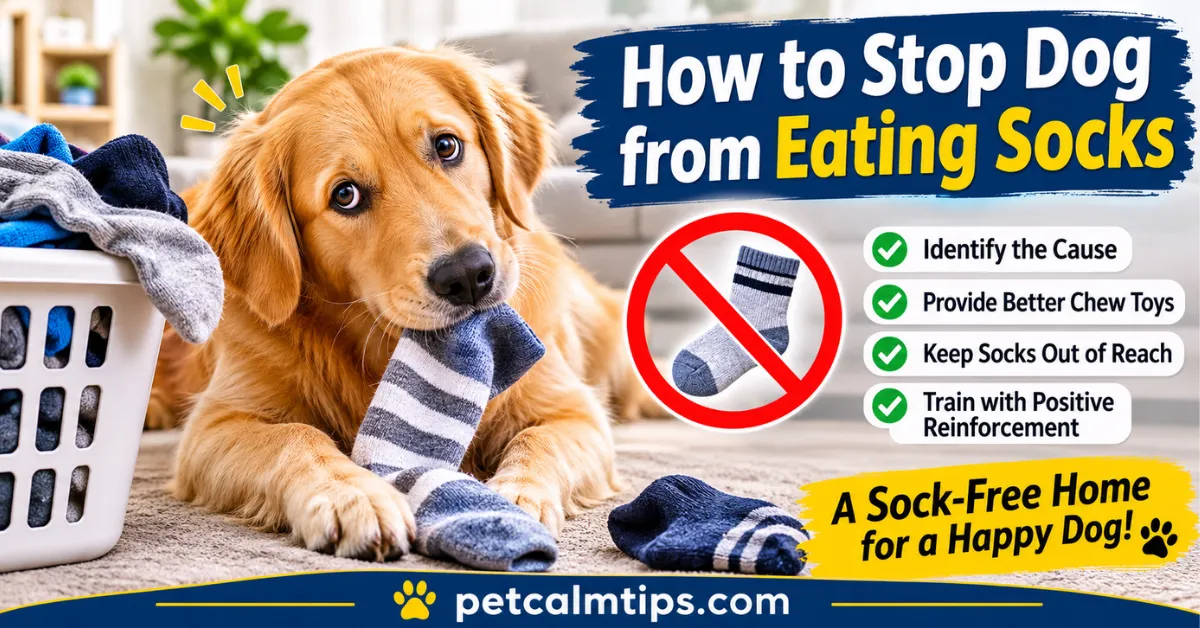
To stop a dog from eating socks, remove access first by keeping laundry in closed hampers or behind doors. Then teach “drop it” and “leave it” using trades instead of force, and add exercise and chew toys to meet your dog’s needs. Talk to your vet if the habit is intense or sudden. Never punish your dog. If they swallowed a sock, call a vet promptly, because blockages can be dangerous.
Why Dogs Eat Socks
Before you can fix the behavior, it helps to understand what’s driving it. Dogs don’t steal socks to annoy you. There’s usually a reason, and often more than one.
They Smell Like You
Socks are packed with your scent. For a dog, that’s comforting and interesting. Some dogs carry socks around the way a toddler drags a blanket, and chewing or swallowing can follow.
Boredom and Under-Stimulation
A dog without enough physical or mental outlets will find their own entertainment. Socks are soft, portable, and satisfyingly chewy. Young, high-energy dogs and those left alone for long stretches are especially prone to this.
Puppy Exploration and Teething
Puppies explore the world with their mouths. Teething adds an urge to chew on anything that eases sore gums. Many puppies outgrow the worst of it, but the habit can stick if it’s rewarded or never redirected.
The Chase Game
Here’s something many articles overlook: if you chase your dog when they grab a sock, you’ve just started the best game they’ve ever played. Dogs quickly learn that taking a sock makes their favorite human run, shout, and engage. That attention, even negative attention, can reinforce the behavior.
Resource Guarding and Gulping
Some dogs learn that grabbing an item gets it taken away, so they swallow it fast to keep it. This is a common way a “chewing” problem becomes a “swallowing” problem. If your dog growls, freezes, or stiffens when you approach, that’s guarding, and it needs a gentler plan (more on that below).
Anxiety, Stress, and Pica
Some dogs chew or eat objects when they’re anxious, particularly during separation or big changes at home. Persistently eating non-food items is called pica. It can have behavioral roots, but medical issues such as gastrointestinal disease or nutritional problems can also play a role, and only a vet can sort that out. If your dog seems compulsive about eating fabric or other objects, a vet visit is a smart first step.
Why Swallowed Socks Are a Serious Risk
Dogs’ stomachs don’t break down cotton and wool. A sock may pass through without trouble, or it may lodge in the stomach or intestines and cause a blockage. Small dogs are at higher risk because there’s less room to work with, but large dogs can get blockages too.
Blockages can restrict blood flow to the intestines and may require surgery. Because it’s impossible to predict at home whether a sock will pass, treat any swallowed sock as something to discuss with your vet rather than something to wait out.
Step-by-Step: How to Stop Your Dog From Eating Socks
Think of this as a two-part plan: stop the opportunities, and build the skills. Both matter. Training alone won’t work while socks are lying everywhere, and management alone won’t help when a sock slips through.
Step 1: Remove Access
This step does the most, and it works immediately. Use a hamper with a lid or one placed behind a closed door. Keep socks off floors, couch cushions, and bedside tables. Close bedroom and laundry room doors. Baby gates can help. It might feel like you’re giving in, but every successful sock grab rehearses the habit. Take away the rehearsals while you train.
Step 2: Teach a Reliable “Drop It”
Practice with a boring toy first, not a sock. Hold a high-value treat near your dog’s nose, say “drop it,” and the moment they release the toy to take the treat, praise them and hand it over. Repeat many times a day. Gradually make the trade less obvious, then try it with lightly interesting items.
The goal is for your dog to learn that giving things up is a great deal, not a loss.
Step 3: Teach “Leave It”
Place a treat under your hand, let your dog sniff, and wait. The moment they back off, even slightly, reward them with a different treat from your other hand. Over time, practice with items on the floor, including a clean sock held on a leash-length distance away, and always reward walking away. Keep sessions short and upbeat, ideally a few minutes at a time.
Step 4: Stay Calm When Your Dog Takes a Sock
When it happens (and it probably will), don’t chase and don’t shout. Calmly offer a trade: a treat or a favorite toy. Walk toward the treat spot, not the dog. If your dog won’t drop it and the item is dangerous, call them to you with a happy voice and a treat rather than cornering them.
If your dog stiffens, growls, or snaps when you reach for the item, stop. Don’t force it. Work with a qualified trainer or veterinary behaviorist, since guarding can escalate when handled with confrontation.
Step 5: Increase Exercise and Mental Work
A dog that’s physically and mentally satisfied is far less likely to hunt for laundry. Depending on age and breed, that may mean longer walks, sniff-focused outings, fetch, or tug games. Add mental work too: food puzzles, snuffle mats, and short training sessions all burn energy in a useful way.
Step 6: Offer Legal Chew Options
Dogs need to chew, so give them better choices. Sturdy rubber chew toys, durable puzzle feeders, and vet-approved chews can all work, as long as they’re sized appropriately and supervised. Rotate toys every few days so they stay interesting. Avoid anything your dog can easily break into swallowable chunks.
Step 7: Address Anxiety or Medical Concerns
If socks disappear mostly when you leave, your dog may be struggling with separation distress. Signs include pacing, drooling, destructive behavior near doors, or barking when alone. A vet or certified behavior professional can build a plan, which may include behavior modification and, in some cases, medication prescribed by a vet.
If the sock-eating started suddenly, or your dog also vomits, loses weight, or seems unwell, schedule a vet check before assuming it’s purely behavioral.
How to Stop a Dog From Eating Socks and Underwear
The same plan applies when the target is underwear. These items carry strong human scent, which is exactly what makes them appealing, and they can cause the same blockage risks as socks. Some underwear also contains elastic bands and seams that may be harder to pass.
Because scent is the draw, management matters even more here. Keep dirty laundry in a lidded hamper in a room your dog can’t enter, and don’t leave clothes on bathroom floors or beside the bed. Teach “drop it” and “leave it” with the same trade-based approach, and keep trades calm and treat-heavy so your dog doesn’t learn that grabbing underwear gets a big reaction from guests or family.
If a dog eats socks and underwear regularly, that pattern leans toward scent-seeking or pica rather than a one-off accident, so mention it to your vet.
7 Common Mistakes Owners Make
1: Punishing after the fact. Dogs don’t connect a scolding with something they did minutes ago. Punishment often creates fear, makes dogs hide the evidence, and can increase guarding.
2: Chasing the dog. As mentioned, chasing turns theft into a game and makes your dog less likely to drop items.
3: Pulling the sock out of the mouth. This can lead to gulping, mouth injuries, or guarding. Trade instead.
4: Leaving temptation in reach “just this once.” One more successful grab keeps the habit alive.
5: Skipping exercise. Training works better with a dog who isn’t buzzing with excess energy.
6: Trying to make your dog vomit at home. Don’t give salt, hydrogen peroxide, or anything similar unless a veterinarian specifically instructs you to. Some of these can cause harm, and vomiting isn’t appropriate for every situation.
7: Assuming it’ll pass. If you know or suspect a sock was swallowed, calling your vet early is better than waiting for symptoms.
When to Call Your Vet
Call your vet the same day if you know or suspect your dog swallowed a sock or other fabric, even if they seem fine. Your vet can advise whether to watch, bring your dog in, or take imaging.
Go to a vet or emergency clinic right away if your dog shows:
- Repeated vomiting or retching
- Loss of appetite or refusing water
- Lethargy or unusual weakness
- Belly pain, bloating, or a hunched posture
- Straining to poop, diarrhea, or no stool
- Whining, restlessness, or reluctance to be touched
Dogs with blockages can decline quickly, so treat these signs as urgent. Also call your vet if sock-eating is frequent, sudden, or accompanied by other behavior changes.
Long-Term Prevention
Once your dog has the basics down, a few habits help keep things from creeping back.
Make laundry management automatic. Lidded hamper, closed door, done. It should be a household habit, not something you have to remember each time.
Keep training fresh. Practice “drop it” and “leave it” regularly, even after your dog has mastered them, so the skills stay reliable.
Meet your dog’s needs daily. Dogs benefit from consistent exercise, play, and mental challenges, plus appropriate rest. A routine reduces boredom-driven chewing.
Prepare for alone time. If your dog is home alone, give them a safe, dog-proofed space with approved chews or a food puzzle, and keep all tempting items out of reach.
Reward the right choices. If your dog walks past a sock or brings you a toy instead, say yes and reward it. Behavior you notice and reward is behavior you’ll see more of.
Don’t expect perfection overnight. Some dogs improve within weeks, while others need months, especially if the habit is rooted in anxiety or pica. Prevention reduces risk, but it can’t guarantee zero slip-ups, so keep your guard up even when things are going well.
- Explore More Expert-Reviewed Pet Care Guides: How to Stop Dog From Chewing Shoes
Conclusion
Learning how to stop a dog from eating socks comes down to three things: keeping socks out of reach, teaching your dog that giving things up is rewarding, and meeting their physical and emotional needs. Skip punishment and chasing, since both tend to make the problem worse.
Remember that swallowed fabric is a genuine health risk. If you suspect your dog ate a sock, don’t wait for symptoms to show up, and don’t try home remedies to induce vomiting. Call your vet for guidance.
Your next step is simple: tonight, set up a lidded hamper or closed laundry spot, and begin five minutes of “drop it” practice with a toy. Small, consistent changes add up quickly.
Frequently Asked Questions
1: Why does my dog keep eating socks?
Most dogs are drawn to the scent, texture, and attention that come with socks. Boredom, teething, anxiety, and learned chase games are common causes. If the habit is intense or comes with other symptoms, a vet can check for medical or compulsive causes such as pica.
2: Will my dog grow out of eating socks?
Some puppies do as teething ends and training improves, but there’s no guarantee. Without management and training, the habit can continue into adulthood. Treat it as something to actively work on rather than something to wait out.
3: What happens if my dog swallowed a sock?
Some socks pass through the digestive tract, but others cause a blockage that can be life-threatening. Because you can’t tell at home which will happen, call your vet promptly. They may recommend monitoring, imaging, or treatment depending on your dog’s size and symptoms.
4: Should I make my dog throw up after eating a sock?
Not unless a vet tells you to. Home methods can be dangerous and may not work, and vomiting isn’t appropriate for every situation. Call your veterinarian or an emergency clinic immediately, and follow their instructions based on your dog’s size, health, and what was swallowed.
5: Is it okay to give my dog old socks as toys?
It’s best not to. Old socks teach dogs that socks are acceptable to chew, and they can’t tell clean from dirty. They can also be swallowed in pieces. Use purpose-made, size-appropriate toys under supervision instead.
6: Can a dog be trained to stop stealing socks completely?
Many dogs improve dramatically with consistent management and training, but “completely” depends on the dog. Some stay opportunistic, so reducing access remains part of the plan. A certified trainer or behavior professional can help if progress stalls or guarding appears.