
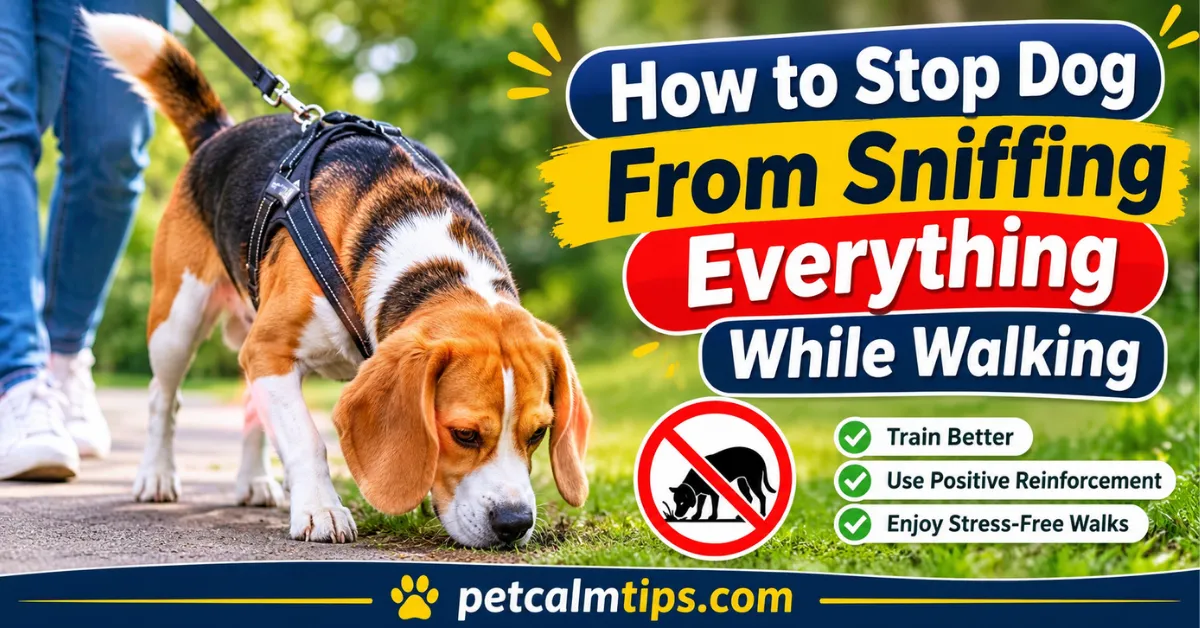
How to Stop Dog From Sniffing Everything While Walking: Tips
Quick Answer
You usually can’t stop sniffing entirely, and you shouldn’t try. Instead, teach your dog when sniffing is allowed and when it’s time to move. Use a consistent cue like “let’s go,” reward your dog for walking with you, then release them to sniff on a cue like “go sniff.” Short, predictable sniff breaks plus rewarded walking cut down on constant stopping, and patience matters more than corrections.
Why Dogs Sniff So Much on Walks
A dog’s nose is its main way of understanding the world. Dogs have far more scent receptors than people do, and a large part of their brain is devoted to processing smell. Where we see a quiet sidewalk, your dog may be “reading” who passed by, what they ate, and how recently they were there.
Think of a walk as your dog’s daily newspaper. Urine marks, other dogs’ scents, wildlife trails, and even leftover food smells all carry information. Sniffing also appears to be mentally satisfying for many dogs, and it can be calming. That’s why a dog who gets a good, sniff-filled walk often comes home more relaxed than one who was marched along a route.
Some dogs sniff more than others. Scent hounds like Beagles and Bloodhounds were bred to follow trails, so strong interest in smells is part of who they are. Puppies are also naturally curious, and a new neighborhood or a new season can suddenly make familiar routes more interesting.
Normal Sniffing vs. Excessive Sniffing
Before you try to change anything, it helps to decide whether there’s a real problem. Sniffing is usually within the normal range when:
- Your dog can be redirected with a cue or a treat.
- Your dog moves on after a few seconds to a minute at each spot.
- Your dog walks fairly comfortably between sniff stops.
- Your dog seems relaxed and curious.
If you’re asking yourself how to stop your dog from excessive sniffing, look for patterns like these:
- Your dog ignores you completely and can’t be redirected.
- Your dog pulls hard toward every scent and seems unable to stop.
- Your dog seems tense, frantic, or stressed while sniffing.
- Your dog eats things off the ground while sniffing.
- Your dog’s walks have become short, frustrating, and unpleasant for both of you.
A dog who sniffs a lot isn’t being stubborn or disrespectful. More often, they’re excited, under-trained for the situation, or short on mental outlets. A dog who seems frantic, who is suddenly sniffing far more than usual, or who also shows other changes in behavior is worth a conversation with your vet (more on that below).
Step-by-Step: Teaching Your Dog When to Sniff and When to Walk
The most effective approach isn’t banning sniffing. It’s turning sniffing into a reward your dog earns by walking with you. Here’s a simple plan.
1. Start in a low-distraction place
Practice in your yard, hallway, or a quiet street. Dogs can’t learn a new skill when every lamppost is more interesting than you.
2. Reward attention
Carry small, soft treats. Whenever your dog looks at you voluntarily, mark it with a cheerful “yes” and give a treat. You’re teaching your dog that checking in with you pays off.
3. Teach a “let’s go” cue
When your dog is sniffing, say “let’s go” in a friendly tone, take a few steps away, and reward your dog the moment they turn and follow. Don’t pull the leash. If they don’t follow, make the walk more rewarding by moving at a faster pace, using a higher-value treat, or increasing your distance from the distraction. Repeat many times in easy settings before expecting it in tough ones.
4. Teach a “go sniff” release cue
This is the secret ingredient. Choose a cue such as “go sniff” or “free time.” Say it right before your dog gets to investigate a spot. Over time, your dog learns that sniffing is allowed on a signal, and that moving along with you is what earns more of it. This idea works because the thing your dog wants most becomes the reward for good behavior.
5. Pick your sniff spots
Decide ahead of time where you’ll allow longer sniffing, like a grassy patch or a favorite corner. When you’re in a hurry or crossing a busy street, you can walk past other spots with a “let’s go” and a treat.
6. Increase difficulty slowly
Practice at the edge of your property, then on the sidewalk, then on a walk with moderate distractions. If your dog fails repeatedly, you’ve moved too fast. Go back a step.
7. Keep it consistent
Everyone who walks your dog should use the same cues and the same rules. If one person lets the dog sniff anywhere while another expects heel-like walking, the dog gets confused.
Progress usually comes over weeks, not days, and every dog learns at a different pace. If you’re struggling, a certified trainer who uses reward-based methods can help you tailor the plan.
Giving Your Dog Enough Sniffing Time
One of the most overlooked ideas is that you may get better results by giving your dog more sniffing, not less. A dog who gets a lot of satisfying sniff time elsewhere is often easier to move along on a regular walk.
Here are some options:
- A “sniffari” or decompression walk. Once or twice a week, take a relaxed walk where your dog leads the pace and sniffs freely, in a safe area on a long leash or in a securely fenced space.
- Scatter feeding. Toss a handful of kibble in the grass or around a room and let your dog hunt for it.
- Snuffle mats and puzzle feeders. These turn mealtime into a scent-driven activity.
- Hide-and-seek with treats. Hide treats or a favorite toy around the house and cue your dog to “find it.”
- Varied routes. New places provide new smells, which can satisfy curiosity more than walking the same loop daily.
Safe sniffing matters too. Keep your dog away from areas where pesticides or lawn chemicals may have been used, and watch for trash, dead animals, and spilled food. If your dog tends to eat things off the ground, teach a solid “leave it” and consider a basket muzzle introduced gradually and positively. Never let your dog sniff near unknown substances, and call your vet or an animal poison hotline if you think they swallowed something harmful.
7 Common Mistakes That Make Sniffing Worse
1: Yanking or correcting the leash. Jerking your dog away from a scent can create frustration, anxiety, and pulling. Many veterinary behavior organizations recommend reward-based training over punishment because aversive methods can increase stress and may harm your relationship with your dog.
2: Rushing every walk. If walks are mostly a fast march from point A to point B, your dog may sniff more intensely whenever they get the chance.
3: Expecting too much too soon. A dog who has been allowed to sniff freely for years won’t switch to focused walking overnight.
4: Using treats too rarely. If rewards disappear after a few good steps, your dog learns that listening isn’t worth it. Pay generously at first, then gradually space out treats.
5: Being inconsistent. Sometimes allowing sniffing and sometimes not, with no clear cue, makes the rules impossible to understand.
6: Using the wrong equipment. A back-clip harness or a well-fitted collar can work, but if your dog pulls hard, a front-clip harness may give you more control without pain. Avoid tools designed to cause discomfort.
7: Ignoring other needs. A bored, under-exercised dog will sniff more frantically. Make sure your dog’s physical and mental needs are being met every day.
Sniffing Away From Walks: Nighttime, Cold-Like Sounds, and Greetings
Sniffing isn’t only a walk issue. Owners often notice odd sniffing at home, and it’s useful to know what’s normal and what deserves attention.
Why is my dog sniffing so much at night?
Evening and nighttime sniffing has several possible explanations. Your dog may be picking up scents from outside, like wildlife, neighborhood animals, or smells drifting through a window. Some dogs sniff the floor or furniture because they’re hungry, need a bathroom break, or are restless before settling down.
Anxiety, nausea, or discomfort can also show up as increased sniffing, licking, or pacing at night. In older dogs, a sudden change in nighttime behavior, like pacing, staring, or seeming confused, can sometimes be linked to cognitive decline, which is something to discuss with your vet. If the behavior is new, persistent, or paired with other changes, don’t just wait it out. Mention it at a vet visit.
Why is my dog sniffing like he has a cold?
Dogs can have congestion, snorting, or sniffling for reasons ranging from harmless to medical. Allergies, dust, or irritants like smoke, perfume, or cleaning products can cause temporary snuffling. A grass seed or other foreign object lodged in the nose can cause sudden, repeated sniffing and sneezing. Infections, dental disease, and other conditions can also cause nasal symptoms. Flat-faced breeds like Pugs and Bulldogs often make noisy breathing sounds because of their anatomy, though noisy breathing should still be monitored.
I can’t tell you what’s going on with a specific dog from a general description. Brief, mild sniffling that clears up quickly may not be a concern, but thick or colored nasal discharge, blood, one-sided discharge, ongoing sneezing, coughing, or lethargy are reasons to call your vet.
Why does my dog sniff me so much when I get home?
This one is usually about information and connection. You’ve been gone for hours, and you smell like places, people, and other animals. Your dog is gathering news about your day, and sniffing is part of a warm greeting. Some dogs sniff more if you’ve touched another pet or visited somewhere new.
It’s typically harmless and even sweet. If it comes with signs of distress, such as whining, trembling, destructive behavior, or constant following, it may be linked to separation-related anxiety, and a trainer or veterinary behaviorist can help.
When to Call Your Vet
Most sniffing is perfectly healthy. But sometimes it can point to something physical or emotional that needs attention. Contact your vet if you notice:
- A sudden, significant increase in sniffing that isn’t explained by a new environment.
- Sniffing combined with repeated gagging, drooling, lip-licking, or loss of appetite, which could signal nausea.
- Nasal discharge that is thick, colored, bloody, or only from one nostril.
- Repeated sneezing fits or a head shake with sniffing.
- Pawing at the nose or face.
- Changes in sleep, confusion, or restlessness in a senior dog.
- Eating grass, dirt, or other non-food items excessively.
Seek urgent veterinary care right away if your dog has trouble breathing, blue or pale gums, collapses, has repeated vomiting, or you believe they ate something toxic. When in doubt, a quick phone call to your vet or an emergency clinic is always worth it.
Prevention and Long-Term Habits
You can’t prevent every sniff, and you wouldn’t want to. But you can build habits that make walks smoother over time:
- Start early. Puppies can learn “let’s go” and “go sniff” from the first weeks of leash training.
- Use walks for both exercise and enrichment. Mix purposeful walking with relaxed sniffing.
- Keep sessions short and positive. Five minutes of success is better than thirty minutes of frustration.
- Match the walk to your dog. Senior dogs, puppies, and high-energy breeds all have different needs.
- Schedule regular vet checkups. Changes in behavior can be the first sign of a health problem.
- Revisit training. If your dog slips, go back to easier settings and rebuild.
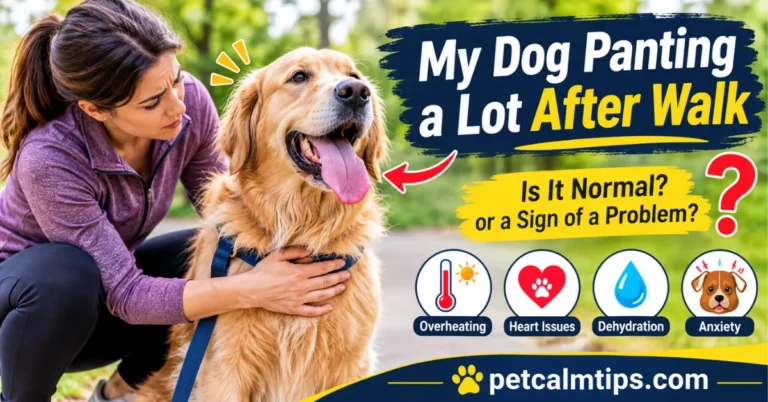
- Explore More Expert-Reviewed Pet Care Guides: My Dog Panting a Lot After Walk?
- How to Stop Dog From Chewing Shoes
- How to Introduce New Dog to Old Dog at Home
Conclusion
If you’re wondering how to stop a dog from sniffing everything while walking, the most effective answer is to manage it, not eliminate it. Sniffing is how dogs explore and relax, so the goal is to teach your dog when to sniff and when to move along. Use a consistent “let’s go” cue, reward your dog generously for walking with you, and allow sniffing on a release cue like “go sniff.” Add scent games at home so your dog gets enough nose time. If sniffing seems frantic, suddenly increases, or comes with nasal or behavior changes, check in with your vet. Your next step: tomorrow, pick one short stretch of your walk and practice “let’s go” with treats.
Frequently Asked Questions
1: Is it bad to let my dog sniff on walks?
No. Sniffing is mentally enriching and often calming for dogs. Letting your dog sniff regularly is generally healthy as long as the area is safe and your dog isn’t eating hazardous items. The goal is balance, not banning sniffing.
2: How long should I let my dog sniff on a walk?
There’s no set rule. Many owners find a mix works well: some time for purposeful walking and several short sniff breaks, or one longer sniff-focused walk each week. Adjust based on your dog’s age, energy, and how well they respond to cues.
3: Why does my dog sniff the ground and ignore me?
Strong scents can be more compelling than anything you offer, especially in busy or new places. Increase your treat value, add distance from the distraction, and practice “let’s go” in easier settings first. Training takes repetition.
4: Can a harness or collar stop my dog from sniffing?
Equipment alone won’t teach your dog what to do, but a comfortable, well-fitted harness can give you better control if your dog pulls. Training and rewards do the real work, and tools that cause pain can backfire.
5: Is it normal for my dog to sniff more as they get older?
Some changes are normal, but a sudden increase in sniffing, restlessness, or confusion in an older dog can be linked to health or cognitive changes. Mention it to your vet so they can look for medical causes.
6: When is my dog’s sniffing a sign of illness?
Sniffing becomes a concern when it’s sudden, constant, or paired with other symptoms like nasal discharge, sneezing fits, gagging, appetite loss, lethargy, or pawing at the face. Trouble breathing is an emergency. Only a veterinarian can diagnose the cause.




One Comment