
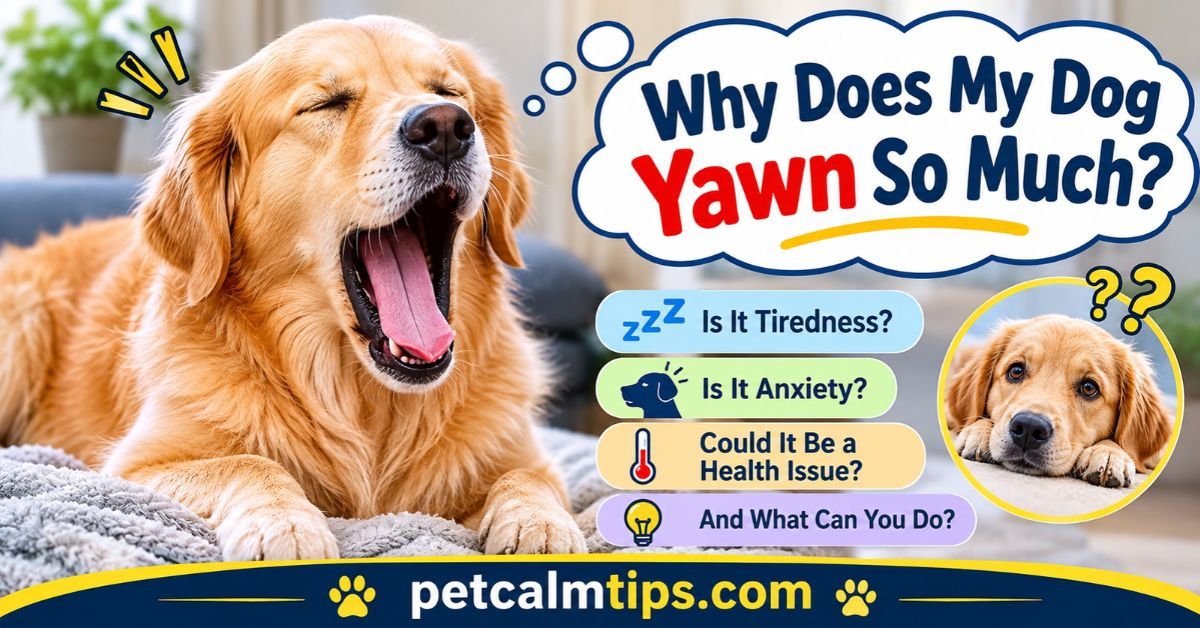
Why Does My Dog Yawn So Much? Reasons & Vet Warning Signs
Quick Answer
Why does my dog yawn so much? Honestly, most dogs yawn because they’re tired, a little stressed, or just copying you. My dog yawns every time I yawn. If your dog yawns when you pet him or in the car, it’s usually excitement, not sleepiness. As long as he’s eating and playing normal, it’s nothing to worry about.
Table of Contents
- Is Yawning Normal in Dogs?
- The Most Common Reasons Dogs Yawn
- Why Does My Dog Yawn So Much When I Pet Him?
- Why Does My Dog Yawn So Much in the Car?
- Why Dogs Yawn Around You and During Cuddles
- How to Read the Context Around a Yawn
- What You Can Do at Home
- 6 Common Mistakes Owners Make
- When to Call Your Vet
- Prevention and Long-Term Care
- Conclusion
- FAQs
Is Yawning Normal in Dogs?
Yes. Yawning is a normal behavior in dogs, just as it is in people and many other animals. A yawn involves a deep, slow intake of breath, a wide-open mouth, and often a stretch of the jaw and neck. It’s a reflex, but it also carries social and emotional meaning.
Scientists haven’t pinned down one single purpose for yawning. Researchers have proposed ideas ranging from changes in alertness and brain cooling to social signaling and stress regulation, and the evidence is still developing. For dogs, the practical takeaway is simple: a yawn is a piece of information, not a diagnosis. It tells you something is happening in your dog’s body or mind, and your job is to figure out what.
There’s no official number of yawns that counts as “too many.” What matters is whether the yawning fits the situation and whether it comes with other signs that something is off.
The Most Common Reasons Dogs Yawn
1: Tiredness and Waking Up
The most ordinary reason is the simplest. Dogs yawn when they’re drowsy, settling down for a nap, or just waking up. These yawns usually come with a big stretch, soft eyes, and loose body posture. If your dog yawns after a long walk or in the evening, sleepiness is the likely explanation.
2: Stress, Uncertainty, or Mild Anxiety
Dogs also yawn when they feel uneasy. Many trainers and behavior professionals describe this as a “displacement” or “calming” behavior, a way a dog may try to cope with a tense moment or signal that he isn’t a threat. You might see stress yawning at the vet, during grooming, in a crowded space, or when a child hugs him too tightly.
Stress yawns often look different from sleepy ones. They tend to be more tense, sometimes quick or exaggerated, and they show up alongside other signals such as lip licking, turning the head away, a tucked tail, flattened ears, or showing the whites of the eyes. A dog who yawns repeatedly in these moments is telling you he’d like things to calm down.
3: Excitement and Anticipation
Not every yawn signals worry. Some dogs yawn when they’re anticipating something good, like a walk, a meal, or a training session. Yawning here may reflect the mix of excitement and impatience a dog feels while waiting. If your dog yawns while you grab the leash and then bounces to the door, that’s probably what you’re seeing.
4: Contagious Yawning
Some research suggests dogs may yawn after seeing or hearing a person yawn, and that this may be more likely with familiar people. That doesn’t prove dogs “feel” empathy the way humans do, and scientists still debate what it means. But it can be a sign that your dog pays close attention to you. If your dog yawns right after you do, don’t read too much into it.
5: Medical Reasons
Less often, frequent yawning is linked to a health problem. Possibilities a veterinarian might consider include nausea or stomach upset, pain, dental or jaw discomfort, ear problems, or, in rare cases, neurological issues. Excess yawning can also come with anxiety disorders or stress-related conditions.
None of this means your dog is sick just because he yawns a lot. But if the yawning is new, sudden, or accompanied by other changes, it’s worth a call to your vet. Only a veterinarian can tell you what’s going on with your individual dog.
Why Does My Dog Yawn So Much When I Pet Him?
This is one of the most common questions owners ask, and there are two very different possibilities.
He’s relaxed and comfortable. Some dogs yawn during petting because they’re settling into a calm state. If his body looks loose, his eyes are soft or half-closed, and he leans into your hand or asks for more when you stop, the yawn is probably contentment or sleepiness.
He’s a little uncomfortable. Other dogs yawn during petting because the touch is too much, too long, or in a spot they don’t love. Look for stiffening, turning away, lip licking, a tight mouth, or moving out of reach. Common trouble spots include the top of the head, the face, the base of the tail, and the paws, though every dog has different preferences.
A simple way to check is the pause test. Stop petting, pull your hand back an inch or two, and watch. If your dog nudges you, moves closer, or pushes his body into your hand, he’s enjoying it. If he stays still, walks away, or seems relieved, he’s likely had enough.
Why Does My Dog Yawn So Much in the Car?
Car yawning usually points to one of three things: nervousness, motion sickness, or anticipation.
- Nervousness. If your dog mostly associates car rides with the vet, he may yawn from stress. Look for panting, whining, trembling, or restlessness.
- Motion sickness. Nausea can show up as yawning along with drooling, lip smacking, swallowing a lot, and sometimes vomiting. Puppies seem more prone to it, though adult dogs can have it too.
- Anticipation. A dog who loves the park may yawn out of excitement.
If the yawning comes with heavy drooling or vomiting, ask your veterinarian about motion sickness. They can discuss options that suit your dog, including whether medication is appropriate. Don’t give your dog human motion sickness medicine without veterinary guidance.
Why Dogs Yawn Around You and During Cuddles
If your dog yawns so much around you in particular, the explanation is often reassuring. Dogs tend to relax in the presence of people they trust, and relaxed dogs yawn. Add in possible contagious yawning and the natural sleepiness that follows a day of activity, and a lot of home yawning is just comfort.
Cuddling is a bit more nuanced. A dog who curls up beside you, rests his head on you, and yawns softly is likely settling in. But some dogs tolerate hugging and tight snuggling without really enjoying it. If your dog yawns while you cuddle and also stiffens, licks his lips, turns his head away, or tries to wriggle free, he may be asking for more space.
Neither response means your dog doesn’t love you. It just means he has his own preferences, like any individual. Let him choose how close to get, and notice whether he comes back for more.
Also consider the pattern. If he only yawns around you at certain times, such as when you return home, when you’re tense, or when you raise your voice, that points to a trigger worth noticing.
How to Read the Context Around a Yawn
Use this quick guide to interpret what you see. It’s a set of general clues, not a diagnosis.
| What you notice | Likely meaning |
|---|---|
| Slow yawn, stretching, soft eyes, loose body | Sleepy or relaxed |
| Yawn with lip licking, head turning, tucked tail | Stress or unease |
| Yawn while waiting for a walk or treat, wiggly body | Excitement or anticipation |
| Yawn right after you yawn | Possible contagious yawning |
| Yawn with drooling, gulping, or lip smacking | Possible nausea or car sickness |
| Yawn with pacing, trembling, or hiding | Significant stress or anxiety |
| Yawn with pain signs, such as limping, whining, or reluctance to move | Possible discomfort; consult your vet |
Look at the whole dog, not just the mouth. Ears, tail, eyes, posture, and movement all add meaning.
What You Can Do at Home
If your dog’s yawning is occasional and he otherwise seems fine, you probably don’t need to do anything. If you want to understand it better or reduce stress-related yawning, try this approach:
- Track when it happens. Note the time, place, and what was going on. Patterns show up quickly. A short log on your phone works well.
- Check his body language. Compare the yawn to the table above and watch for any accompanying signals.
- Reduce the likely trigger. If he yawns when petted too long, shorten the sessions. If he yawns in the car, try shorter trips to places he enjoys.
- Give him space. If a situation seems stressful, calmly move him to a quieter spot.
- Offer a predictable routine. Regular meals, walks, and rest help many dogs feel secure.
- Provide exercise and mental stimulation. Walks, sniffing time, and puzzle toys can ease restlessness and boredom.
- Schedule a vet visit if it persists. If the yawning continues, increases, or comes with other changes, get it checked rather than guessing.
For dogs with ongoing anxiety, a certified professional dog trainer or veterinary behaviorist can build a plan that fits your dog’s specific triggers.
6 Common Mistakes Owners Make
1: Assuming every yawn means tiredness. A yawn in a stressful setting is often a request for relief, not a sign of sleepiness.
2: Ignoring other body language. The yawn is one signal in a larger message. Missing the lip licking or stiff posture that goes with it leads to misreading your dog.
3: Pushing affection. Continuing to pet, hug, or hold a dog who’s yawning from discomfort can make him more stressed over time.
4: Forcing him through fearful situations. If car rides or vet visits clearly worry him, gradual, positive exposure works better than hoping he’ll get used to it.
5: Skipping the vet when something seems off. It’s easy to explain away new yawning as a quirk. If other symptoms are present, an exam is the safer choice.
6: Punishing the behavior. Never scold a dog for yawning or for showing stress. Doing so can teach him to hide his signals, which makes problems harder to spot.
When to Call Your Vet
Contact your veterinarian for a regular appointment if:
- The yawning is new, frequent, or increasing without a clear reason.
- It comes with drooling, lip licking, or gulping that seems tied to nausea.
- He seems more anxious, restless, or withdrawn than usual.
- You notice changes in appetite, sleep, or energy.
- He yawns often alongside signs of mouth, jaw, or ear discomfort, like pawing at his face, shaking his head, or dropping food.
Seek urgent veterinary care right away if frequent yawning appears with:
- Repeated vomiting or retching.
- Collapse, seizures, or loss of coordination.
- Labored breathing or pale or bluish gums.
- A swollen, hard belly, especially with unproductive retching.
- Severe pain, such as crying out or refusing to move.
If you’re unsure whether something is an emergency, call your vet or an emergency animal hospital and describe what you’re seeing. They can guide you on how quickly your dog needs to be seen.
Prevention and Long-Term Care
You can’t prevent every yawn, and you wouldn’t want to, since it’s a healthy part of dog behavior. But you can lower the odds of stress-related yawning:
- Socialize gradually. Introduce new people, places, and sounds in small, positive steps, especially for puppies.
- Teach him to like car rides. Start with sitting in the parked car, then short trips with a reward at the end.
- Respect his touch preferences. Learn which spots he enjoys and which he avoids.
- Keep up with veterinary checkups. Regular exams, including dental care, help catch problems early.
- Maintain consistent routines. Predictability often reduces everyday stress.
- Teach kids how to interact. Show children to avoid hugging dogs tightly and to stop when the dog moves away.
Prevention won’t eliminate every cause of yawning, but it builds a calmer, more confident dog who tells you what he needs.
Conclusion
So, why does my dog yawn so much? Most of the time, the answer is ordinary. He’s tired, relaxed, excited, or picking up on your own yawn. Sometimes he’s using the yawn to cope with stress or ask for space. Less often, it points to nausea, pain, or another health issue.
The best approach is to watch the context. Note where and when the yawning happens, and look at his ears, tail, eyes, and posture. Respond by giving him room, easing the trigger, or getting him comfortable.
Your next step: for the next week, keep a short note of when your dog yawns and what else you see. If you spot concerning patterns or any warning signs, bring your notes to your veterinarian. They’ll make the conversation much more productive.
Explore More Expert-Reviewed Pet Care Guides: Why Does My Dog Chew His Nails?
How to Stop Dog From Chewing Shoes
How to Make Dog Stop Licking Wound
Why Does My Dog Lick My Hands?
Why Does My Dog Sit on Me?
Best Probiotics for Dog Gut Health
FAQs
1. Is it normal for a dog to yawn a lot?
Yes, within reason. Dogs yawn when tired, relaxed, excited, or stressed. A lot of yawning can still be normal if it fits the situation. It’s worth a closer look if it’s sudden, constant, or paired with symptoms such as drooling, vomiting, pacing, or behavior changes.
2. Does yawning mean my dog is stressed?
Not always. Stress is one possible reason, but dogs also yawn from sleepiness and contentment. Check for other stress signs like lip licking, a tucked tail, flattened ears, or turning away. If those appear with the yawn, your dog is probably uncomfortable.
3. Do dogs yawn when they’re happy?
Sometimes. Relaxed dogs often yawn as they settle down, and some yawn from anticipation before something enjoyable. A loose body, soft eyes, and calm movement suggest a content yawn. Context and body language are the best guides.
4. Why does my dog yawn when I yawn?
Some research suggests dogs may respond to human yawns, possibly because they’re attentive to familiar people. Scientists still aren’t sure exactly why. It’s generally harmless and may simply reflect how closely your dog watches you.
5. Can yawning be a sign of pain or illness in dogs?
It can be, though it’s rarely the only sign. Nausea, mouth or ear pain, and other conditions may cause extra yawning, usually with other changes. If you notice drooling, appetite loss, lethargy, or discomfort, have your veterinarian examine him.
6. How can I help my dog stop yawning from stress?
Identify what triggers the stress, then reduce or gradually reintroduce it using positive experiences. Give him space, keep routines steady, and offer exercise. For ongoing anxiety, a veterinarian or certified behavior professional can create a plan suited to your dog.






2 Comments