
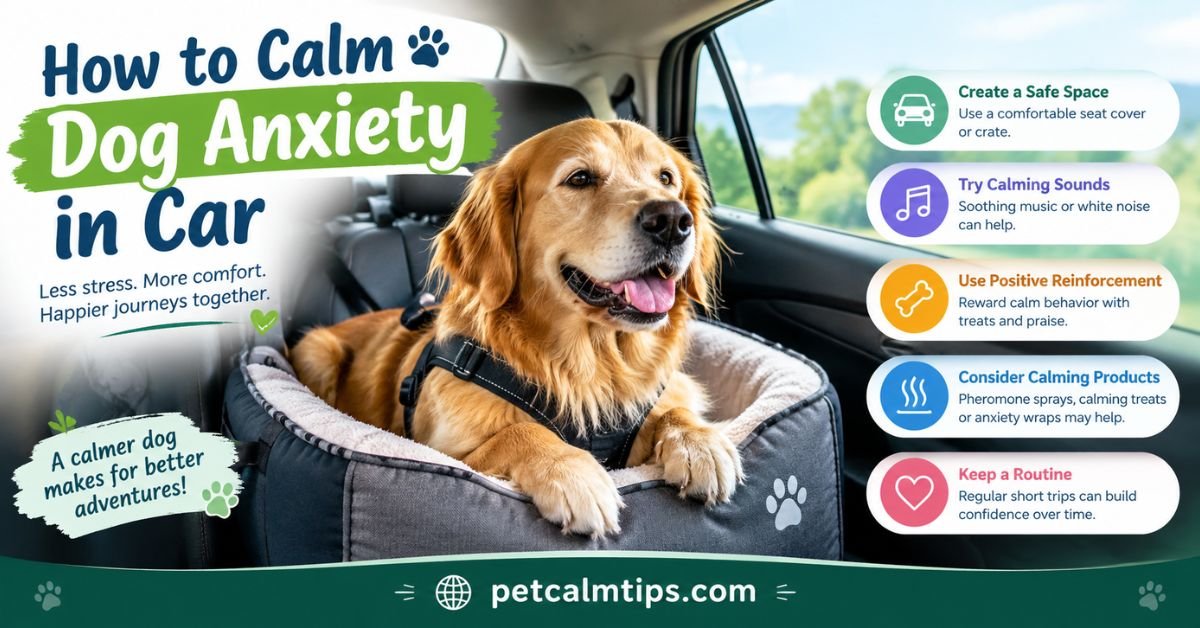
How to Calm Dog Anxiety in Car: (7 Gentle Steps That Help)
Quick Answer
How to Calm Dog Anxiety in Car. Calming a dog’s car anxiety means lowering fear in small steps. Start with the parked, silent car and reward calm behavior. Add engine noise, then short drives, then longer trips. Secure your dog in a well-ventilated, stable spot, keep the cabin cool, skip big meals beforehand, and use familiar scents. If drooling, vomiting, or panic continues, your vet can check for motion sickness.
Table of Contents
- Why Does My Dog Get Anxious in the Car?
- Cause 1: Motion Sickness and Dog Car Sickness
- Cause 2: Fear and Negative Associations
- What You Can Do Today: A 7-Step Plan
- Common Mistakes Dog Owners Make
- When to Call Your Vet Immediately
- Conclusion
- FAQs
Why Does My Dog Get Anxious in the Car?
Car anxiety is common, and it’s usually not a sign of a “bad” dog. Dogs don’t understand where the car is going. They only know it moves, shakes, and smells strange.
In my 12 years at a Texas shelter, I’ve seen dogs who were calm everywhere except the back seat. Almost every one had a story behind it.
Here are the most common triggers:
- Motion sickness, especially in puppies whose inner ears are still developing
- Bad associations, like only riding to the vet or groomer
- Lack of early exposure during the puppy socialization window
- Noise and vibration from engines, wind, or traffic
- Past trauma, such as an accident or a rough rescue transport
- Separation worry, when your dog hates being confined away from you
Anxiety often mixes two or three of these. A dog may start out nauseous, then learn to fear the car because of it.
Signs of stress include panting, pacing, lip licking, yawning, whining, trembling, and excessive drooling. Some dogs freeze instead. A quiet, stiff dog isn’t necessarily a calm one.
Knowing the cause helps you choose the right fix, so let’s look at the two biggest ones.
Cause 1: Motion Sickness and Dog Car Sickness
Sometimes the “anxiety” is actually nausea. Your dog feels awful, and the car becomes the place where that happens.
Puppies are the usual victims. Their balance system is still maturing, and many outgrow it. Adult dogs can struggle too, particularly if they’ve been sick in the car before.
Watch for these signs:
- Heavy drooling before or during the ride
- Repeated lip smacking or swallowing
- Whining that builds as the car moves
- Vomiting or retching
- Lethargy once you arrive
Here’s what usually helps. Face your dog forward if he’s secured, and crack the windows for fresh air. Keep the car cool, since heat makes nausea worse.
Feed a light meal a few hours before travel rather than a big bowl right before. Short, frequent trips build tolerance better than one long haul.
If you suspect true motion sickness, talk to your vet. They can discuss anti-nausea options that are prescribed for dogs. Please don’t give human medications on your own, because some are unsafe for pets.
One more thing. If your dog has been sick in the car, clean the area well with a pet-safe cleaner. Lingering smells can trigger worry all over again.
Cause 2: Fear and Negative Associations
Dogs learn fast. If every car ride ends at the vet, the car itself becomes the warning sign.
I once worked with a shepherd mix who’d trembled at the sight of any vehicle. His first ride had been a scary transport, and he’d never had a happy trip since. We fixed it by making the car boring, then wonderful.
That’s the heart of counterconditioning. You’re teaching your dog that the car predicts good things.
Look for these patterns:
- Your dog hides when you pick up keys
- He resists the car door or backs away from it
- He relaxes instantly when the ride ends
- He’s fine in a parked car but panics when it moves
The last one matters. A dog who’s calm while parked but upset in motion points toward motion sensitivity or noise fear. A dog who panics before even entering points toward association.
Fear-based anxiety responds best to slow, low-pressure exposure. Rushing creates setbacks. Pushing a trembling dog into the car “to get over it” usually deepens the fear.
Progress rarely moves in a straight line. Some days he’ll surprise you, and some days he’ll slide back a step. That’s normal, so don’t give up.
What You Can Do Today: A 7-Step Plan
Here’s a plan you can start this week. Move on only when your dog stays relaxed at each stage.
- Make the parked car fun. Open the doors and toss treats inside. Let your dog explore without pressure. Do this for a few days.
- Reward calm sitting. Once he hops in willingly, feed treats while he rests inside the parked car. Keep sessions to a few minutes.
- Add the engine. Start the car, give treats, and turn it off. Repeat until the sound doesn’t bother him.
- Set up a safe spot. Use a crash-tested harness or a well-secured crate. A stable, snug spot reduces sway and helps many dogs feel safer.
- Take tiny trips. Drive to the end of the street and back. Then try a few blocks. End every trip somewhere good, like a park.
- Bring comfort items. A familiar blanket or a shirt that smells like you can help. Ask your vet about calming aids if your dog needs extra support.
- Build up slowly. Extend the distance only after several calm rides. Stay relaxed yourself, because dogs read your mood.
A few quick extras. Exercise your dog before trips so he’s pleasantly tired. Keep the car cool, play soft music, and speak in a steady voice.
Never leave your dog alone in a parked car, even briefly. Heat builds faster than most people expect.
Common Mistakes Dog Owners Make
Everyone makes these. I’ve made a few myself, so there’s no shame here.
1: Rushing the process. Jumping to a two-hour road trip is the fastest way to undo progress. Small wins add up.
2: Punishing the fear. Scolding a whining or drooling dog adds stress on top of stress. He can’t help it.
3: Over-comforting in a panic. Soothing is fine, but frantic cuddling can signal that something really is wrong. Stay calm and matter-of-fact.
4: Only driving to scary places. If the vet is the only destination, mix in fun stops. Parks, trails, and pet-friendly cafés help rebalance the equation.
5: Skipping safety gear. An unrestrained dog slides around, which can raise anxiety and creates real injury risk in a sudden stop.
6: Feeding a big meal first. A full stomach plus motion is a recipe for nausea.
7: Using human medication. Never give your dog anything without your vet’s guidance. Doses and drugs that work for people can be dangerous for pets.
8: Expecting overnight results. Some dogs improve in two weeks, and others need months. Both are normal.
If you’re curious about related training, you could also read our guide on crate training for anxious dogs and our overview of puppy socialization basics. (Those are suggested internal links to match your site’s pages.)
When to Call Your Vet Immediately
Most car anxiety is a training issue. Some signs, though, are medical and shouldn’t wait.
Call your vet right away if you see:
- Vomiting that won’t stop or contains blood
- Difficulty breathing, blue or pale gums, or collapse
- Heatstroke signs, like heavy panting, thick drool, stumbling, or weakness
- Severe self-injury, such as chewing through a crate or cutting paws
- Sudden new fear in a dog who was previously fine, which may signal pain or illness
- Accident injuries, even if your dog seems okay
Book a regular appointment if your dog shows intense panic, remains terrified after weeks of training, or can’t travel at all. A vet can rule out ear problems, pain, and nausea. They can also refer you to a certified trainer or veterinary behaviorist.
This article offers general advice and can’t replace an exam. When in doubt, call. You know your dog better than anyone.
Conclusion
Car anxiety feels huge, but it’s very workable. Most dogs improve once you identify whether nausea, fear, or both are behind it. Go slowly, keep rides short and rewarding, and set up a safe, cool, comfortable space.
That’s really the heart of how to calm dog anxiety in car situations: patience, small steps, and plenty of good associations.
Your next step is simple. Tomorrow, open the car door, toss a few treats inside, and let your dog explore. Nothing else. No driving, no pressure.
You’re already doing something right by caring this much. Your dog will feel that, and the road ahead will get smoother.
Explore More Expert-Reviewed Pet Care Guides: Why Does My Dog Lick the Floor?
How to Clean Dog Ears
Can Dogs Eat Cheese Everyday?
Why Does My Dog Shake After a Bath?
How to Stop My Dog From Chewing Furniture
Why Does My Dog Sleep With His Eyes Open?
How to Make Dog Drink More Water
Can Dogs Eat Raw Eggs?
Why Is My Dog Panting for No Reason at Night?
How to Stop a Dog From Jumping Up on Guests
FAQs
1: Why does my dog shake in the car?
Shaking usually means fear, nausea, or overstimulation. Some dogs tremble from the vibration, and others from anticipation of a stressful destination. Watch for other signs like drooling or panting. If trembling is severe or new, ask your vet to rule out pain or illness.
2: How long does it take to get a dog used to the car?
It depends on the dog. Mild cases may improve in a couple of weeks, while deep-rooted fear can take months. Progress comes from short, positive sessions repeated often. Let your dog set the pace, and don’t compare him with other dogs. Consistency matters more than speed.
3: Can I give my dog something to calm him before a car ride?
Talk to your vet first. They can recommend safe options for your dog’s size, age, and health, which may include prescribed anti-nausea or calming support. Avoid giving human medications or supplements on your own, since some ingredients are harmful to dogs.
4: Where is the safest place for an anxious dog in the car?
A secured crate or crash-tested harness in the back seat is generally the safest choice. Stable, snug positioning reduces sliding and sway, which helps many nervous dogs. Avoid the front seat, especially with airbags, and never let your dog ride loose.
5: Do dogs outgrow car sickness?
Many puppies do, often by around one year, as their balance system matures. Adult dogs may keep it, particularly if they’ve had bad experiences. Gradual exposure, light meals, and fresh air help. If vomiting continues, your vet can suggest treatment so rides don’t become miserable.
6: Should I comfort my dog when he’s scared in the car?
Yes, calmly. A soft voice and a steady tone are fine and won’t “reward” fear. Skip the frantic fussing, which can make the situation feel more alarming. Stay relaxed, offer a favorite blanket or toy, and save big praise for when he settles.






3 Comments